Ukraine warns of expanded North Korean military presence in Russia
Ukrainian President Volodymyr Zelensky has announced that Russia is preparing to deploy additional North Korean troops and has received new ballistic missiles from Pyongyang, marking an escalation in military cooperation between Moscow and its key Asian ally.
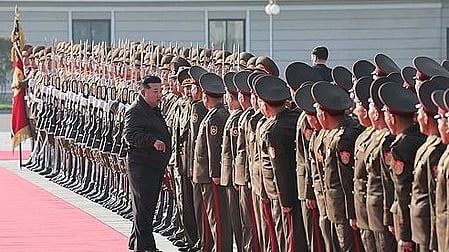
Ukraine warns of expanded North Korean military presence in Russia
Ukrainian President Volodymyr Zelensky announced Monday that Russia is preparing to station more North Korean troops on its territory and has received additional ballistic missiles from Pyongyang, signaling a deepening of military ties between the two nations.
Speaking in his nightly address, Zelensky emphasized the unprecedented nature of Russia's reliance on foreign military support.
This is the first time they cannot wage war without supplements from North Koreahe said, referring to Russian forces.
They are now preparing to deploy an additional contingent of Koreans on their territory. They have received, just imagine, additional ballistic missiles from North Korea.
The Ukrainian leader did not provide specific evidence or a timeline for his claims but stated over the weekend that Russia plans to deploy between 30,000 and 50,000 North Korean troops on its territory. He did not explain how he obtained these figures.
Military cooperation under formal treaty
The military partnership between Moscow and Pyongyang operates under a mutual defense pact signed on June 18, 2024, in the North Korean capital. The treaty came into force on December 4, 2024, after ratification by both countries. Under Article 4 of the agreement, North Korea and Russia are obligated to immediately provide military and other assistance to each other if either falls into a state of war due to armed invasion, in accordance with Article 51 of the UN Charter.
Russia has used North Korean missiles against Ukrainian targets since late 2023, with the United States confirming that Moscow first deployed North Korean ballistic missiles on December 30, 2023. The military cooperation has since expanded significantly, with North Korea reportedly supplying Russia with over 5 million artillery shells since 2024.
North Korean troops in Kursk region
North Korean forces have been actively involved in combat operations in Russia's Kursk region, where Ukraine launched a cross-border incursion in August 2024, initially seizing approximately 1,300 square kilometers of Russian territory. Moscow deployed North Korean troops in a counteroffensive later that year that pushed Ukrainian forces back from parts of the border region.
According to South Korean and Ukrainian intelligence assessments, North Korean casualties in the Kursk fighting have been severe, with approximately 6,000 troops killed or wounded as of early 2026.
Appeal to regional powers
Zelensky urged Japan and South Korea to provide air defense assistance, arguing that such support is needed to counter Pyongyang's growing military capabilities.
They are growing stronger on the experience they are gaining while helping Moscowhe said of North Korean forces.
The appeal comes as South Korea, Japan, and the United States have already condemned the deepening military cooperation between North Korea and Russia. In a June 2024 joint statement, the three nations expressed particular concern about weapons transfers between Moscow and Pyongyang.
In exchange for military support, North Korea has reportedly received Russian technical assistance for spy satellites, drones, surface-to-air missiles, and ballistic missile production equipment, though exact details of technology transfers remain difficult to verify independently.
North Korea has become one of Russia's closest military partners since Russian President Vladimir Putin and North Korean leader Kim Jong Un signed the mutual defense pact. The cooperation represents a significant shift in the strategic landscape of the conflict in Ukraine, with Moscow increasingly dependent on external military supplies to sustain its operations.