Strait of Hormuz: Competing navigation routes reflect deepening geopolitical divide
Iran and Oman are negotiating a bilateral framework to manage maritime traffic through the Strait of Hormuz, where competing security escorts have left shipping companies torn between protection and provocation in one of the world's most critical energy chokepoints.
Two routes, two authorities
Iran and Oman are nearing a bilateral agreement to manage maritime traffic in the Strait of Hormuz under a temporary framework, as competing navigation systems controlled by different parties create uncertainty for global shipping.
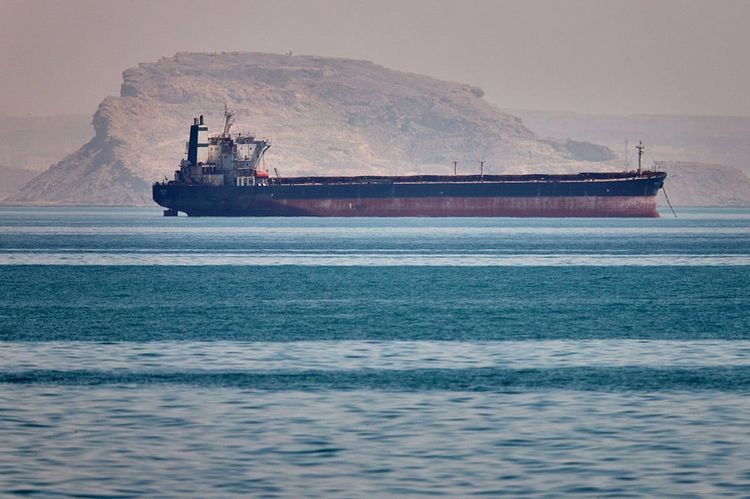
The waterway, through which approximately 20 percent of global oil consumption and 20 percent of global LNG trade passes—representing about 27 percent of all seaborne oil shipments worldwide—has become the centre of a contest over who controls one of the world's most strategically important maritime passages.
Iranian officials emphasise that the negotiations are strictly bilateral coastal-state talks, independent of external timelines or demands. In the absence of a final agreement, competing positions have emerged: Washington seeks unrestricted international commerce through the strait, while Tehran is demanding guarantees that it will retain a role in monitoring maritime traffic and protecting what it considers its security and sovereignty interests.
The proposed framework
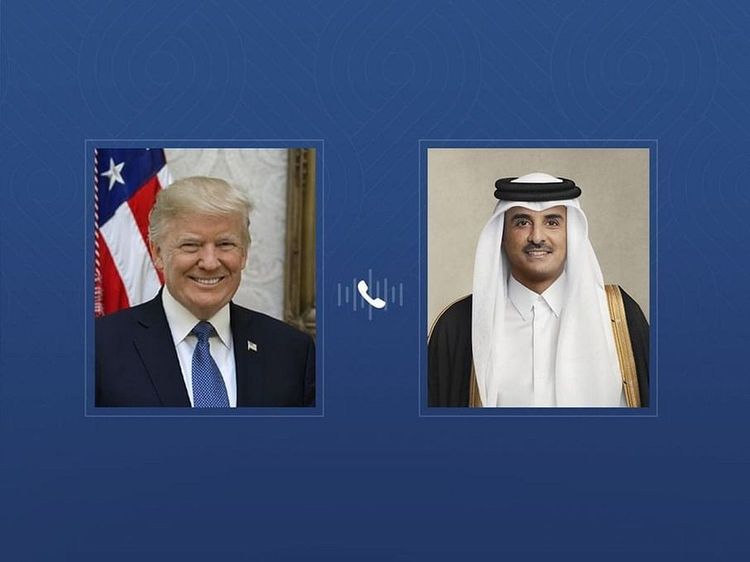
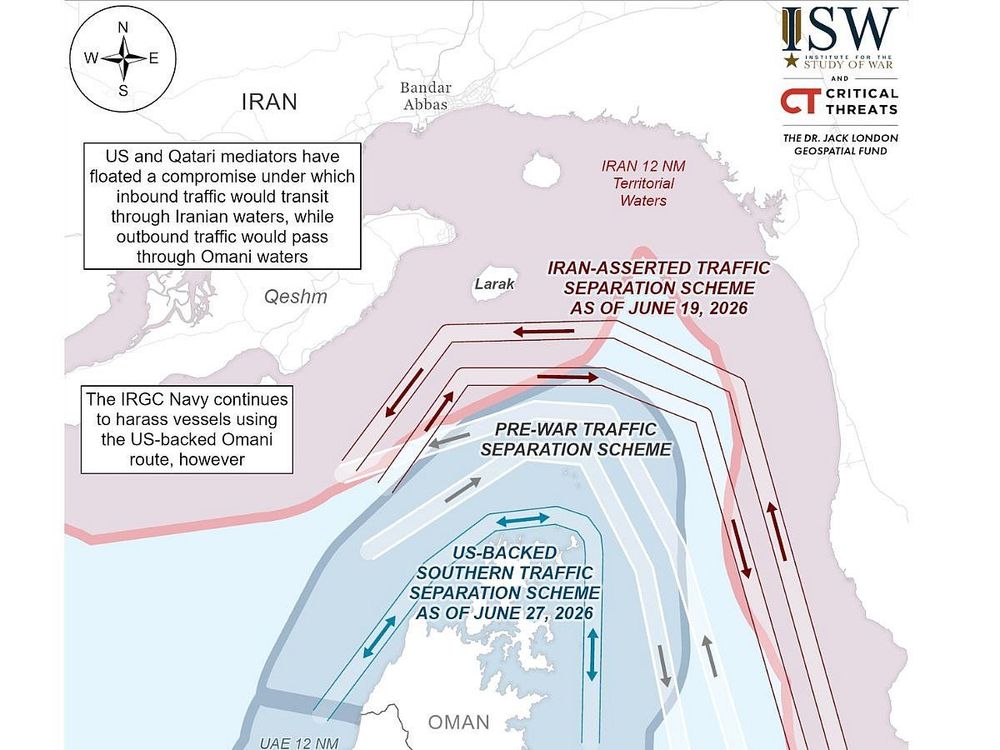
Reports from Iranian and regional officials indicate that a draft deal currently being circulated through Qatar mediation includes several key elements. Inbound vessels entering the Arabian Gulf would use a channel controlled by Iran, close to its coast. Outbound vessels would use a channel near Oman, but only after notifying Iranian officials, giving Tehran visibility and the option to intervene.
The proposal reportedly envisions an intermediate corridor that would replace the prior northern and southern routes once operational. Possible service fees for environmental impact, security and staffing could be shared equally between Iran and Oman, though the International Maritime Organization has stated there is no legal basis under international law to introduce mandatory tolls simply to transit through an international strait, and that passage should remain free of charges in accordance with UNCLOS principles.
American officials have disputed Iranian descriptions of approvals, permissions or fees in any temporary arrangement. Iran has also linked full reopening to lifting the US naval blockade of Iranian ports and broader points from earlier negotiations. Oman has been more reserved publicly and has not fully confirmed the Iranian framing.
Geographic and legal foundations
The Strait of Hormuz measures only about 33 kilometres at its narrowest point. Within that space are internationally recognised Traffic Separation Schemes, maritime lanes designed to keep ships moving safely. The IMO Traffic Separation Scheme in the strait was originally adopted in 1968 and revised in 1979, making it one of the oldest such systems globally.
The IMO-recognized shipping lanes lie primarily within Omani territorial waters, based on a 1968 Iran-Oman continental shelf agreement that placed the median line so navigable deep-water channels fall predominantly on the Omani side. Iran and Oman demarcated their maritime border in the strait in the 1970s, and signed an agreement in May 2015 to demarcate 450 kilometres of their common sea borders in the Sea of Oman, which entered into force in September 2016.
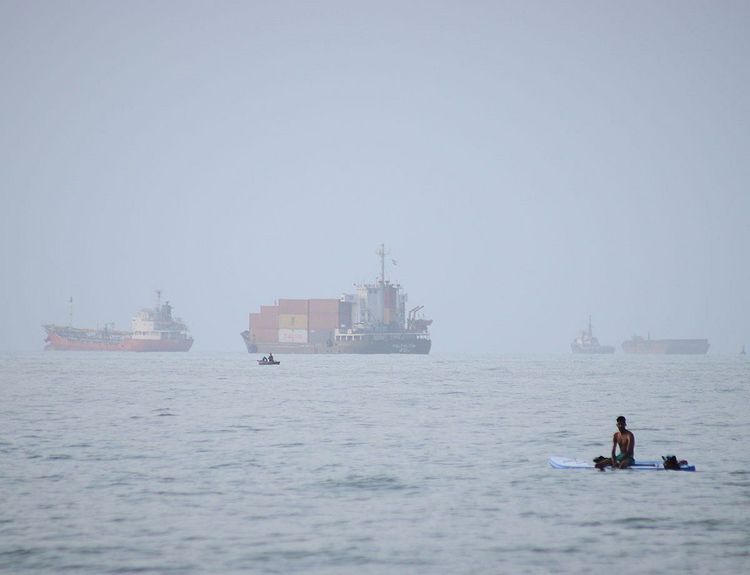
Since the latest conflict escalated, however, competing security arrangements have emerged. The United States has encouraged many commercial ships to use a southern corridor closer to Omani waters, where American and allied naval forces can provide escorts and surveillance. Iran argues that shipping should instead use corridors it oversees and rejects what it sees as a US-imposed navigation system.
Limited alternatives increase stakes
The dispute carries particular weight because alternatives to Hormuz transit are severely limited. Saudi Arabia and the UAE are the only Gulf producers with operational crude pipelines capable of bypassing the strait, with an estimated 3.5 to 5.5 million barrels per day of available bypass capacity. Iraq, Kuwait, Qatar, Bahrain and Iran rely on the strait for the vast majority of their oil exports.
Natural gas flows are even more dependent on the waterway. About 93 percent of Qatar's and 96 percent of the UAE's LNG exports transit through the strait, representing approximately 19 to 20 percent of global LNG trade.
The concentration of energy flows means disruptions have global reach. China alone receives 37.7 percent of all crude oil and condensate exports transiting the strait, while Asian countries collectively receive 89.2 percent of total flows through the waterway.
Economic and human costs mount
For shipping companies, the conflicting messages create difficult choices. Operators following US-protected routes may be viewed by Iran as ignoring its warnings. Those complying with Iranian preferred routing risk undermining the international principle of free navigation and potentially conflicting with American guidance.
The uncertainty has already driven up costs dramatically. War risk insurance premiums for ships transiting the strait have surged from 0.25 percent of hull value before the conflict to between 3 percent and 10 percent by July 2026. A 100 million dollar tanker now faces premiums of 3 to 10 million dollars compared to roughly 250,000 dollars previously.
The crisis has also created a human toll. According to the IMO, approximately 6,000 seafarers are trapped in the region on vessels stranded in or near the strait, with the organization working on an evacuation plan that is currently paused.
The United States says the southern corridor remains open and protected, citing the successful transit of more than 1,000 commercial vessels over the past three months. Iran rejects that claim, insisting that ships should follow routes it designates and warning that vessels using alternative passages could be targeted.
Until a broader diplomatic agreement is reached, the Strait of Hormuz is likely to remain one of the world's most closely watched maritime flashpoints, with the emerging proposal potentially allowing shipping to resume without requiring either side to fully surrender its position.