Strait of Hormuz crisis escalates: 84 incidents logged as tanker traffic collapses and ADNOC vessel attacked
Maritime authorities warn a hostile attack is highly likely in the Strait of Hormuz after an ADNOC tanker was targeted on August 8. Tanker traffic has dropped to single digits as 84 incidents have been logged since March, with threats spreading to other critical waterways.
Strait of Hormuz crisis escalates: 84 incidents logged as tanker traffic collapses and ADNOC vessel attacked
The security situation in the Strait of Hormuz has reached a critical point, with maritime authorities warning that a deliberate hostile attack is "highly likely" in the coming days. The assessment from the Joint Maritime Information Center follows the August 8 attack on an ADNOC tanker, the latest in a series of incidents that has climbed to 84 since March 1.
The waterway, which carries approximately 20% of global oil consumption and 25% of seaborne oil trade—totaling about 20 million barrels per day under normal conditions—has seen commercial shipping virtually grind to a halt. Independent tracking data shows tanker movements in both directions have collapsed to single digits, a stark contrast to the roughly 138 vessels that typically passed through daily in 2025.
Traffic drops to fraction of normal levels
Between August 6 and 8, only 40 US-facilitated transits were recorded through the Strait. On August 8 alone, just eight cargo vessels made the crossing—six heading east and two west—along with two tankers. The dramatic reduction reflects the severity of the threat environment facing commercial shipping.
The Joint Maritime Information Center, established in February 2024 under Combined Maritime Forces to share threat information with stakeholders, initially focused on Houthi attacks before expanding its coverage to the entire Combined Maritime Forces operating area in February 2025. The organization has become a key source of maritime security intelligence as multiple waterways face elevated risks.
Iranian surveillance and mine threats persist
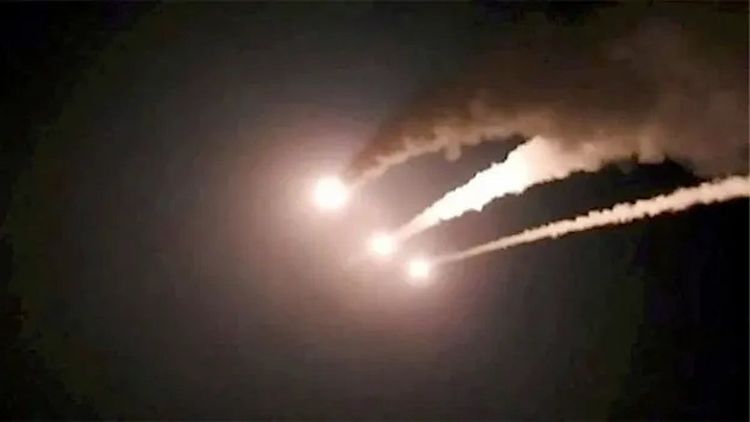
Iran's Islamic Revolutionary Guard Corps continues to actively monitor merchant vessels passing through the area, employing drone overflights and targeted surveillance. Near the southern Omani approaches around Limah, Khasab and Kumzar, projectile strikes and near-miss explosions have been reported.
Maritime authorities warn that drifting or uncharted mines remain a risk in and around the Strait's shipping lanes. Navigation has been further complicated by GPS and signal interference affecting the Strait, the Gulf of Oman and the Arabian Gulf.
ADNOC tanker targeted in latest attack
An ADNOC vessel was attacked in the Strait early on August 8, though no crew members were injured. A fire that broke out during the incident was extinguished, and the vessel completed its journey, returning safely to Fujairah. UK Maritime Trade Operations logged the incident as an attack involving an unidentified tanker.
The attack comes as ADNOC Logistics & Services recently acquired 11 tankers for $1.3 billion, including six very large crude carriers and five very large gas carriers, almost doubling its VLCC fleet from eight to 14 vessels. The company, which operates more than 900 vessels total, has been using military escorts and darkness operations to move crude through the Strait.
While the UAE operates a 1.8 million barrels per day capacity pipeline running from Habshan to Fujairah that provides a partial bypass of the Strait, this carries less than half of the UAE's approximately 3.6 million barrels per day of crude exports, making maritime transit through Hormuz essential.
US naval enforcement intensifies
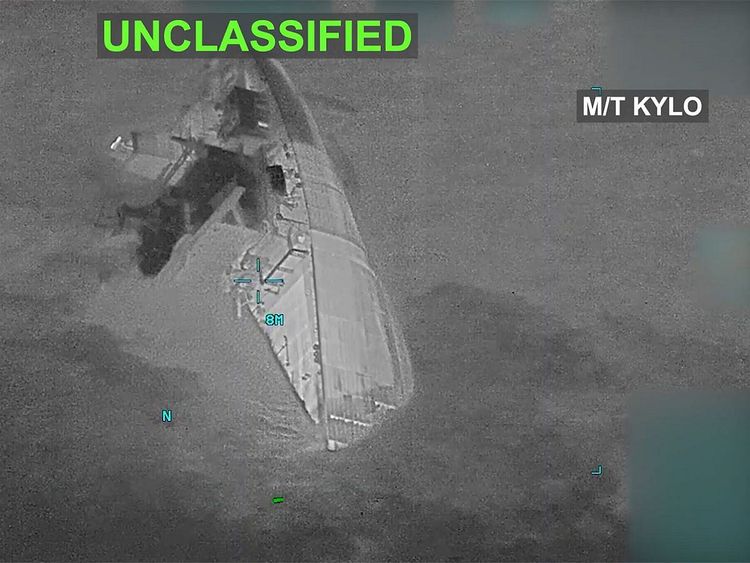
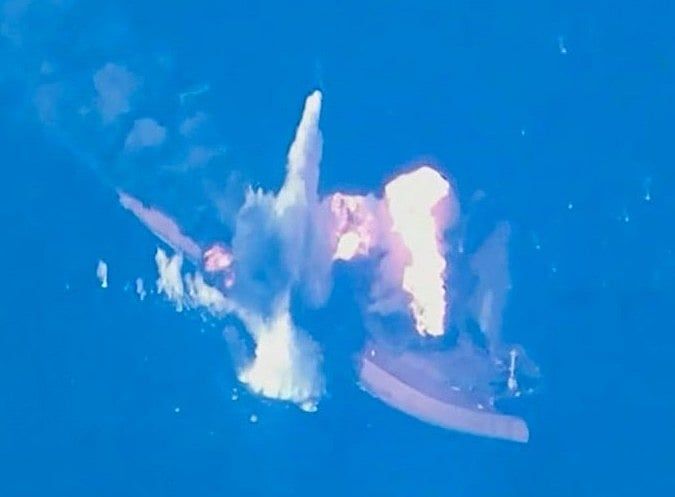
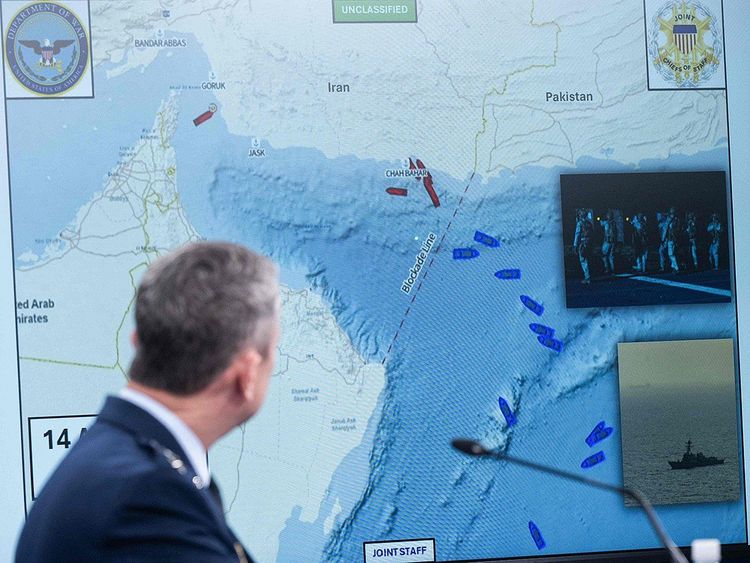
The United States imposed a naval blockade on Iran on April 13, 2026, following the failure of diplomatic talks and escalating conflict. US Central Command reported that as of August 9, enforcement operations had redirected 53 commercial vessels, disabled two vessels and boarded two vessels for compliance checks.
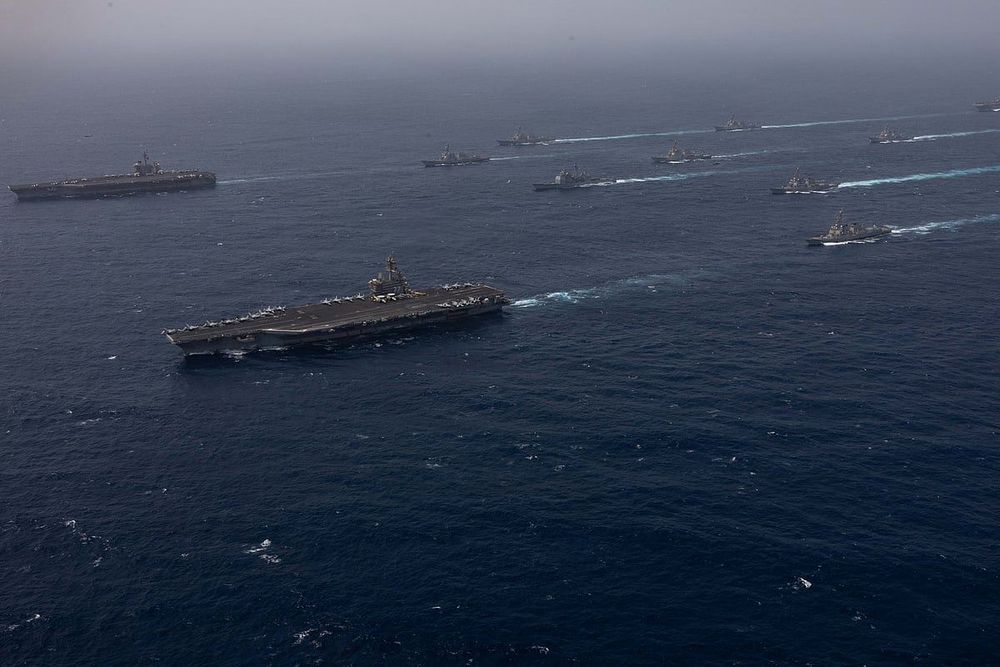
The US has deployed at least three aircraft carrier strike groups to the CENTCOM area of operations, including USS Abraham Lincoln and USS George H.W. Bush, representing about 41% of actively deployed Navy vessels worldwide concentrated in the region as of mid-April 2026. Ships in the area are being instructed to respond quickly to military radio queries and keep their automatic identification systems active unless there is a genuine security reason not to.
Global energy flows at risk
The crisis has significant implications for global energy security. Saudi Arabia moved the most oil through the Strait before the crisis, accounting for about 38% of crude and condensate exports at approximately 5.5 million barrels per day, followed by Iraq, Kuwait, the UAE, Qatar and Iran.
About 84% of all crude oil and condensate shipped through the Strait in 2024 was headed to Asian markets, with China, India, Japan and South Korea receiving 69% of all crude flowing through the waterway. Saudi Arabia and the UAE are the only Gulf producers with operating crude oil pipelines that can circumvent the Strait—Saudi Arabia's East-West pipeline can carry approximately 5 million barrels per day to Red Sea terminals—while Iran, Iraq, Kuwait, Qatar and Bahrain rely on the Strait for the vast majority of their oil exports.
Multiple waterways face elevated threats
The Strait of Hormuz is not the only chokepoint under pressure. Maritime authorities have assigned threat levels across multiple critical waterways:
- Strait of Hormuz — Severe: Recent Iranian attacks make hostile action highly likely, with mine and navigation risks persisting.
- Gulf of Oman — Substantial: Strong possibility of attack as US naval enforcement and electronic interference continue.
- Gulf of Aden — Substantial: Piracy risks and Houthi activity remain concerns.
- Bab el-Mandeb/Southern Red Sea — Substantial: Houthi attacks on merchant shipping keep the threat elevated.
- Arabian Gulf — Moderate: Navigation interference and residual attack risks persist.
- Arabian Sea — Moderate: Conflict-linked risks remain, though no recent attacks have been reported.
- Northern Red Sea/Suez Canal — Moderate: Operations remain normal, but navigation interference is possible.
- Somali Coast/Somali Basin — Moderate: Piracy remains possible despite monsoon conditions.
- Eastern Mediterranean — Low: No persistent targeting, though local navigation interference continues.
Houthi forces have deployed missiles and drones near the Bab el-Mandeb Strait and declared a maritime embargo against Saudi Arabia in July 2026, leading to reduced ship traffic through the strait from about 50 vessels per day before the conflict to an average of 32 per day as of early August 2026.
Outlook for coming days
Maritime authorities expect commercial traffic through the Strait of Hormuz to remain reduced over the next 24 to 48 hours. Ships traveling with automatic identification systems active may receive radio calls instructing them to divert toward the northern Iranian-controlled route.
Vessels should anticipate a strong US naval presence, persistent IRGC monitoring, increased radio hails and possible visit-and-search checks. Navigation interference and mine-related risks will continue to require heightened vigilance from vessels operating in and around the Strait.