Qatar PM holds talks with Iranian President in Tehran amid regional de-escalation push
Qatar's Prime Minister Mohammed bin Abdulrahman Al Thani met Iranian President Masoud Pezeshkian in Tehran on Thursday, discussing regional security and ongoing diplomatic efforts to reduce tensions as both leaders emphasized their countries' brotherly ties.
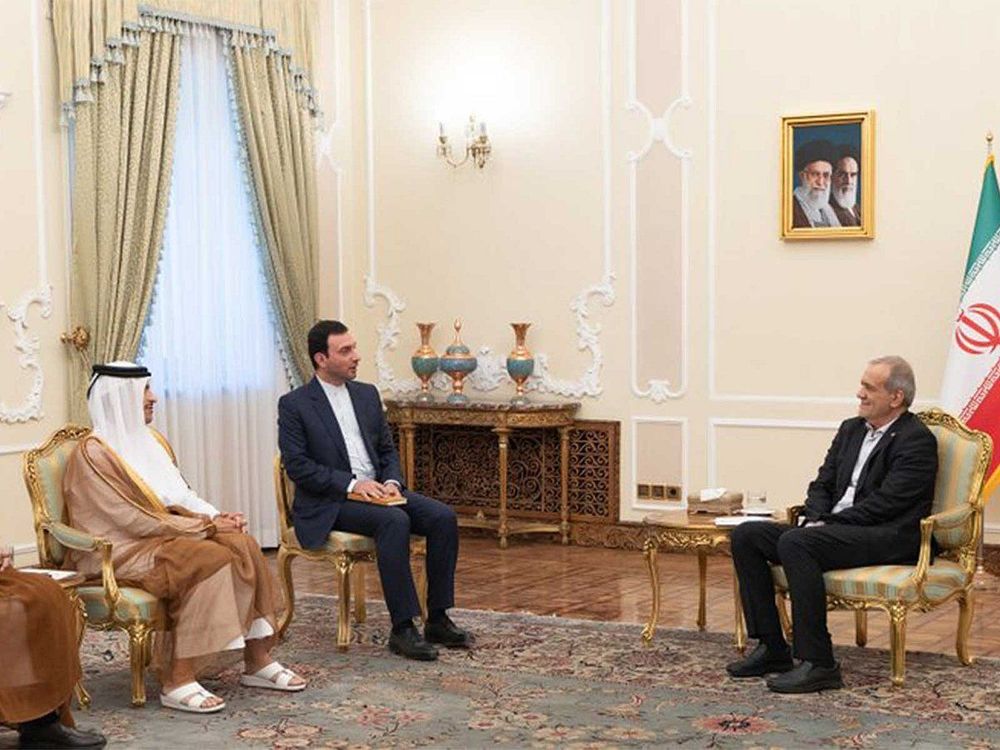
Qatar PM holds talks with Iranian President in Tehran amid regional de-escalation push
Qatar's Prime Minister and Foreign Minister Mohammed bin Abdulrahman Al Thani held talks with Iranian President Masoud Pezeshkian in Tehran on Thursday, part of intensified diplomatic efforts by Doha to de-escalate regional tensions and create conditions for dialogue.
During the meeting, the two sides discussed regional developments, their impact on security and stability, and ongoing efforts to foster a conducive environment for dialogue, according to the Qatar Ministry of Foreign Affairs.
Al Thani, who has served as Prime Minister since March 2023 while concurrently holding the foreign minister portfolio since 2016, also met with Iranian Foreign Minister Abbas Araghchi and other senior officials during his Tehran visit.
Pezeshkian, a 69-year-old reformist politician and cardiac surgeon who assumed the presidency in July 2024, said Iran and Qatar remained "two countries of friends and brothers" despite what he called recent "bitter events." He said the issues between the two countries could be resolved through understanding.
"Some events occurred that were unacceptable, but we still believe that Iran and Qatar are two countries of friends and brothers and that the issues that have arisen can be resolved through understanding," Pezeshkian said, according to the Iranian presidential press release.
The relationship between Iran and Qatar carries significant economic weight. The two nations jointly control the South Pars/North Dome Gas-Condensate field, the world's largest natural gas field, along their maritime border. Qatar produces approximately 18.5 billion cubic feet per day from the field, accounting for around 80 percent of Qatari government revenues.
Historical ties between the countries deepened in August 2017, when Qatar restored full diplomatic relations with Iran during the Gulf Crisis. During the diplomatic and economic blockade imposed on Qatar by Saudi Arabia, UAE, Bahrain, and Egypt from 2017 to 2021, Iran provided Qatar with access to its airspace, shipping lanes, and food exports.
Framework for stability
Pezeshkian emphasized that Iran was not seeking war or an expansion of conflict and called for the implementation of previous understandings through dialogue. "Logic dictates that the implementation of the memorandum of understanding be resumed in the same manner as before and that issues be resolved through dialogue," he said.
The Iranian President also appreciated Qatar's efforts, along with those of Pakistan and Oman, to promote peace and stability in the region.
Al Thani said Qatar's Emir Tamim bin Hamad Al Thani considered Pezeshkian "as a brother" and stressed that deep and sincere respect remained between Qatar and Iran despite recent developments. He said Doha sought to restore regional stability and was ready to expand cooperation with Iran.
"The language of force and threats is not a solution, and stability, security, and economic peace must be restored to the region through diplomacy, rationality, and logic," Al Thani said, according to the Iranian presidential press release.
Qatar's mediation efforts reflect a long-standing foreign policy priority. The country enshrined mediation as a core pillar of its foreign policy in Article 7 of its Permanent Constitution in 2003. Qatar has successfully brokered peace deals in Lebanon in 2008, Yemen in 2010, Darfur in 2011, and Gaza in 2012, and notably mediated the 2020 U.S.-Taliban agreement that led to the withdrawal of American forces from Afghanistan in 2021.
Strait of Hormuz discussions
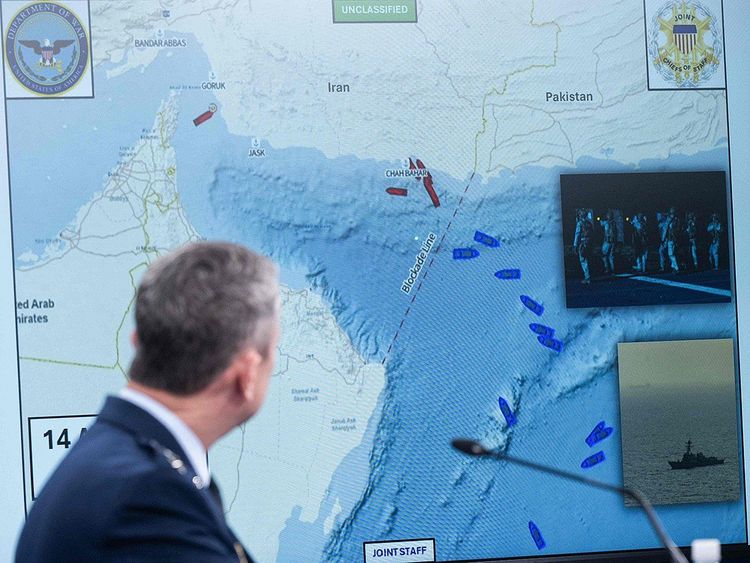
The Qatar-Iran discussions come amid a broader diplomatic push over the Strait of Hormuz, the world's most important oil transit chokepoint. Approximately 25 percent of global oil trade and 19 percent of liquefied natural gas trade passes through the strait, which at its narrowest point spans only 22 nautical miles.
Earlier on Thursday, Al Thani and Araghchi discussed a proposed framework involving a temporary joint navigational corridor through the strait and possible cooperation to clear mines from the waterway. Qatar has stressed the importance of freedom of navigation and continued diplomatic efforts to reduce tensions.
However, Washington has said there are currently no negotiations between the United States and Iran. Former White House press secretary Karoline Leavitt told Fox News on Thursday, "No negotiations are happening right now, and this will continue until the president feels that maybe they come to the table in a meaningful way. We have not seen that yet."
Leavitt said the US was focused on economic pressure against Iran under what the White House has termed "Operation Economic Outcast", while President Donald Trump continued to retain "all options" on the table.
Qatar maintains a unique diplomatic position in the region. While hosting Al Udeid Air Base, one of the largest U.S. military facilities in the Middle East since 2003, the country simultaneously maintains channels with various regional actors. In 2023, Qatar's Ministry of Foreign Affairs established new ministerial roles specifically focused on mediation files and signed memoranda of understanding on mediation and dispute resolution with Sweden, Norway, and Finland.
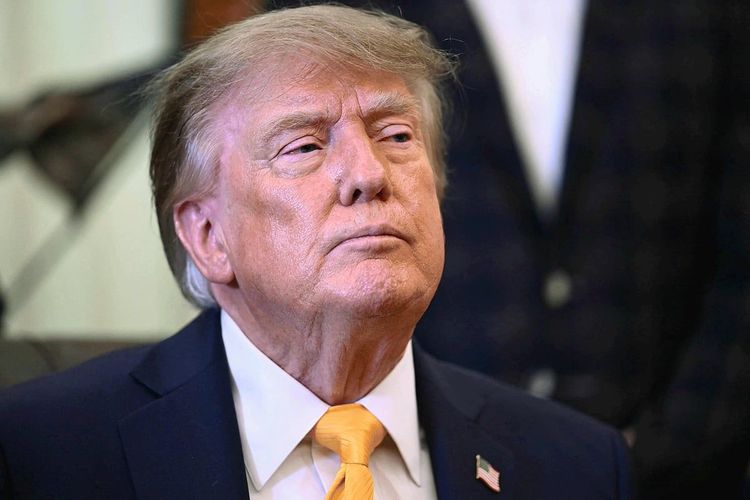
Earlier on Wednesday, President Trump told Al Jazeera he has no fixed timeline for Iran to return to the negotiating table to end the conflict with Washington. "I have no time schedule, none. I'm not in a hurry. I have no time schedule at all," Trump said.
Trump said the US was "winning very big" and pointed to economic difficulties in Iran as he explained his position. Asked whether economic measures were more effective than military strikes, Trump said, "I think they are both effective."