Attackers target Niger capital airport and presidential palace in overnight assault
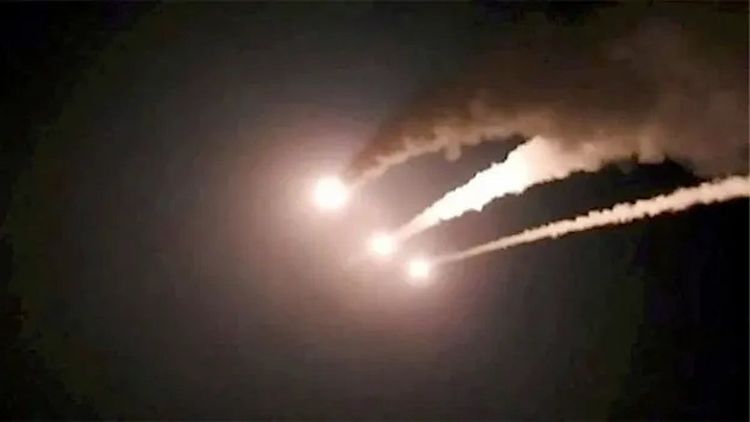
Sustained gunfire and explosions rocked Niamey early Saturday as attackers struck the international airport and attempted to breach the presidential palace security perimeter, in the latest violence to hit Niger's capital.
Attackers target Niger capital airport and presidential palace in overnight assault
Sustained gunfire and explosions were heard across several parts of Niger's capital early Saturday after attackers targeted the city's international airport and attempted to breach the security perimeter around the presidency, according to witnesses and a security source.
Heavy exchanges of fire erupted around Diori Hamani International Airport and near the presidential palace, witnesses reported. A security source described the attackers as terrorists and said they had struck the airport before trying to penetrate the area surrounding the presidency.
The assault also targeted Base 101, a major military installation near the airport, according to Bana Wagana Ibrahim, a member of Niger's Consultative Council and a deputy in the parliament of the Alliance of Sahel States. Ibrahim later stated on Facebook that Nigerien defence and security forces had regained control and that the situation was under control.
Residents reported sustained shooting and loud explosions during the night, including around the airport complex and the Plateau district, where the presidential palace and other key state institutions are located. There was no immediate statement from Niger's military government.
Military rule and political context
Niger has been under military rule since a July 2023 coup ousted elected President Mohamed Bazoum. That takeover marked Niger's fifth military coup since independence from France in 1960 and the first since 2010. The government led by General Abdourahamane Tiani, who commanded the Presidential Guard from 2011 before staging the coup, has since distanced itself from traditional Western partners and developed closer ties with Russia.
Tiani was sworn in as Niger's transitional president in March 2025 for a five-year transition period ending in 2030. Meanwhile, Bazoum and his wife Hadiza remain detained at the presidential palace in Niamey with no access to family members or lawyers, more than two years after the coup. An ECOWAS Court ruled in December 2023 that Bazoum was arbitrarily detained and called for his release, though Niger's junta lifted his presidential immunity in June 2024 to allow prosecution.
Shifting international alliances
The United States withdrew its more than 1,000 troops from Niger in 2024 under pressure from the ruling junta, ending what was previously the second-largest U.S. military presence in Africa. Russian military instructors and an air defense system arrived in Niger in April 2024, with Russian forces helping to repel a militant attack on Niger's international airport earlier in 2026.
Niger has followed a similar course to the military-led governments of neighbouring Mali and Burkina Faso. The three countries have formed a political and security bloc known as the Alliance of Sahel States, established in September 2023 as a mutual defense pact. The alliance was upgraded to a confederation in July 2024, and the three countries formally withdrew from the regional bloc ECOWAS on January 29, 2025. The alliance has a combined population of approximately 75 million people across 2.78 million square kilometers.
Ongoing security challenges
All three countries continue to battle armed groups linked to al Qaeda and Islamic State. Niger has faced a series of deadly attacks this year, including an assault at a mosque in Fambita, Kokorou, in southwestern Niger in March that killed at least 44 civilians. Authorities attributed responsibility for that attack to Islamic State-Sahel Province.
The airport and adjoining military facilities have increasingly become high-profile targets, extending violence that had previously been concentrated largely outside the capital.