Trump declares US leads China in AI as computing power emerges as strategic battleground
President Trump asserts American dominance in artificial intelligence ahead of Chinese leader Xi Jinping's September visit, as regulators prepare framework for digital assets and AI infrastructure expansion accelerates nationwide.
Trump declares US leads China in AI as computing power emerges as strategic battleground
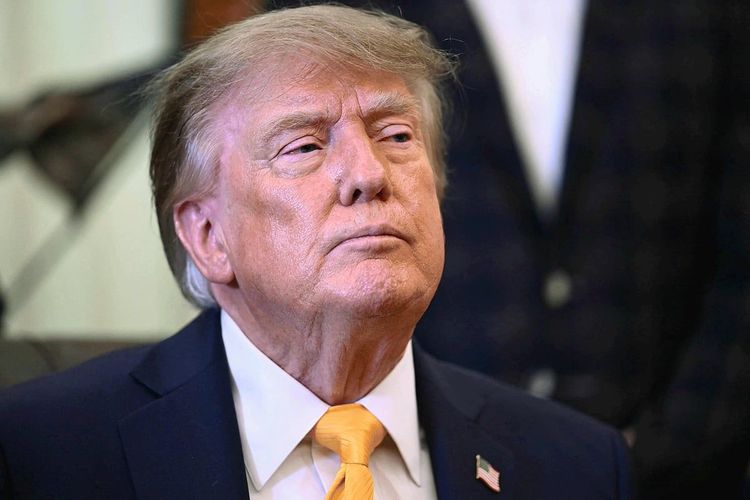
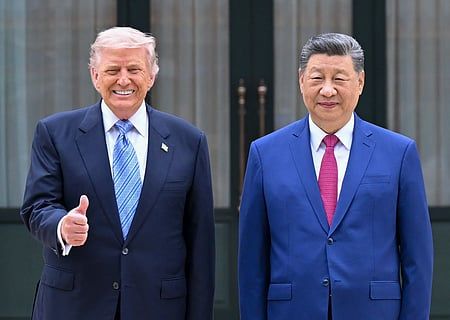
President Donald Trump declared the United States holds a commanding lead over China in artificial intelligence development, positioning the emerging technology as central to discussions when Chinese President Xi Jinping arrives for his first formal state visit to America in more than a decade.
Speaking at a White House gathering with technology, cryptocurrency and financial sector leaders, Trump characterized the AI advantage as substantial. "We're leading in every single one, and I will tell you, the AI, the artificial intelligence, we're way ahead of number two," he said. "Number two is China, and I never want to underestimate China, but right now we're way ahead."
Xi's September 24 visit marks the first formal state visit by a Chinese leader to the United States since his 2015 trip during the Obama administration. The upcoming meeting builds on earlier discussions between the two presidents during Trump's visit to Beijing earlier in 2026, where artificial intelligence first emerged as a topic of bilateral talks.
"President Xi's coming on September 24th. We look forward to it. We'll probably be talking about AI and a lot of other things," Trump said, indicating the technology would feature prominently in bilateral discussions.
Computing power as strategic commodity
The White House event preceded the first meeting of the Commodity Futures Trading Commission's Innovation Advisory Committee, which convened later the same day to address regulatory issues in crypto assets, AI, and prediction markets. CFTC Chairman Michael Selig characterized computing capacity as critical infrastructure in the global AI race.
"Some call it digital oil, and America needs to dominate these markets to win the AI race," Selig told attendees. The committee, which replaced the former Technology Advisory Committee, includes a CEO Innovation Council with executives from Gemini, Crypto.com, Kraken, Intercontinental Exchange, Cboe Global Markets, and Nasdaq, alongside representatives from Coinbase, Robinhood, Ripple, and Chainlink Labs who attended the White House gathering.
Trump emphasized his administration's approach balances innovation with oversight. "We want to regulate, but we want to have it regulated where they can continue to lead, not regulation that's going to stifle a very important industry, I think maybe bigger than the internet, bigger than anything anyone's seen," he said.
Infrastructure expansion and energy demands
The President pointed to AI's economic impact through job creation and infrastructure development, particularly highlighting data center construction and electricity generation. "If I were the mayor of a town or the governor of a state, and I had a chance to get a big plant in, an AI plant or a data centre, I would absolutely want it because the jobs are enormous and the money paid, the taxes paid are just enormous," Trump said.
Data centers consumed 176 terawatt-hours of electricity in 2023, representing 4.4 percent of total U.S. electricity consumption, according to Department of Energy projections. That figure could surge to between 325 and 580 terawatt-hours by 2028, potentially accounting for up to 12 percent of the nation's power usage.
Trump said his administration was expediting approvals for technology companies to construct their own power generation facilities, a move intended to relieve pressure on aging electrical infrastructure. "We're getting them fast two- and three-week approvals; they're building some of the greatest electric plants anywhere in the world because our grid is old and tired and weak, and they're actually giving the excess electricity into the grid," he said.
Strategic competition and export controls
The U.S.-China rivalry over AI leadership has intensified focus on advanced semiconductors, computing infrastructure, energy supply and specialized talent. Washington has deployed export controls to restrict China's access to cutting-edge chips and related manufacturing technology, a strategy that began in 2018 when the U.S. encouraged the Netherlands to limit sales of advanced extreme ultraviolet lithography tools to Chinese chipmaker SMIC. The Biden administration significantly expanded these restrictions in September 2022 in response to advances in AI language models.
China has pursued semiconductor independence since issuing a national industrial policy in 2014 aimed at establishing world-leading capabilities across the integrated circuit supply chain by 2030, underscoring the strategic dimension of the technology competition.
Digital assets legislation
Trump also urged Congress to advance the CLARITY Act, legislation designed to establish regulatory structure for digital assets. The bill passed the House of Representatives in July 2025 by a vote of 294 to 134, demonstrating bipartisan support. Coinbase co-founder Brian Armstrong indicated a Senate procedural vote was scheduled for September 15, shortly before Xi's arrival, describing the measure as a bipartisan compromise.
Trump framed AI development as transformative for employment and medical innovation. "I think it's going to create a lot of jobs, it's going to create success, it's going to create tremendous innovation medically," he said, positioning American leadership in the technology as both an economic and strategic imperative.