Riyadh tower damaged and tanker struck near Oman as Trump weighs Iran strikes
Witnesses reported damage to Riyadh's Public Investment Fund Tower on Thursday, November 19, as Saudi authorities described a Houthi missile threat to the capital. A tanker was also struck near Oman, while President Donald Trump sought a lasting agreement with Iran and, according to an Israeli report, continued to consider joint military action.
 Omar Al Nuaimi
Debris damage reported in Riyadh
AFP journalists heard a powerful explosion in Riyadh early Thursday. Saudi civil defense officials briefly warned of "potential danger," then announced minutes later that the danger had passed. The Saudi-led coalition said it had responded to a Houthi missile threat directed at the city.
Coalition spokesman Turki al-Malki said the initial assessment pointed to debris damage, which authorities were still surveying. Three witnesses told AFP that the Public Investment Fund Tower had been damaged. One, speaking anonymously, described broken windows and damage to the facade spanning several floors. Their accounts did not establish a direct missile strike on the building.
The 80-story tower houses the headquarters of Saudi Arabia's sovereign wealth fund and is the tallest building in the city's financial district. Chaired by Crown Prince Mohammed bin Salman, the fund manages more than $900 billion and plays a central role in efforts to reduce the kingdom's dependence on oil. The latest fighting has threatened those plans.
In a separate announcement carried by the Saudi Press Agency, the coalition said it had shot down a Houthi cruise missile heading toward southern Saudi Arabia.
Tanker attack adds to Hormuz shipping risks
The United Kingdom Maritime Trade Operations said an unidentified projectile struck a tanker's engine room as the vessel headed out through the Strait of Hormuz on November 18. The incident occurred at 4:45 p.m. UTC, or 8:45 p.m. Gulf time, roughly 6 nautical miles north of Khasab, Oman.
UKMTO published its warning at 2:30 a.m. Gulf time Thursday after receiving a delayed report from local authorities. Everyone aboard was reported safe and accounted for, but the damage and possible environmental consequences remained unknown. The alert did not identify the vessel, the attacker or the projectile's origin, and it did not establish a connection to earlier incidents.
A separate account from Iran's navy claimed that mines had disabled three oil tankers east of the strait on November 18. CNBC reported the claim, citing Iranian media, and said it could not verify it independently.
Shipping activity remained sharply reduced. The tracker hormuz.now classified the strait as "Restricted" on November 19, with AIS-visible commercial traffic running at about 6% of its pre-crisis level. Its seven-day average was 5.4 crossings per day, compared with 84.8 before the crisis.
Iran requires ships to obtain permits from its Persian Gulf Strait Authority. According to the tracker, Tehran has blacklisted 240 vessels for taking the US-coordinated corridor or crossing without paying. US Central Command, meanwhile, said on October 25 that the primary routes "remain free and clear of Iranian sea mines" and that it had supported more than 3,000 commercial crossings over six months.
Insurance costs also reflected the risks. Early-November war-risk quotes for Gulf voyages reached 7–9% of a vessel's hull value, compared with about 0.25% before the war, according to Lloyd's List figures reported by Insurance Business and cited by hormuz.now. For a tanker valued at $100 million, those rates mean roughly $7–9 million rather than about $250,000.
IEA warning comes as oil prices face surplus concerns
The International Energy Agency's World Energy Outlook, released Thursday, described the Middle East crisis as the "largest threat" to energy security in history. The conflict began with US and Israeli bombing of Iran in February. The agency said consumers were bearing more of the cost as options for cushioning supply disruptions diminished, and warned of "lasting marks" on the energy system.
The outlook includes two additional scenarios examining a prolonged Middle East crisis. Under its middle, "stated policies" scenario, worldwide oil demand peaks around 2030 and then declines slowly, while natural gas demand continues growing until about 2035.
In the report's foreword, IEA Executive Director Fatih Birol wrote that the Hormuz crisis "dwarfs the scale of the oil shocks of the 1970s" and said he saw "no credible pathway for the energy world to return to the way it was before."
Oil markets were also responding to expectations of excess supply. Brent crude futures traded around $92.19 a barrel on November 19, with US West Texas Intermediate near $83.31. A day earlier, Brent had lost 1.3% and WTI had fallen 3.2%, taking WTI to its lowest level since August 26.
US crude stockpiles increased by 3.4 million barrels to 417.8 million barrels in the week ended November 13, far exceeding analysts' expectations. The inventory increase weighed on prices despite the continuing attacks around Hormuz.
Trump seeks durable deal but has not ruled out strikes
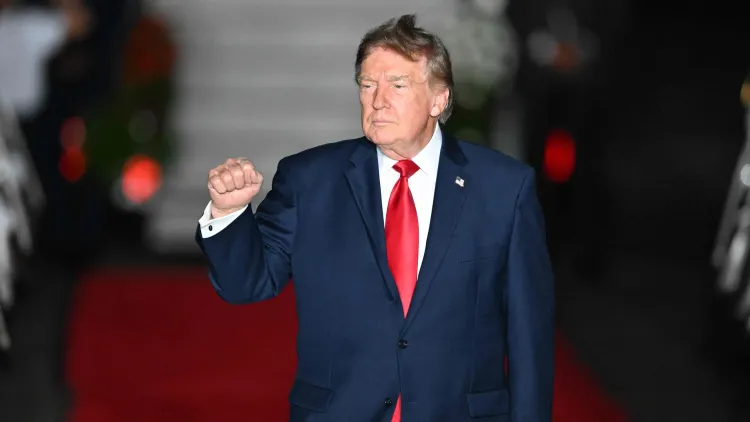
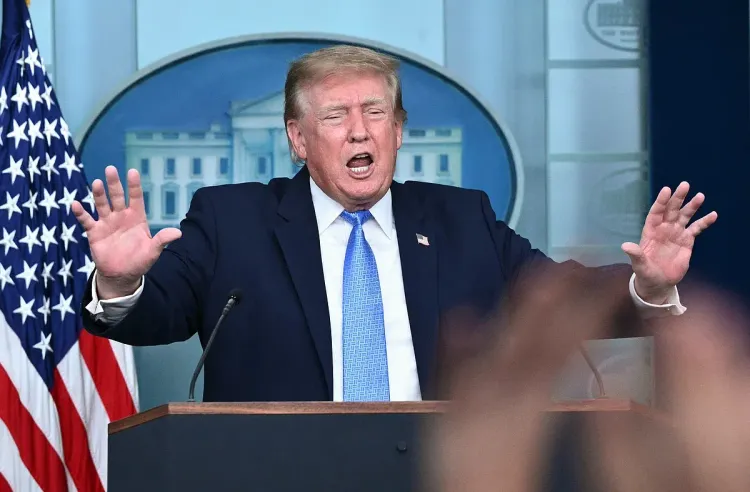
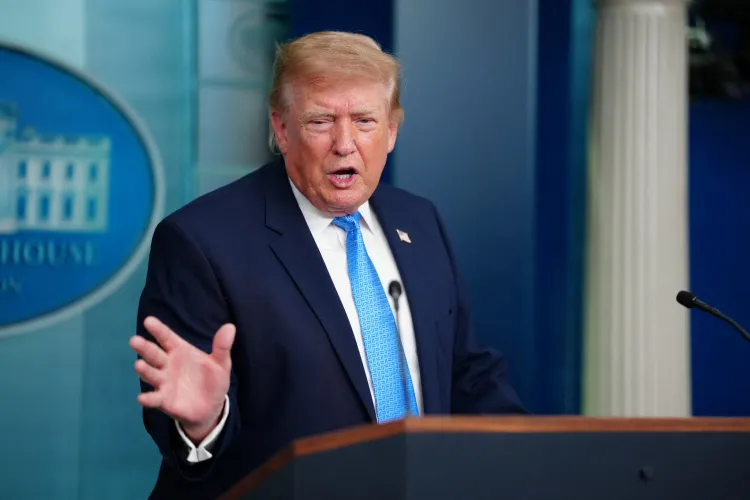
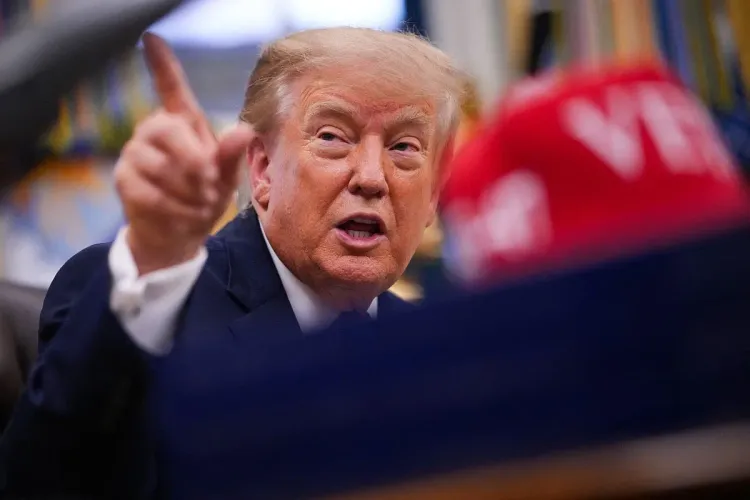
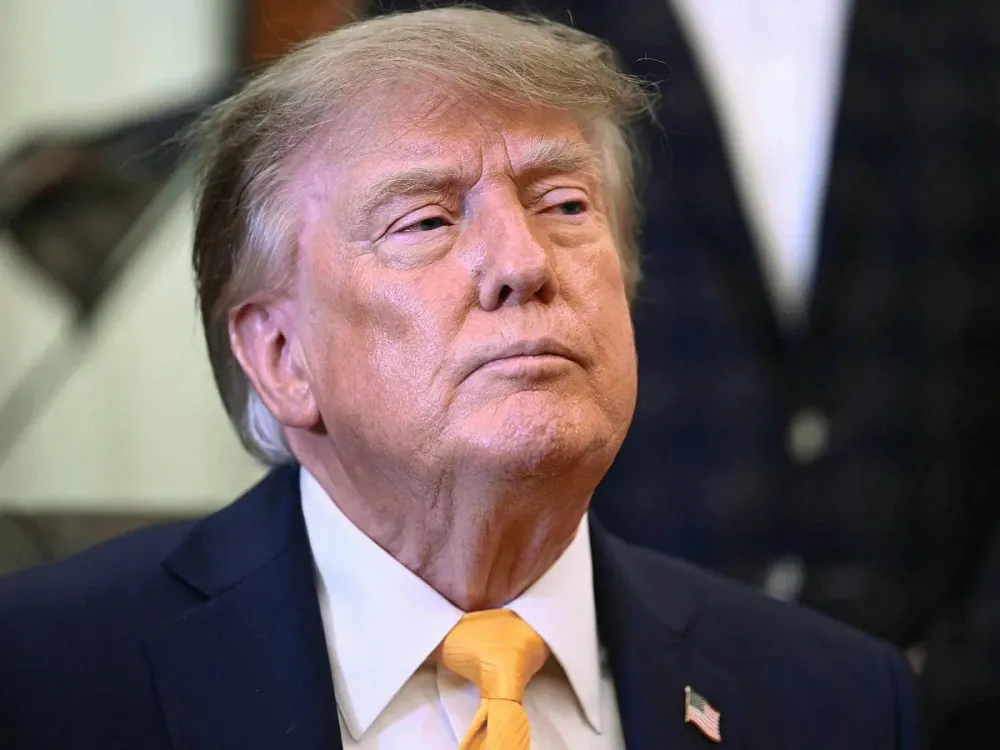
Trump said in a Fox interview that Washington remained in contact with Iranian representatives and claimed Tehran wanted an agreement. He insisted that a settlement must prevent Iran from rebuilding its military and nuclear capabilities, but offered no proposed text, negotiating timetable or mechanism to bind a future US administration.
"I want a deal that can be lasting. If we have a bad President, a weak President, I want a deal that will supersede the President," Trump said in an excerpt circulated by the White House-affiliated Rapid Response 47 account. He also said: "I'm going to finish it off — soon. One way or the other, we'll finish it off."
Israeli news site Mako reported, citing two people familiar with the matter, that Trump was still weighing a joint US-Israeli attack on Iran. A senior US official told the outlet that all options remained available to prevent Iran from acquiring a nuclear weapon. Mako said no decision had been made and that the issue was expected to come up after Trump's Asia visit.
Trump also held a three-way meeting in Shenzhen with Chinese President Xi Jinping and Russian President Vladimir Putin. CNBC reported on November 19 that Trump said he and Xi both felt strongly that oil must be able to pass through Hormuz.
Iran and Oman advance a shipping proposal
Iran has reported progress on a Hormuz shipping arrangement, but it is not yet a permanent, fully operational agreement. The documented bilateral negotiations involve Iran and Oman, whose foreign ministers announced a phased framework on August 25.
That joint statement, published by Oman's Foreign Ministry, called for a temporary shared navigation corridor and joint mine clearance. It also provided for technical talks on a permanent route, information exchange, maritime traffic management, and cooperation on navigation and security services.
On November 15, Iranian parliamentary committee spokesman Hassan Ghashghavi said an expert review of a shipping plan was complete and that an agreement had been reached with two coastal states. The report did not identify those states or clearly establish a separate third-country participant. Xinhua, citing Tasnim, said the proposed lanes would be temporary at first, with permanence to follow. Ghashghavi said parliamentary leaders still had to consider the plan before a vote by the full parliament.
Parliament Speaker Mohammad Bagher Ghalibaf said on November 16 that Tehran and Muscat had reached a "mutual understanding" on a corridor and "traffic separation scheme." Foreign Ministry spokesman Esmaeil Baghaei separately confirmed agreement on proposed geographical coordinates. Formal approval and implementation by the responsible authorities in both countries were still required.
Iranian Foreign Minister Araghchi visited Muscat on November 17. Al Mayadeen English reported that he described constructive discussions on a new regional security framework and safe passage through the strait.
Kuwait and Bahrain report interceptions
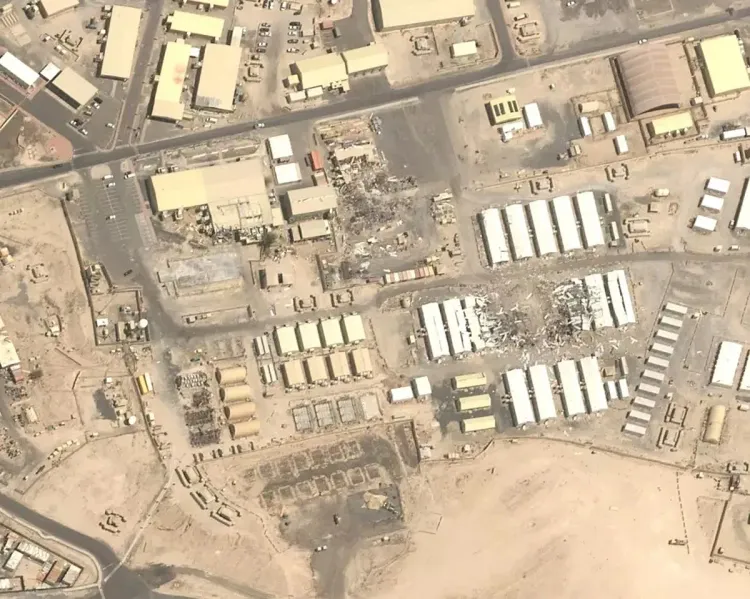
Wednesday's Iranian attacks targeted a US airbase in Kuwait and Bahrain, apparently in response to US military action the previous day. Iran's military said drones were aimed at Patriot air-defense systems and drone and missile launch platforms at Kuwait's Ali Al-Salem Air Base.
Kuwait's army reported intercepting drone attacks. Bahrain's military also announced interceptions of Iranian attacks, without specifying whether they involved drones or missiles. Neither country immediately reported casualties or damage.
A US military official described Tuesday's action on Qeshm Island as a "self-defense" strike using precision munitions against one Iranian missile launch site. AP reported that it followed an Iranian attack earlier Tuesday on a US radar installation in Bahrain.
The State Department renewed security alerts Wednesday for Americans in Saudi Arabia and Bahrain. The notices called for "heightened vigilance" amid attacks by Iran and the Houthis.
Iraq prepares deployment in militia stronghold
Iraqi state media reported that federal forces would begin deploying Friday in Jurf al-Nasr, the principal stronghold of Iran-backed Kataib Hezbollah. A government military spokesman said an official decree had established a command headquarters there as Prime Minister Ali al-Zaidi sought to rein in the faction.
The town lies south of Baghdad and was formerly called Jurf al-Sakhar. A senior Iraqi official told Al Jazeera Arabic that the group had until Friday to leave. An oil-smuggling crackdown there has already resulted in nine senior officials being dismissed and referred to the judiciary. Sources told Reuters that the operation, aided by some security and oil officials, had deprived the government of hundreds of millions of dollars since 2021.
Esmail Qaani, commander of Iran's IRGC Quds Force, traveled to Iraq to seek a resolution, an Iraqi official told Al Jazeera. He met al-Zaidi and members of the Shia Coordination Framework.
A Kataib Hezbollah commander told AFP the group would not leave, "not even over our dead bodies," while at least three Coordination Framework leaders opposed an armed confrontation or federal forces entering before a political understanding was reached.
Nuclear safeguards dispute and US funding debate
Iran challenged IAEA Director General Rafael Grossi over his rejection of accusations that the agency applies a double standard to Israel and Iran. Grossi had linked their different treatment to their respective status under the Nuclear Non-Proliferation Treaty.
Writing on X, Iranian Foreign Ministry spokesman Esmaeil Baghaei argued that formal legal status did not resolve questions of institutional responsibility and impartiality. He asked why Israel, which possesses a nuclear arsenal, remained outside comprehensive safeguards.
In Washington, Democratic Representatives Ro Khanna and Yassamin Ansari said Wednesday that they would withhold support from any government funding package that failed to prohibit spending on offensive operations in Iran. Their statement neither defined those operations nor identified exceptions. It also did not establish that Democratic leaders or the broader caucus had adopted their position.
The next funding deadline is December 11. House Democratic Leader Hakeem Jeffries said negotiators were considering either an agreement before that date or another temporary extension into next year.