Trump confirms Qeshm Island attacks as US-Iran talks continue
President Donald Trump has confirmed attacks on Iran's Qeshm Island while Washington and Tehran pursue an agreement through indirect talks. Iran has rejected the latest US response to its conditions for reopening the Strait of Hormuz as "unconvincing," but Qatar says both sides remain engaged in negotiations.
 Omar Al Nuaimi
Qeshm attacks and plans for further strikes
Qeshm, the Persian Gulf's largest island, sits off Iran's southern coast near the Strait of Hormuz. CNBC had identified it as a potential US target, citing reports of underground tunnels containing anti-ship missiles, mines, drones and attack craft.
Separately, Al Jazeera cited US media reports, based on accounts from US officials, that Central Command had prepared a strike plan that could begin as early as November 4, 2026. Those reports placed the possible start after the midterm elections, when three US aircraft carriers would be in the region. Earlier reporting described the proposed campaign as short and intense.
Iran has also signaled the possibility of a wider response. Over the preceding weekend, Supreme Leader Mojtaba Khamenei instructed the military to act immediately against any threat, without geographic limits, and revise its target list. Iranian officials have raised European countries and undersea cables in the Gulf as possible targets.
The conditions for reopening Hormuz
The indirect negotiations include an Iranian offer to reopen the Strait of Hormuz over two days, provided Washington meets seven demands. Among them are the removal of sanctions and an end to the US naval blockade, according to Al Jazeera.
On November 4, Iran described Washington's reply as "unconvincing." Mohsen Rezaei, secretary of Iran's Supreme National Security Council, wrote on X that "America's response to Iran's rights and demands was not convincing." He said reopening the strait required all seven conditions to be addressed fully and explicitly.
Qatar is carrying proposals between the two governments. Foreign Ministry spokesperson Majed al-Ansari said on November 4 that both sides "remain committed to the negotiation process" and described Qatar's role as facilitating the "real-time exchange of proposals."
Two days earlier, Vice President JD Vance had expressed optimism about a possible agreement. "The president and I both feel really good about the prospect of potentially coming to a negotiated settlement," he told CNN. Vance also described Iranians as "unpredictable," said Trump still had "kinetic and non-kinetic" options and noted that Washington had set no deadline for a peace deal.
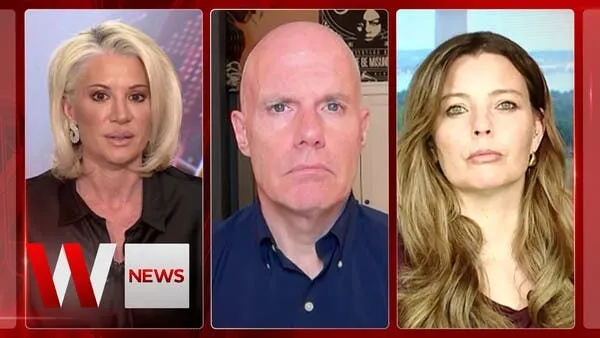
In Al Arabiya's W News Extra, hosted by Leigh-Ann Gerrans, correspondent Sara Firth reported from Washington on the mistrust complicating the negotiations. She also examined the economic pressure on Trump as Americans voted in the midterm elections. The program considered the strait's strategic role and whether diplomacy could avert a wider Middle East conflict.
Tankers attacked near the strait
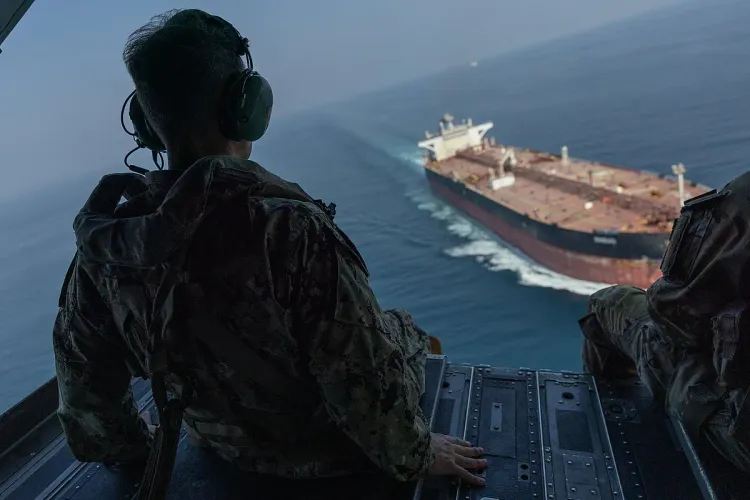
Reports of further attacks on commercial shipping emerged around November 3-4. Iran's Islamic Revolutionary Guard Corps claimed that naval mines had destroyed four oil tankers attempting to use a prohibited shipping lane south of the Strait of Hormuz. It also said it had detained two other vessels.
In a separate report, UK Maritime Trade Operations said two unidentified projectiles hit a tanker's engine room roughly 14 nautical miles (26 km) northeast of Limah, Oman. No casualties were reported. Whether that attack and the incidents described by the IRGC were connected could not be independently verified, according to Al Jazeera.
Nuclear warnings and a disputed claim
Trump has said the US destroyed all of Iran's potential nuclear power, while leaving open an attack on Pickaxe Mountain. The site contains an underground nuclear facility south of the Natanz enrichment plant. "We might have to go after Pickaxe, but that's not a big deal," he said, according to CNBC, asserting that the US could destroy it in one hour.
Iran's advice to civilians about surviving a nuclear strike was also discussed on W News Extra. Michael Jabri-Pickett, managing director of This Is Dubai, suggested the warnings could be intended to persuade international leaders to discourage additional US military action.
The advisory shown on Iranian state television was an eight-minute video that state news agency IRNA published on October 29 for Passive Defense Week, according to Zamon.uz. Emergency services in Isfahan province, where the Natanz nuclear facility is located, prepared it.
An unconfirmed allegation subsequently added to fears of a nuclear strike. On November 2, US journalist Tucker Carlson claimed on X that pressure from Israeli Prime Minister Benjamin Netanyahu could lead the Trump administration to launch such an attack within days. He identified the Pickaxe Mountain area as a possible target.
The White House and Israel's representative to the UN rejected Carlson's claims. Iranian officials did not attribute the civil defense guidance to any specific external threat.