Iran targets US airbase in Kuwait and launches repeated attacks on Bahrain
Kuwait and Bahrain reported intercepting attacks on Wednesday as Iran said it had sent drones against a US airbase in Kuwait. AP described the attacks as apparent retaliation for an American strike on an Iranian missile site a day earlier.
 Omar Al Nuaimi
Kuwait and Bahrain report interceptions
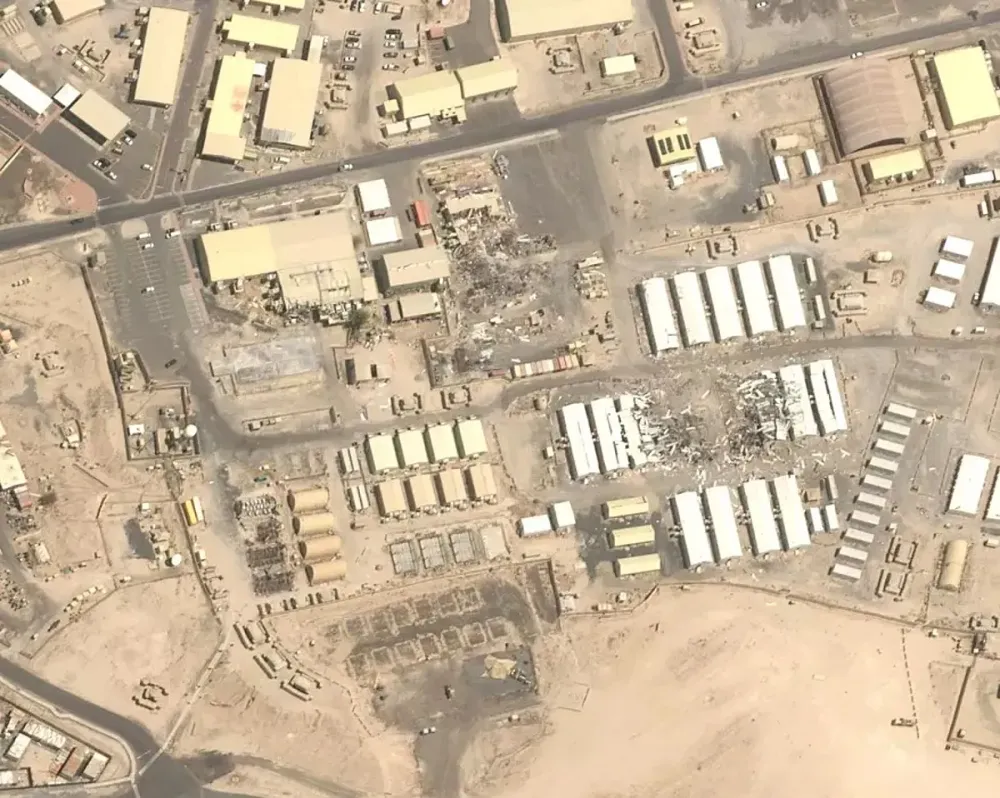
Iran's army identified Patriot air defense systems and launch platforms for drones and missiles at Kuwait's Ali Al-Salem Air Base as its targets. It described the base as a military gateway into West Asia and a key "hub."
Kuwait's military reported intercepting drones, while Bahrain said it had intercepted several Iranian attacks without specifying whether they involved drones or missiles. Neither government immediately announced casualties or damage. Iran's own account specifically identified drones in the Kuwait operation.
The exchanges came after roughly two months of relative quiet between Iran and the US, although Iranian attacks had increased over the preceding week. Tehran has cited American drone surveillance and a strike on Iranian communications towers as reasons for its operations.
Crisis Group analyst Hamidreza Azizi highlighted the geographic expansion of the latest attacks from bases in Bahrain to Kuwait. The American strike that preceded Wednesday's attacks resembled other recent operations around the Strait of Hormuz that US officials have described as defensive.
The exchange that preceded Wednesday's attacks
On Tuesday, Nov. 17, the Islamic Revolutionary Guard Corps said it had attacked a US radar installation at Bahrain's Isa Air Base with drones, alleging that American military drones had violated Iranian airspace. US Central Command denied that the radar had been hit: It said the incoming one-way attack drones were intercepted and that no American personnel were injured or US equipment damaged.
Bahrain's Defence Force also said its air defenses destroyed several incoming aerial attacks before they could reach their targets. The kingdom, home to the US Navy's Fifth Fleet, had already faced an attack on an American early-warning radar facility on Friday and a reported attack on a radar system at a US helicopter base on Sunday. Those incidents appeared to have caused little or no damage.
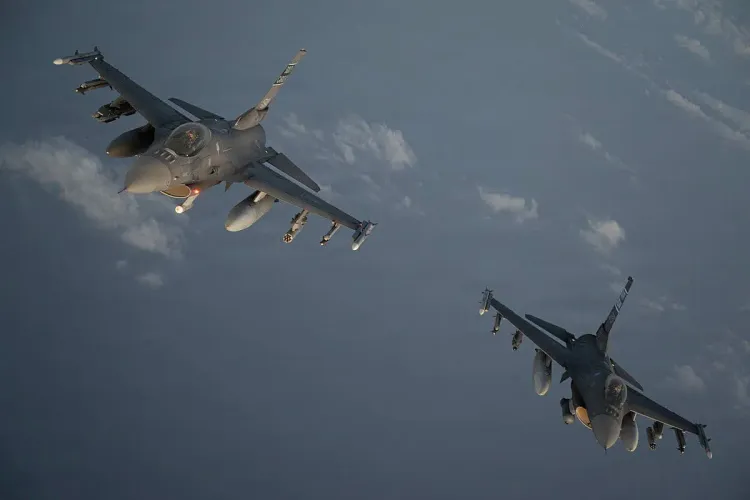
Late Tuesday, American fighter jets used precision munitions against an IRGC missile launch site on Iran's Qeshm Island. A US military official characterized the operation as self-defense and said it answered "IRGC aggression targeting US personnel and assets."
Iranian media placed the targeted air defense missile launcher in Qeshm's Nariman area. Damage to military facilities remained unclear, but provincial official Ahmad Nafisi said residential and commercial areas and vital infrastructure were unharmed.
Separately, Iran's army claimed it had downed a LUCAS drone over the Strait of Hormuz. The US had not commented on that claim.
Diplomatic efforts continue amid a larger US deployment
Secretary of State Marco Rubio denounced the attacks during a call with Bahraini Foreign Minister Abdullatif bin Rashid Al Zayani and reiterated American support for Bahrain's security. Saudi Arabia urged an immediate end to Iranian attacks and a chance for diplomacy. Qatar condemned the continuing attacks as a serious escalation that undercut efforts to reduce tensions.
Iranian spokesman Hossein Mohebbi, meanwhile, accused Bahrain's government of helping carry out attacks against Iran.
Qatar said it planned to meet Iranian officials to discuss proposals aimed at narrowing Tehran's differences with Washington. Iranian Foreign Minister Abbas Araghchi had also visited Pakistan and Oman for discussions on maritime security and the restoration of international shipping. Whether the latest fighting would disrupt those efforts remained unclear.
The US military confirmed that the USS Theodore Roosevelt carrier strike group had reached the Middle East. Its arrival brought the regional total to three American carrier strike groups, joining those led by the USS George H.W. Bush and USS George Washington.
Shipping disruptions and earlier damage
Attacks at sea continued alongside the military exchanges. The UK Maritime Trade Operations agency reported that a vessel about seven nautical miles north of Khasab, Oman, had been hit for a second time and caught fire. Its crew were unaccounted for, and the extent of the damage was unknown.
Iranian ports in the Strait of Hormuz have been under a US blockade since summer. A separate blockade imposed by Yemen's Iran-backed Houthis has affected Saudi Arabia's Red Sea ports since July 20, according to the BBC.
An earlier diplomatic agreement also failed to hold. Britannica says mediators announced a memorandum of understanding on June 14 intended to formally end the war within 60 days of its signing. By July, it was virtually defunct after Iran attacked three commercial vessels that had bypassed its preapproved route.
The war began on February 28 with US-Israeli strikes that killed Iran's supreme leader, Ayatollah Ali Khamenei. His son Mojtaba Khamenei succeeded him, according to the BBC, which reports that the younger Khamenei was wounded in those strikes and has not appeared publicly since.
An AP analysis found that, through August, more than 115 strikes by Iran or Iran-backed forces had damaged or destroyed structures across 26 military bases and other locations hosting US forces. Satellite imagery showed that Ali Al-Salem Air Base alone had been struck at least 30 times.
The disruption has also affected energy markets. According to Wikipedia's account of the crisis, Brent crude exceeded $100 a barrel on March 8 for the first time in four years and later reached a peak of $126. A UK House of Commons Library briefing cites the UAE's state-owned oil company as estimating that full oil flows through Hormuz will not return until 2027, even if an agreement is reached quickly.