Trump says new US strikes on Iran are "quite unlikely" after Qatar talks
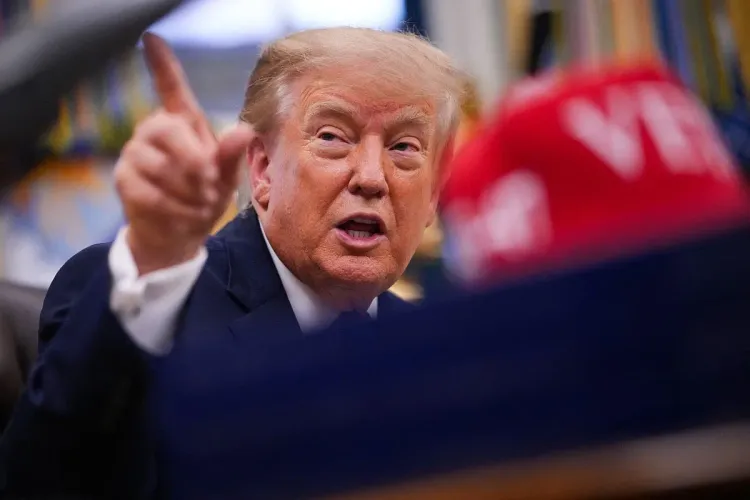
President Donald Trump played down the prospect of renewed US military action against Iran on November 9, saying it was "quite unlikely" for now after talks with Qatar's prime minister. He nevertheless warned that American forces remained ready to act if developments in the Middle East changed.
 Omar Al Nuaimi
White House talks and a conditional warning
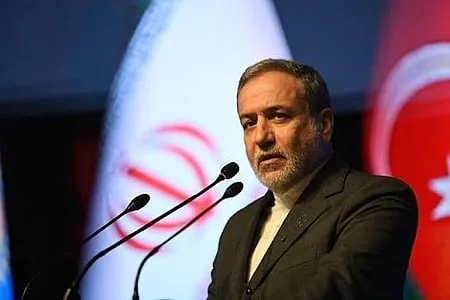
Qatar's prime minister and foreign minister, Sheikh Mohammed bin Abdulrahman Al Thani, met Trump behind closed doors at the White House for 45 minutes on Monday. The Qatari leader had held separate talks with Vice President JD Vance beforehand and visited Tehran the previous week.
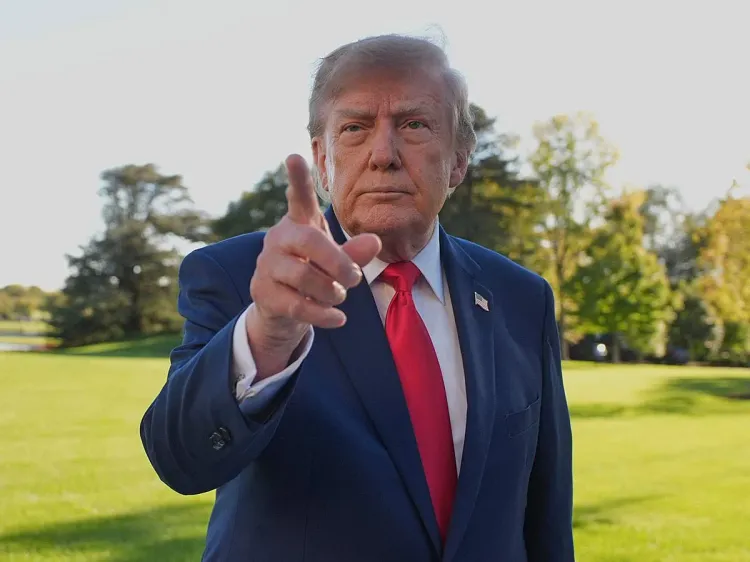
After the meeting, Trump wrote on Truth Social that Qatar, Saudi Arabia, the UAE, Bahrain, Kuwait and other countries supported keeping the US naval blockade of Iran in place. "Should there be any change with respect to developments in the Middle East, the United States of America is 'locked and loaded' and ready to go," he wrote. "At this point, however, that seems to be quite unlikely."
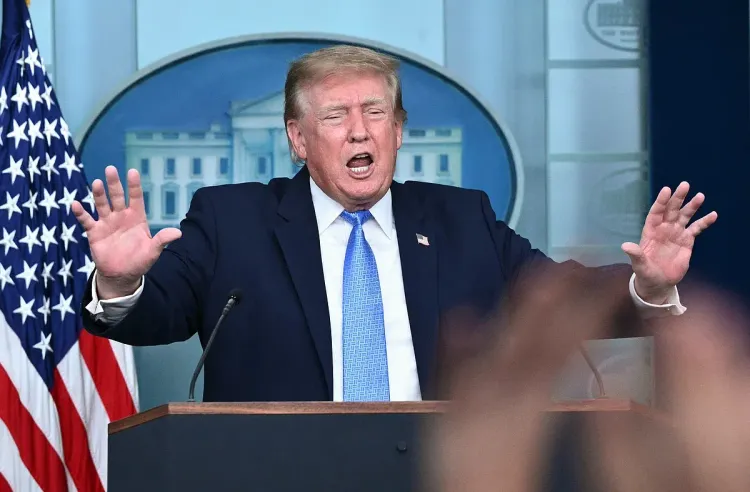
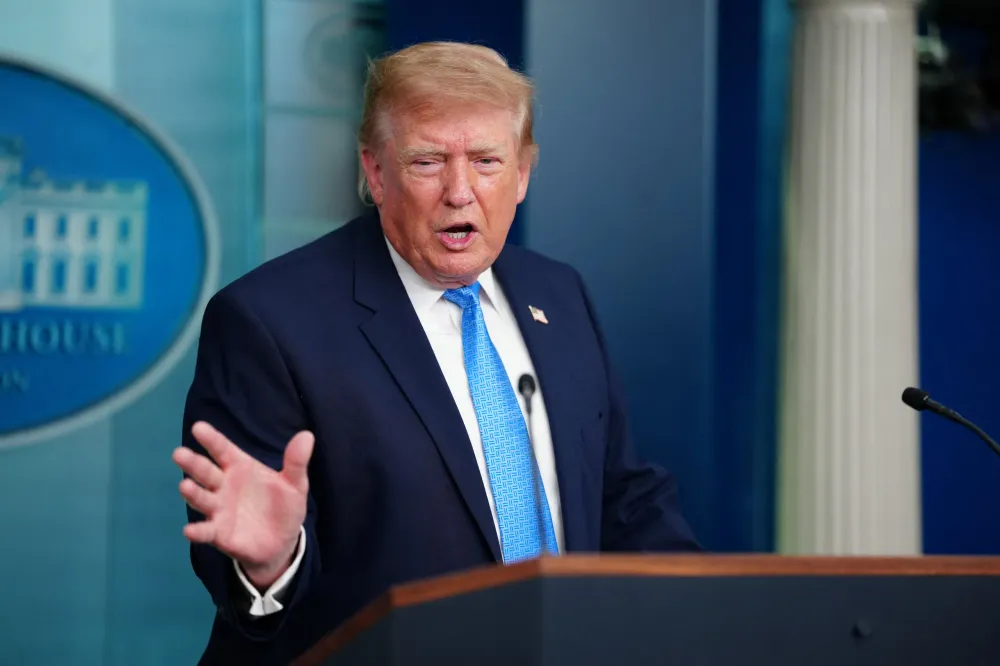
Trump, who has spent weeks seeking an end to the nine-month conflict, sounded hopeful later Monday during an unusual appearance in the White House briefing room. He said there was "a good chance" the war could end, while stopping short of a promise: "We'll see what happens. I don't guarantee anything, but if we do have to go back in, we are locked and loaded and ready to go."
He described "positive momentum" toward ending the conflict and said the US would protect its interests. According to Trump, the countries he had named also agreed that Iran must never acquire a nuclear weapon, a position he called "non-negotiable."
Trump also said three US aircraft carriers were stationed in the region, "fully locked and loaded." He said Washington had selected Iranian infrastructure targets, including 38 bridges, for strikes if military action resumed.
Iran's terms and an uncertain diplomatic opening
Iran's proposal links reopening the Strait of Hormuz to a halt in US bombing, sanctions relief and an end to the American blockade of Iranian ports. Nuclear negotiations would come afterward. Secretary of State Marco Rubio offered a less optimistic assessment on November 8, saying a breakthrough was not imminent and calling Tehran's conditions "outrageous and ridiculous and really not realistic."
Tehran's ceasefire demands include reversing sanctions imposed after the collapse of a memorandum of understanding signed in Islamabad, Pakistan, in June 2026. It also seeks a smaller US military presence in the region, restoration of the oil waivers granted under that agreement and the release of frozen Iranian money, including funds held in Qatar. Another demand is formal recognition of the new Hormuz shipping route worked out by Iran and Oman.
On the nuclear issue, the International Atomic Energy Agency says Iran holds 440.9 kg (972 pounds) of uranium enriched to as much as 60 percent purity. That is a short technical step from the 90 percent enrichment level used for weapons.
Whether direct talks would take place in Doha remained disputed. Ibrahim Kalin, the head of Turkey's National Intelligence Organization, said on November 9 that Qatar would host Vance and Mohsen Rezaei, secretary of Iran's Supreme National Security Council, the following week. Tasnim, an Iranian news agency affiliated with the Islamic Revolutionary Guard Corps, subsequently quoted an unnamed senior security official denying that such a meeting was planned.
Blockade and shipping disruption
Alongside the naval blockade, US Central Command has established Task Force Iron Gate to target flows of advanced weapons, dual-use technology, sanctioned materials and illicit revenue across Iran's land borders and through the Caspian Sea. Trump said on November 8 that the task force was at full strength and claimed the blockade had sharply curtailed goods moving into and out of Iran.
The war began on February 28, 2026. Before then, roughly 20 percent of global oil and liquefied natural gas shipments traveled through the Strait of Hormuz. Tehran has since effectively choked off traffic, while attacks on ships continue to interrupt crude oil flows through the Arabian Gulf channel.
Iran's Islamic Revolutionary Guard Corps said on November 8 that three oil tankers had exploded and caught fire in the strait. It said the vessels had breached Iranian regulations and taken what it described as unauthorized shipping routes.
The disruption has pushed global fuel prices higher and helped raise the cost of everyday goods in the US and other countries.
Oil prices fall after a difficult election for Republicans
Oil markets moved lower on November 9 as traders priced in the possibility of a diplomatic breakthrough. Brent fell 5.64 percent to $92.77 a barrel, while West Texas Intermediate was down 4.36 percent at $86.87. Equiti Group's head of market insights said sustained de-escalation could put further downward pressure on Brent toward the $90–$95 range.
The diplomatic efforts followed a heavy Republican defeat in the US midterm elections, in which voters cited the economy as a major concern. Trump dismissed the outcome as "ridiculous."
"It's not even a result. It's almost hard to believe," he said. "Now I wasn't on the ballot. I shouldn't take anything personally, but I will tell you, I thought it was ridiculous."