Tucker Carlson claims Trump acknowledged Iran war could weaken Gulf allies and benefit Israel
Conservative commentator says he warned president in Oval Office that conflict would destabilize GCC states and reduce US influence in the region, claims Trump agreed with assessment.
 Sara Khan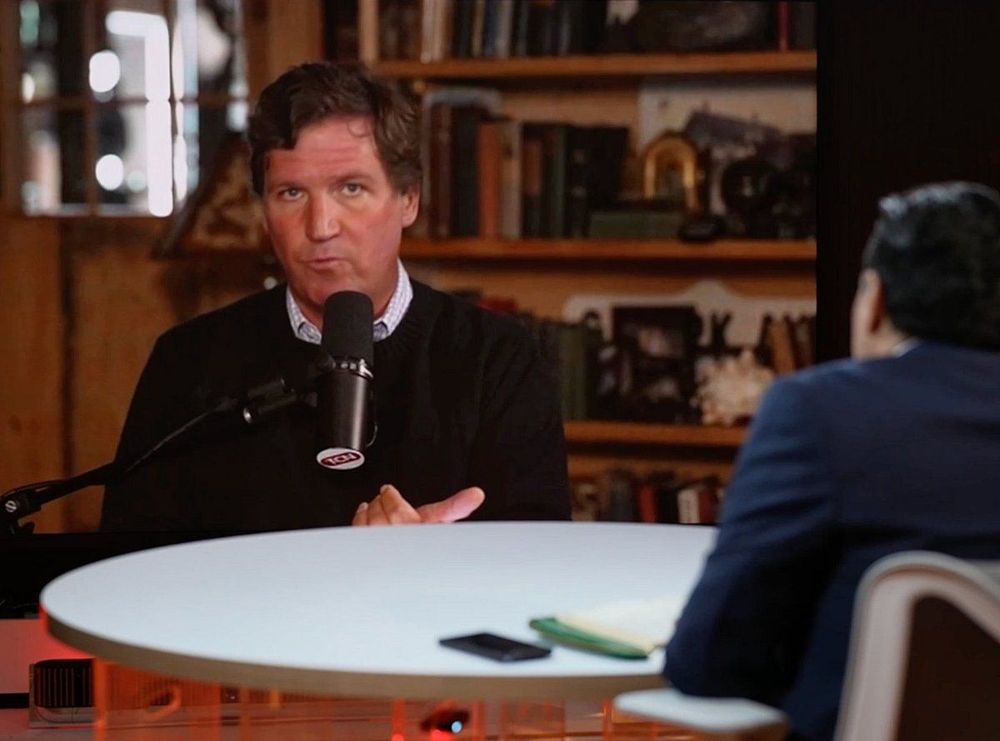
'We're on the brink of a World War that ends with the use of nuclear weapons': Tucker Carlson says Trump agreed with his warning over Gulf, Israel and Iran
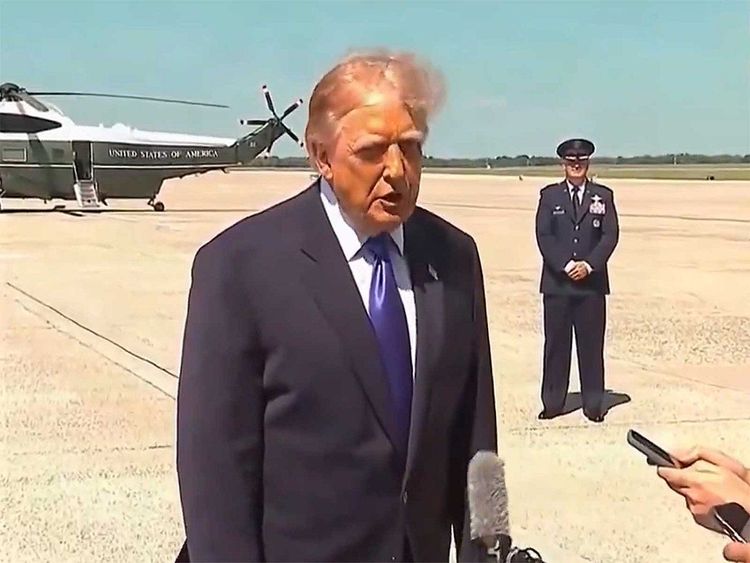
Conservative commentator Tucker Carlson has claimed that President Donald Trump acknowledged his warning that the ongoing conflict with Iran could strategically weaken America's Gulf allies while serving Israeli interests, according to statements made in a recent interview with Going Underground.
Carlson, 57, said he presented this analysis directly to Trump during an Oval Office meeting around Feb. 20, 2026, approximately one week before the US-Israeli military campaign against Iran commenced. The former Fox News host said he had just returned from visiting Gulf Cooperation Council states when he raised concerns about the broader regional consequences of potential military action.
The GCC, established in May 1981, comprises six member states: Bahrain, Kuwait, Oman, Qatar, Saudi Arabia, and the United Arab Emirates. The alliance represents major economic, financial, aviation and tourism hubs that have developed increasingly close ties with Washington.
Carlson told Going Underground that he argued weakening Iran as a regional power, destabilizing the GCC and reducing the US military footprint in the Gulf could ultimately advance Israel's strategic position. He claimed Trump agreed with this assessment, stating the president responded affirmatively when presented with the analysis.
The claim marks a dramatic shift in Carlson's relationship with Trump. After departing Fox News on April 24, 2023, less than a week after the network agreed to pay $787.5 million to settle a defamation lawsuit with Dominion Voting Systems, Carlson became an increasingly influential independent conservative voice. By 2024, he had emerged as one of Trump's most prominent media supporters, endorsing him at the Republican National Convention and appearing at campaign events.
However, the relationship deteriorated sharply over Iran policy in 2025 and early 2026. Carlson became one of the most vocal critics on the American right opposing military action, arguing it violated the America First principles that helped return Trump to office. By April 2026, Carlson publicly expressed regret for having supported Trump in 2024 and declared himself out of the Republican Party.
Strategic analysis and regional power dynamics
In the Going Underground interview recorded in the Gulf, Carlson framed his argument within a broader theory of how nuclear-armed powers seek to dominate their surrounding strategic environments. He compared Israel's regional position to Russia's influence over neighboring states, China's claims involving Taiwan and the South China Sea, and US Monroe Doctrine policies.
Carlson specifically pointed to the UAE, Saudi Arabia and Qatar as having developed into major regional powers that Israel might view as competitors for influence. He said Trump personally likes the leaders of these countries, making the president's decision to pursue a policy that could damage them difficult to understand.
The commentator offered no documentary evidence for his claims about Israeli strategic objectives, and his analysis represents his own interpretation rather than established findings of US or Israeli policy. Nevertheless, the remarks illustrate deepening divisions within Trump's political movement over the purpose and consequences of the Iran campaign.
Economic stakes and energy security concerns
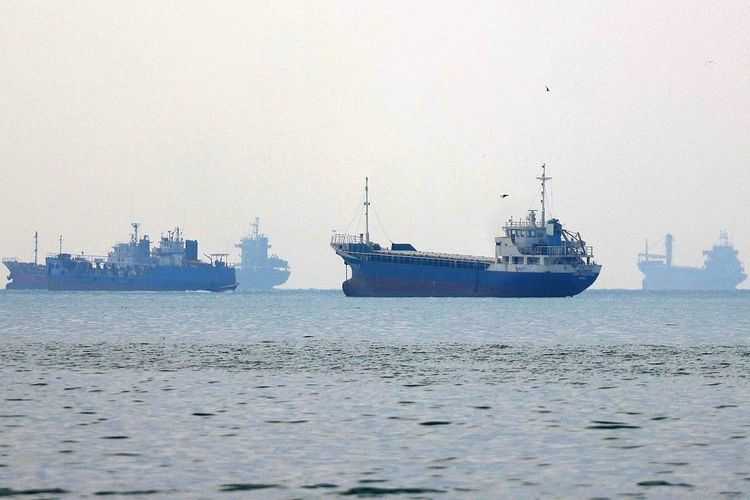
The conflict has generated sustained anxiety in global energy markets, particularly concerning the Strait of Hormuz. In 2025, nearly 15 million barrels per day of crude oil passed through the strait, representing nearly 34 percent of global crude oil trade, with most exports destined for Asia. The narrow passage, only 39 kilometers wide at its narrowest point, handles approximately 20 million barrels of oil daily, roughly 20 percent of global petroleum liquids consumption.
The strait also carries approximately 20 percent of global liquefied natural gas trade, with about 93 percent of Qatar's and 96 percent of the UAE's LNG exports transiting through the passage. Saudi Arabia, the UAE, Kuwait, Qatar, Iraq, Bahrain and Iran all export oil through the Strait of Hormuz. While Saudi Arabia and the UAE have some pipeline capacity to bypass the strait, estimated at 3.5 to 5.5 million barrels per day, other countries including Iran, Iraq, Kuwait, Qatar and Bahrain rely on it for the vast majority of their oil exports.
Attacks on shipping and threats to alternative oil routes have kept global crude prices above $107 per barrel as of Monday afternoon, Sept. 14, reflecting ongoing market concerns about supply disruptions.
Geopolitical context and shifting alliances
Carlson's Going Underground interview examined broader forces reshaping global power structures, including the Ukraine conflict, China's rise, and the expanding influence of BRICS. The economic alliance expanded significantly in 2024 and 2025, now comprising 10 full member states: Brazil, Russia, India, China, South Africa, Egypt, Ethiopia, Iran, the United Arab Emirates, and Indonesia. The bloc has also established a partner country framework with 10 additional nations.
The commentator raised questions about whether US military pressure on Iran can achieve Washington's objectives or instead deepen regional instability and draw Gulf states into a conflict beyond their control. He described himself as tormented by the question of why Trump would pursue a policy potentially damaging countries with which the president has cultivated close personal and diplomatic relationships.
Carlson's break with Trump reflects a fundamental dispute within the populist movement over what America First foreign policy means in practice, who benefits from US power projection in the Middle East, and whether Trump has departed from the anti-interventionist philosophy that helped propel him back to the White House. The split is particularly significant because Carlson was not simply another conservative critic but one of the most influential voices in the populist media ecosystem that shaped the modern MAGA movement.
The debate has become especially acute as the Iran campaign, launched alongside Israel in early 2026, has evolved into what some conservatives view as a prolonged conflict resembling the post-9/11 wars Trump had campaigned against, generating economic and political costs including higher fuel prices and growing domestic opposition.