UAE-Germany economic partnership deepens through investment and industrial cooperation
As President Sheikh Mohamed bin Zayed Al Nahyan begins a state visit to Germany, bilateral relations are shifting from traditional trade to strategic industrial partnerships, with major investments and innovative collaborations reshaping the economic landscape between both nations.
 Sara Khan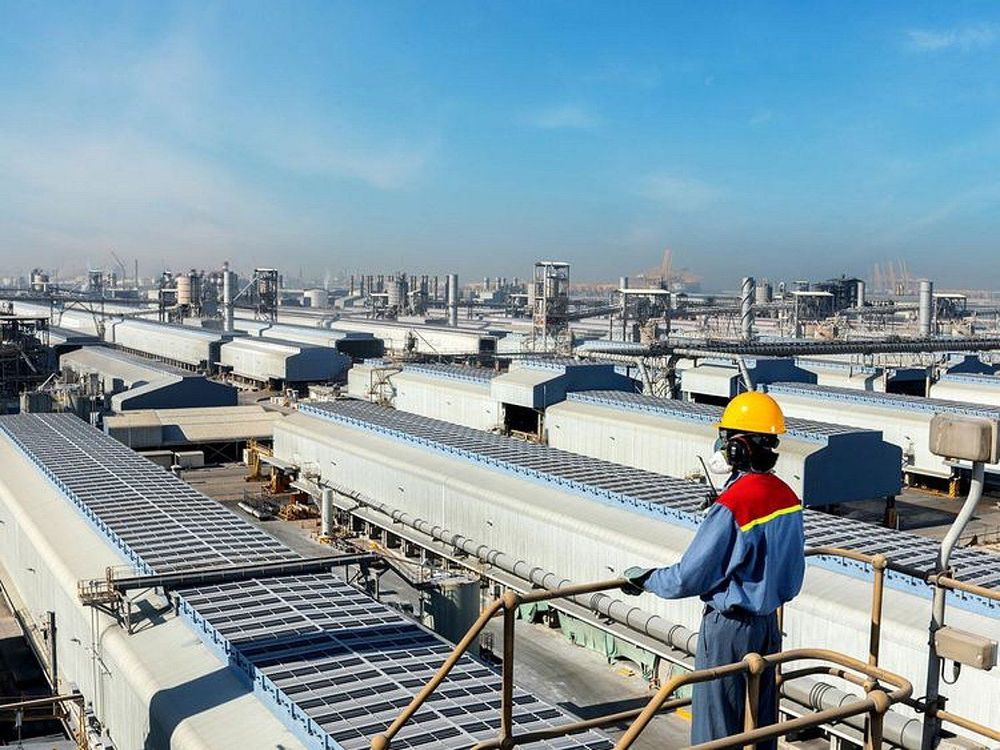
Trade growth and structural shifts
When BMW's Landshut foundry in Bavaria began casting engine parts and electric vehicle components using aluminium from Emirates Global Aluminium in 2021, it marked a turning point in UAE-Germany economic relations. The deal involved 43,000 tonnes of solar-produced aluminium annually, representing nearly half the foundry's requirements at the time and making EGA the first company globally to produce aluminium commercially using solar power.
This arrangement exemplifies how the relationship between the two countries has evolved beyond conventional trade into strategic industrial partnerships built on technical innovation and sustainability.
President Sheikh Mohamed bin Zayed Al Nahyan's state visit to Germany on September 9 builds on diplomatic relations formally established on May 17, 1972, just six months after the UAE's unification. A strategic partnership created in 2004 was revitalized during German Chancellor Olaf Scholz's visit to the UAE in September 2022, with further cooperation steps agreed in 2019 and 2022.
Trade growth and structural shifts
Non-oil trade between the countries increased by more than 14 per cent from $13.59 billion in 2024 to $15.51 billion in 2025. However, the trajectory shows deeper structural change: German imports from the UAE surged by 150 per cent in 2023, contributing to bilateral trade volumes exceeding 14 billion euros that year and establishing the UAE as Germany's most important business partner in the Arabian Gulf region.
The BMW-EGA collaboration demonstrates this evolution. By 2023, the product combined solar aluminium with recycled metal sourced in the UAE. When the agreement was extended in November 2024, both companies aimed to raise the recycled share further while maintaining BMW's exacting technical specifications.
EGA chief executive Abdulnasser Bin Kalban noted that meeting BMW's demand for the highest quality metal produced with solar power continues to drive innovation at the Emirati smelter. This approach builds competitive positioning based on technical quality alongside price, converting the UAE's clean energy advantage into industrial value.
Major investments reshape industrial landscape
Investment flows reveal another dimension of the relationship. Between 2020 and 2024, German investment into the UAE totalled $8.96 billion, against $744 million flowing the other way. This pattern shifted dramatically with XRG's acquisition of a 95.1 per cent stake in Covestro on December 10, 2025, at an enterprise value of approximately €14.7 billion. The Leverkusen-based manufacturer of high-quality polymer materials for automotive, construction and electronics industries also received €1.17 billion in fresh capital.
For Germany, facing the shutdown of its last nuclear reactor in 2023 and a coal phase-out as part of its energy transition toward climate neutrality by 2045, this represents long-term capital supporting industrial modernization. For the UAE, it provides access to advanced materials where value depends on chemistry and engineering expertise as well as production scale.
The acquisition has already generated practical cooperation opportunities. In February, Covestro, Fertiglobe and Abu Dhabi chemicals venture TA'ZIZ agreed to explore ammonia supply chains and wider industrial opportunities, addressing a key raw material need for Covestro's operations.
Energy partnerships address strategic needs
Energy cooperation has developed through formal structures, including the Emirati-German Energy Partnership established in 2017, expanded into the Energy and Climate Partnership in 2022, with a Hydrogen Task Force initiated in 2021. Germany aims to produce at least 80 per cent of electricity from renewable sources by 2030, making reliable backup capacity and diversified supply essential.
In February, ADNOC and RWE agreed to explore liquefied natural gas supply to Germany and other European markets. Masdar and RWE also agreed to explore investment in German battery-storage projects, which help maintain power reliability when renewable output varies.
Broader strategic context
Germany's search for diversified partnerships gained urgency during Chancellor Friedrich Merz's three-day Gulf tour beginning February 4, 2026, which included Saudi Arabia, Qatar and the UAE. The visit, aimed at reducing Germany's dependence on the United States and China, brought strategic weight to commercial ties. During the tour, Merz emphasized:
We need such partnerships more than ever at a time when politics is increasingly being determined by major powers.
Around 1,200 to 2,000 German companies operate from the UAE, many using it as regional headquarters for Middle East, Africa and Asia markets. The opportunity lies in deepening their local operations through engineering teams, production-linked training and supplier relationships with Emirati firms.
Partnerships involving specialized small and mid-sized companies can spread these benefits further, creating opportunities for skilled employment and local suppliers while making the relationship less dependent on a few large transactions.
Path forward
The presidential visit offers an opportunity to strengthen connections through joint research in advanced materials, industrial artificial intelligence tested on production lines and training aligned with specific project needs. Each initiative requires viable customers and business models before generating growth.
Germany seeks to modernize its industrial base while the UAE develops specialized capabilities and new growth sources. Their interests converge in factories, laboratories and businesses capable of delivering both objectives. The aluminium reaching Bavaria's foundries and the Covestro investment show what demanding customers and long-term capital can achieve. The next gains lie in what both countries learn to build together.