Why anticipating unexpected threats remains the defining security challenge 25 years after 9/11
A quarter-century after the September 11 attacks, the lesson that matters most is not about preventing terrorism—it's about governments maintaining the intellectual agility to recognize emerging risks before they become crises.
 Sara Khan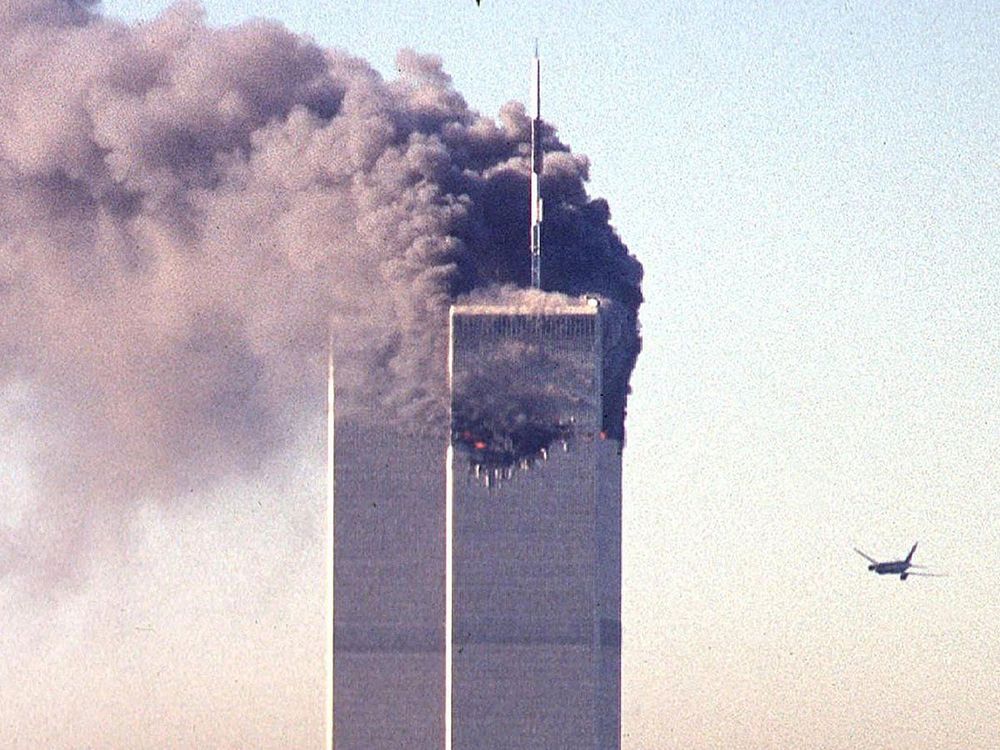
Why anticipating unexpected threats remains the defining security challenge 25 years after 9/11
Twenty-five years after September 11, 2001, when nearly 3,000 people were killed by 19 al-Qaeda operatives who hijacked commercial aircraft using boxcutters and knives, the global security landscape has transformed dramatically. Al-Qaeda's operational center has shifted from Afghanistan and Pakistan to Africa, where it now operates through a franchise model of regional affiliates rather than as a centralized command structure. Meanwhile, strategic attention has pivoted toward great-power competition, cyber warfare, artificial intelligence and disinformation campaigns.
Yet one lesson from that catastrophic day has aged remarkably well. National security ultimately depends on a state's ability to anticipate change before it becomes a crisis. That may sound obvious. In practice, however, it remains extraordinarily difficult.
Understanding what went wrong
Much discussion surrounding September 11 has focused on intelligence failures. But this description is only partially accurate. The United States possessed considerable intelligence about al-Qaeda before September 2001, including multiple warnings that Osama bin Laden intended to strike American interests. The problem was not an absence of information—it was an inability to convert scattered information into strategic understanding.
The 9/11 Commission identified four types of failures that led to the attacks: failures of imagination, policy, capabilities, and management. The Commission described the failure of imagination as the most important. Two decades later, that phrase deserves renewed attention, not because governments lack imagination, but because institutions often become prisoners of their own success.
Security organizations are designed to create order, standardize procedures and reduce uncertainty. Those are essential qualities. Yet the very processes that make institutions effective can also make them intellectually cautious. Threat assessments increasingly reflect established assumptions, while success breeds confidence that future threats will resemble past ones.
History repeatedly shows the opposite. Strategic surprise rarely occurs because information is unavailable. More often, it occurs because decision-makers struggle to imagine familiar capabilities being employed in unfamiliar ways. Between 1968 and 1972, there were more than 130 attempted hijackings in the United States. Passenger hijackings and suicide terrorism were well understood before 2001. Few imagined that commercial airliners themselves would become strategic weapons.
A transformed security environment
Today's security environment is defined less by entirely new threats than by novel combinations of existing ones. Artificial intelligence amplifies disinformation. Cyber operations accompany conventional military campaigns. Commercial drones provide capabilities once reserved for advanced militaries. Satellite networks, undersea cables, financial systems and global logistics have all become strategic infrastructure vulnerable to disruption.
Recent intelligence assessments underscore this evolution. In September 2025, the U.S. National Counterterrorism Center released its first unclassified threat assessment on al-Qaeda since the U.S. withdrawal from Afghanistan in 2021, warning that the organization has renewed its calls for attacks against the United States and the West. The U.S. Intelligence Community has also assessed that while the Islamic State has superseded al-Qaeda as the dominant global jihadist actor, al-Qaeda still intends to target the United States and its citizens through global affiliates.
The 2026 conflict between Israel and Iran demonstrated precisely this evolution. Beyond missile exchanges, the confrontation involved extensive cyber operations, including a 700 percent increase in cyberattacks targeting Israel following Israeli military strikes. Coordinated U.S.-Israeli operations reportedly disrupted Iranian command, control, and sensor networks ahead of airstrikes. The conflict underscored how modern warfare extends into cyberspace, critical infrastructure and global commerce, with Gulf states managing the broader economic and security consequences despite not being direct belligerents.
The Gulf's strategic position
For the GCC, this is perhaps the most enduring relevance of September 11. Over the past quarter century, Gulf states have significantly strengthened their capabilities. Post-9/11 aviation security improvements globally included the creation of the Transportation Security Administration, reinforced cockpit doors, restrictions on carry-on items, deployment of federal air marshals, enhanced baggage screening, and improved international intelligence cooperation through systems like the National Counterterrorism Center and Terrorist Identities Datamart Environment.
Saudi Arabia has deployed comprehensive and well-resourced counterterrorism strategies including security measures, threat detection, counter-financing efforts, and counter-radicalization programs. A former U.S. ambassador to Saudi Arabia described U.S.-Saudi counterterrorism cooperation as among the most productive in the world. Saudi Arabia and the UAE are now internationally respected partners in these fields.
But today's strategic challenge is no longer simply preventing another terrorist attack. It is ensuring that governments remain intellectually agile enough to recognize emerging forms of risk before they become strategic surprises.
Cultivating strategic foresight
This requires what might be called strategic curiosity—continually questioning prevailing assumptions, searching for weak signals of change and rewarding thoughtful dissent before events force governments to do so. Often, the most dangerous threat is the one that does not yet fit existing analytical frameworks.
Closely related is the need for strategic foresight. Unlike traditional forecasting, strategic foresight explores multiple plausible futures and asks not only what is likely, but also what could happen and how resilient institutions would be if it did.
Governments have long conducted military exercises. Increasingly, they should also conduct strategic exercises that simulate cascading crises: cyberattacks coinciding with regional conflict, disruptions to global shipping alongside energy market volatility, artificial intelligence-enabled disinformation during diplomatic crises, or simultaneous attacks on digital and physical infrastructure. Such exercises are valuable not because they predict the future, but because they expose hidden vulnerabilities before adversaries do.
From data to insight
The quality of intelligence itself also matters. Modern governments are inundated with information from satellites, open-source intelligence, artificial intelligence and social media. The challenge is no longer collecting information. It is distinguishing meaningful signals from overwhelming noise.
Effective intelligence therefore depends less on technological sophistication than on analytical discipline. Data must be evaluated, corroborated and placed within a broader strategic context. Analysts must distinguish between isolated incidents and emerging patterns. Equally important, intelligence must be communicated in ways that help policymakers understand uncertainty rather than obscure it behind excessive confidence.
Advances in intelligence studies offer important opportunities. Structured analytical techniques such as red teaming, horizon scanning and alternative futures analysis have become increasingly sophisticated over the past two decades. These methods are specifically designed to reduce cognitive bias, challenge institutional assumptions and improve decision-making under uncertainty. None of these tools eliminates surprise. But together they significantly improve the odds that governments will recognize emerging risks before they become national crises.
Building on strong foundations
The Gulf is particularly well positioned to embrace this approach. Countries such as Saudi Arabia and the UAE have demonstrated a willingness to invest in advanced technologies, digital governance and long-term strategic planning. Vision 2030, the UAE's forward-looking planning culture and growing investments in artificial intelligence all provide foundations for integrating more sophisticated foresight into national security institutions.
The next step is ensuring that technological investment is matched by analytical innovation. Artificial intelligence and big data can identify patterns, but they cannot replace human judgment or strategic thinking. Ultimately, the decisive advantage will belong not to the state that collects the most information, but to the one that asks the best questions.
That, perhaps more than anything else, is the enduring lesson of September 11. The tragedy was not merely that intelligence agencies failed to connect the dots. It was that too few people imagined the picture those dots could form. Twenty-five years later, the challenge facing governments is remarkably similar. The next strategic surprise is unlikely to arrive in exactly the form anticipated by intelligence assessments or policy papers. It will almost certainly emerge at the intersection of technologies, actors and vulnerabilities that are individually familiar but collectively unexpected.
For Gulf policymakers, that is not a reason for pessimism. It is a reminder that resilience begins not only with stronger institutions, better technology or greater military capability, but with a mindset that remains intellectually restless. The greatest tribute to the victims of September 11 is not simply remembering the past. It is ensuring that governments never become so confident in today's understanding of security that they stop imagining tomorrow's.