UK bans Israeli settlement goods: Impact on £6bn bilateral trade examined
Britain announces sweeping ban on trade with Israeli settlements in occupied West Bank, targeting goods, services and financing while broader UK-Israel trade relationship continues.
 Sara Khan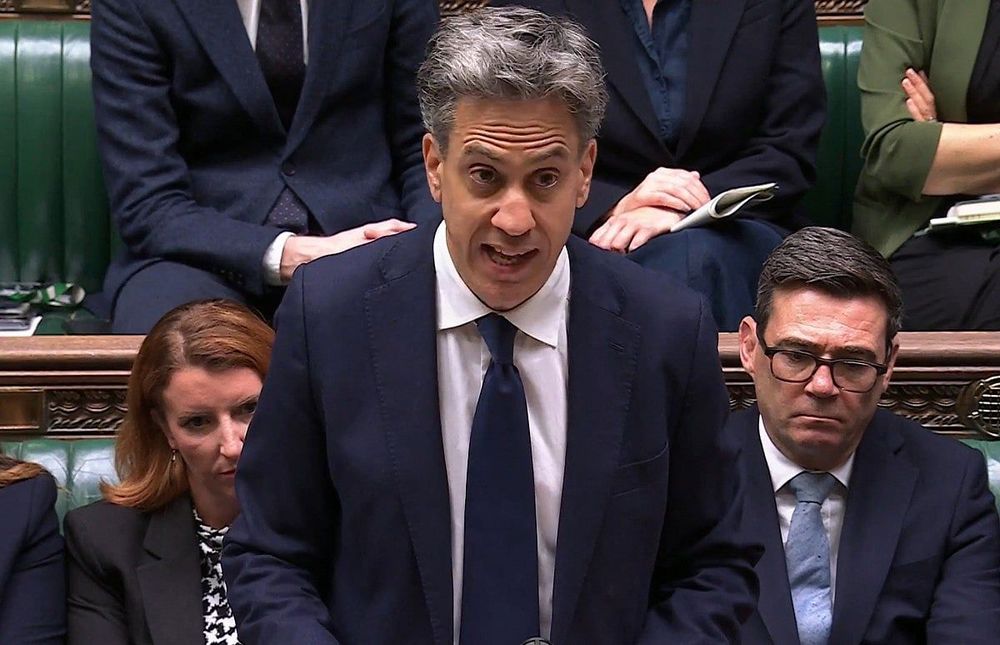
After UK bans Israeli settlement goods, what happens to £6b UK-Israel trade?
Britain has imposed a comprehensive ban on trade with Israeli settlements in the occupied West Bank, but analysis of official figures suggests the measure will carry greater political than economic weight for Israel.
The United Kingdom and Israel traded approximately £6 billion ($8.1 billion) in goods and services during 2025, according to British government data. UK exports to Israel totaled £3.5 billion, while imports reached £2.5 billion. Israel represented roughly 0.3 per cent of Britain's total trade volume.
Foreign Secretary Ed Miliband clarified that the sanctions specifically target settlements and settlement expansion rather than Israel itself, emphasizing that Britain would maintain trade relations with Israel within its internationally recognized pre-1967 borders.
Understanding Israeli settlements
Israeli settlements are communities constructed by Israel in the West Bank and East Jerusalem, territories captured during the 1967 Middle East conflict. The majority of the international community considers these settlements illegal under international law, though Israel disputes this position and cites historical, religious and security justifications for its presence in the territory.
The UK maintains a clear distinction between Israel proper and settlements in occupied territory, a critical detail because the new trade restrictions apply exclusively to the settlements.
Scale of settlement trade
Britain estimates that trade with occupied Palestinian territories amounted to approximately £38 million in 2025, dramatically lower than the roughly £6 billion traded with Israel. Even this relatively modest figure cannot be entirely attributed to settlement commerce, as the House of Commons Library notes difficulties in calculating trade specifically with Israeli settlements due to Israel and the occupied Palestinian territories operating within a customs union.
Scope of the ban
The measures prohibit goods originating from Israeli settlements in the West Bank, construction and infrastructure services supporting settlements, financing and real estate services connected to settlement expansion, advertising in Britain for settlement properties, and new export licenses for items materially contributing to the occupation. Products and services originating from Israel itself remain explicitly excluded from the settlement ban.
Companies will be barred from providing services that support settlements, including financing, construction, infrastructure, real estate and advertising. Britain will also refuse licenses for arms and other exports that materially contribute to the occupation. The legislation is expected to enter force within six to nine months.
Current trade practices
Britain had previously treated settlement goods differently from products originating in Israel. Settlement products did not qualify for preferential tariffs under UK trade arrangements, and importers were required to provide documentation establishing production origins. The new policy represents a significant escalation: rather than different tariff treatment, settlement goods will be completely prohibited.
UK imports from Israel
Britain imports precious stones and metals, technical and medical equipment, machinery, plastics and fresh produce from Israel. In return, Britain exports machinery and transport equipment to Israel. These broader trade flows remain unaffected by the settlement ban.
Israel's response
Israel responded with immediate countermeasures, announcing the closure of the British consulate in Jerusalem, removal of UK representatives from the Gaza ceasefire monitoring center, and termination of British training for Palestinian Authority security forces in the West Bank. Twelve British lawmakers and other UK citizens were barred from entering Israel. Foreign Minister Gideon Saar accused Britain of interfering ahead of Israel's October election, while President Isaac Herzog described the ban as a grave miscalculation.
Diplomatic significance
The diplomatic impact far exceeds the value of affected goods. Britain has transitioned from discouraging economic activity in settlements to legislating against it, while declaring Israel's occupation of Palestinian territory illegal.
The initiative is part of a broader international movement. France and Canada have announced plans for similar restrictions, and a 12-country statement issued Tuesday supported national or European restrictions on settlement trade. The group includes Britain, France, Canada, Denmark, Finland, Iceland, Ireland, Norway, Poland, Portugal, Spain and Sweden.
Miliband told Parliament that Britain continued to support trade with Israel and explicitly rejected the wider Boycott, Divestment and Sanctions movement. He stated the objective was to pressure Israel over expanding settlements and escalating settler violence that Britain believes threatens prospects for a future Palestinian state. Miliband went further on Tuesday, stating the British government agreed that violence and displacement by extremist settlers in parts of the West Bank amounted to ethnic cleansing.
Israeli officials fear the measures could establish a precedent whereby major Western allies increasingly distinguish economically and diplomatically between Israel and its settlements. The immediate economic cost may be modest, but the political message carries substantial weight.