Israeli capture of strategic Lebanese ridge sparks political crisis in Tehran
The fall of the Ali al-Taher ridge to Israeli forces has ignited fierce internal conflict in Iran, with hardliners attacking negotiators of the June diplomatic agreement with Washington over the failure to protect Hezbollah's positions in southern Lebanon.
 Sara Khan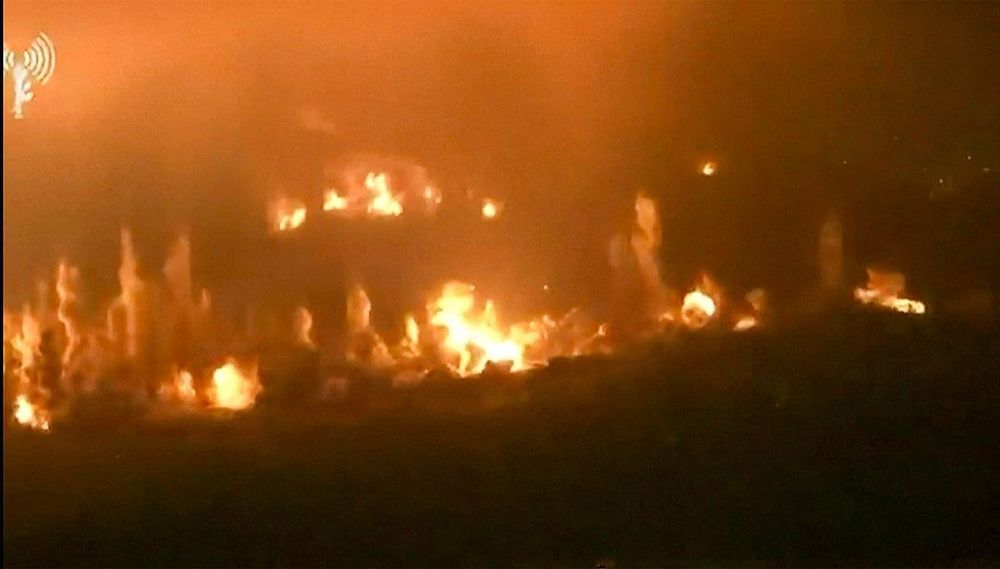
Israeli capture of strategic Lebanese ridge sparks political crisis in Tehran
Israeli forces' seizure of a strategic mountain ridge in southern Lebanon has triggered intense political infighting in Tehran, as Iranian hardliners blame the architects of a recent diplomatic agreement with Washington for failing to protect Hezbollah's military infrastructure.
The Ali al-Taher ridge, sitting at approximately 600 meters above sea level and overlooking key routes connecting southern Lebanon with the coastal area and the western Beqa'a Valley, had long served as a critical Hezbollah position. Located roughly 15 kilometers from the Israeli border and north of the Litani River, the site commanded the Nabatieh area in southern Lebanon, a region home to about 200,000 residents in an 850-square-kilometer zone.
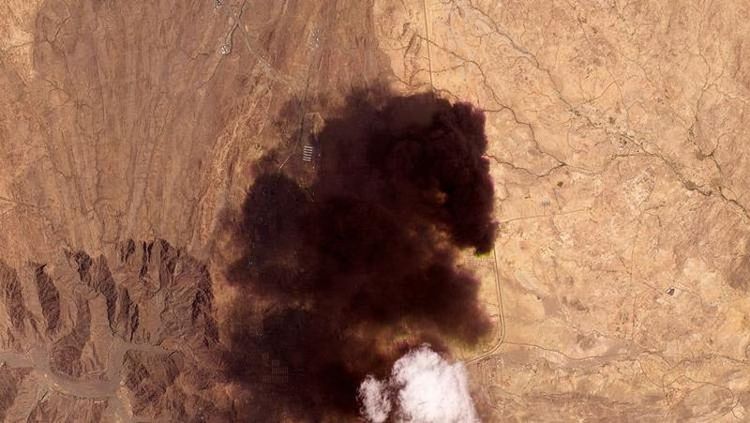
Israeli forces declared operational control over the ridge on September 3. A week later, on September 10, they destroyed the underground network in a massive detonation involving approximately 1,100 tons of explosives that triggered seismic activity registering as a magnitude 4.1 earthquake.
The Israeli military said the network extended more than 2 kilometers and housed a central command complex for Hezbollah's Badr Unit, along with command rooms, weapons depots and underground living quarters. Israeli officials said troops found rockets, missiles, drones, anti-tank weapons, mines and other explosive devices, though these claims could not be independently verified.
The Badr Unit oversees Hezbollah operations in the area north of the Litani River toward Sidon and became the center of the group's activities on the Southern Front after other units sustained severe damage during the 2024 war. Israeli military assessments indicate the complex was built over approximately two decades with Iranian funding and planning.
Diplomatic fallout in Tehran
The loss has become a focal point for domestic political attacks in Iran. Hardliners have turned their anger toward officials who negotiated the Islamabad Memorandum, signed on June 17, 2026, by U.S. President Donald Trump and Iranian President Masoud Pezeshkian. The agreement, primarily brokered by Pakistan with assistance from Qatar, Saudi Arabia, Turkey and Egypt, called for immediate and permanent termination of military operations on all fronts, including in Lebanon
and ensuring territorial integrity and sovereignty of Lebanon.
Parliament Speaker Mohammad-Bagher Ghalibaf, a former Islamic Revolutionary Guard Corps brigadier general who has served in his current role since May 2020 and previously served as Tehran mayor from 2005 to 2017, was identified in Iranian reporting as Tehran's chief negotiator. He had repeatedly described the Lebanon clause in the agreement as a diplomatic victory for Iran.
Critics now argue the agreement constrained Tehran while failing to halt Israeli operations in Lebanon. Their case has intensified following the destruction of the Ali al-Taher tunnel complex, which they say demonstrates the gap between the agreement's provisions and developments on the ground.
The controversy occurs against a backdrop of longstanding international disputes over the region. UN Resolution 1701, which ended the 2006 Lebanon War, required Hezbollah to withdraw north of the Litani River, though the group never complied with this provision. The resolution called for a demilitarized zone between the Blue Line and the Litani River, with only the Lebanese army and UN peacekeepers authorized to possess weapons in the area.
The Ali al-Taher ridge is located just a few kilometers from Beaufort Castle, a UNESCO-listed site that Israeli forces also captured in recent months and continue to occupy, part of what Israeli officials describe as the consolidation of a security zone in southern Lebanon.