Iran's advanced missiles close in on US warships as targeting capabilities improve
Recent Iranian missile attacks on American naval vessels have produced closer calls than previous attempts, raising concerns in Washington that Tehran has significantly improved its ability to track and strike moving warships in the strategically vital Strait of Hormuz.
 Sara Khan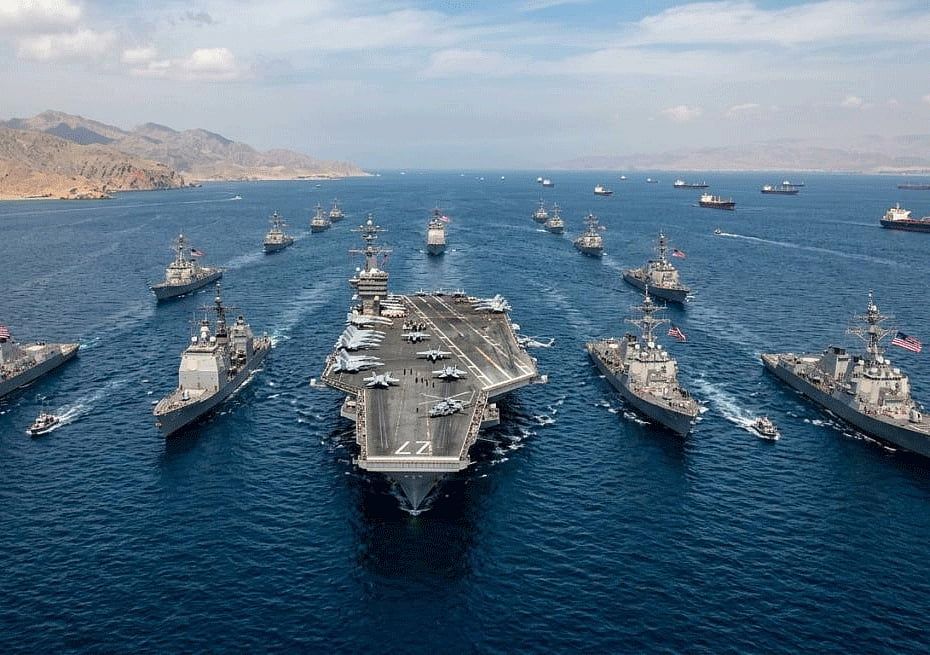
Dangerous gamble: Iran's evolving missiles get closer to US warships. What changed?
Iranian forces have launched missiles at US naval vessels at least three times in the past week, including strikes targeting an aircraft carrier, in attacks that came significantly closer to their targets than previous attempts, according to people familiar with the incidents.
While US Central Command confirmed that American vessels successfully evaded the attacks, officials in Washington are increasingly alarmed by what appears to be a marked improvement in Iran's ability to track and target moving warships — a complex military capability that requires locating a vessel and continuously updating its position as a missile closes in.
Technical leap in missile technology
The recent attacks involved medium-range ballistic missiles equipped with manoeuvrable warheads. Unlike conventional ballistic missiles that follow predictable trajectories toward fixed targets, these advanced systems can adjust their course during flight, potentially allowing them to pursue moving vessels.
Iran has recently showcased its Qassem Basir ballistic missile, which Tehran says offers improved accuracy against moving targets. Unveiled by Iran's Ministry of Defense in May 2025, the weapon is equipped with an electro-optical and infrared terminal seeker that allows it to identify and track moving targets during flight — a significant departure from conventional ballistic missiles that follow fixed trajectories.
The Qassem Basir is an upgraded variant of Iran's solid-fueled Haj Qassem missile series, featuring a manoeuvrable reentry vehicle designed to perform evasive movements during the final stage of flight to defeat interception attempts. The missile was successfully test-fired on April 16-17, 2025, striking a target over 1,200 kilometres away, according to the Iranian Ministry of Defense.
Hitting a moving warship with a ballistic missile requires accurate real-time tracking and continuous position updates as the missile approaches, making it substantially more difficult than striking fixed land targets. Such operations require a dedicated sensor chain combined with precise terminal guidance systems.
The Center for Strategic and International Studies assesses Iran as having one of the largest and most diverse missile arsenals in the Middle East, with some systems reaching approximately 2,000 kilometres in range.
Intelligence sharing concerns
American officials are examining whether Iran may be receiving targeting assistance from Russia or China. While no public evidence has established that either country helped Iran with the recent attacks, the possibility worries Washington because better surveillance, satellite imagery or other intelligence could make Iranian missiles substantially more dangerous to US naval forces.
Economic pressure drives escalation
Iran's willingness to take such risks stems from mounting economic pressure. A large US naval force is enforcing a blockade that has severely restricted Iran's ability to export oil, depriving Tehran of its principal source of foreign currency. Iran earned approximately $45.3 billion from oil exports in 2025 according to OPEC data, though some Iranian sources reported higher figures of up to $67 billion for the Iranian calendar year ending March 2025.
US sanctions have compounded the pressure, while Iran's currency has plunged and inflation has soared.
Marc Sievers, a former US ambassador to Oman, said Iran is escalating because Tehran does not see other options available.
The strategy does not require Iran to defeat the vastly more powerful US Navy. Instead, Tehran can make maintaining the blockade increasingly expensive and dangerous. Every missile attack forces American vessels to defend themselves, potentially consuming costly interceptors ranging from $2.1 million for SM-2 Block IV missiles to approximately $4 million for SM-6 missiles, with SM-3 variants costing between $9.7 million and $27.9 million per unit.
The attacks also force Washington repeatedly to decide how much risk it is prepared to accept to keep ships operating close to Iran.
High-stakes brinkmanship
There is an enormous difference between firing at an American warship and actually hitting one. A successful strike causing major damage or US casualties could trigger a fierce American response and send the conflict back into full-scale warfare.
Yet Iran may see leverage even in that danger. Damaging a US vessel could shake financial markets, alarm Gulf states and confront President Donald Trump with an uncomfortable choice: Retaliate heavily and risk another escalation, or respond more cautiously and face accusations of weakness. That calculation has become even more sensitive with the US midterm elections less than two months away.
Tit-for-tat retaliation
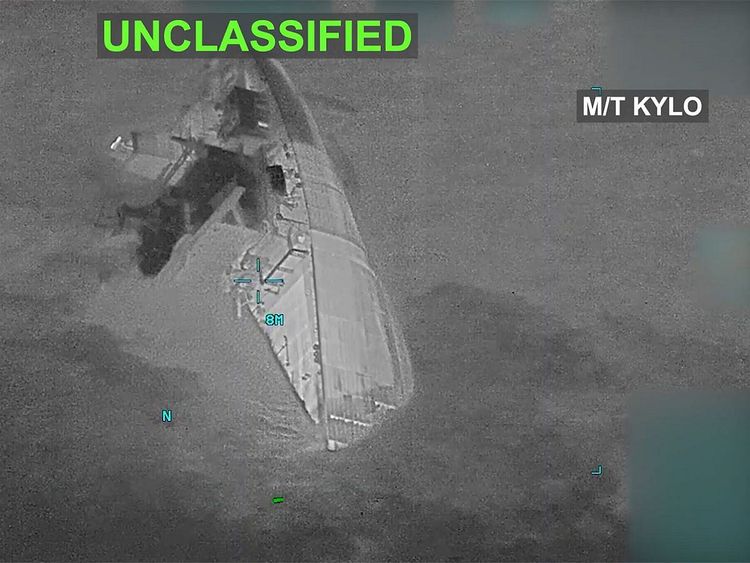
Washington has already demonstrated the price Iran could pay. After Iranian ballistic missiles targeted US naval vessels, American forces began attacking Iranian oil tankers. US Secretary of State Marco Rubio has made the policy explicit: attempts to strike US warships will cost Tehran tankers.
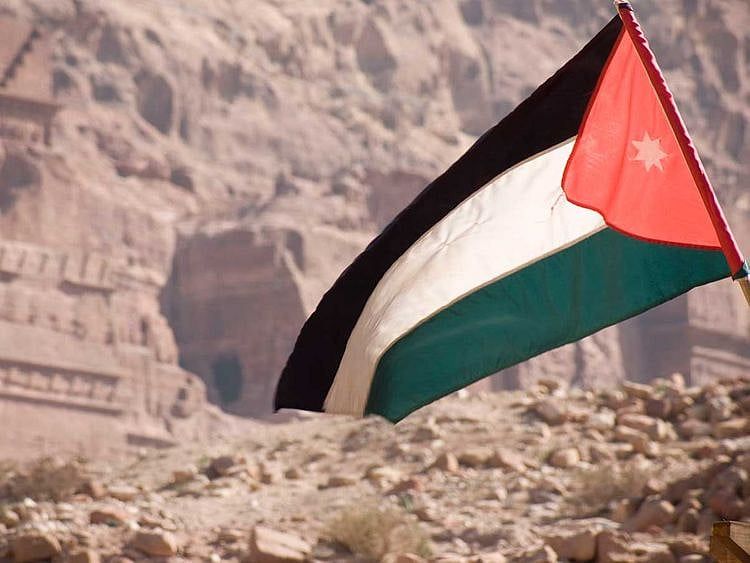
Iran has responded by widening its own attacks. The Revolutionary Guards said on Wednesday that they targeted 10 vessels around Hormuz after US attacks on Iranian tankers. Iran also launched missiles at a US base in Jordan.
The result is an increasingly dangerous cycle: Iran targets US warships; Washington attacks Iran's oil lifeline; Tehran retaliates against more ships and military targets.
Geography as leverage
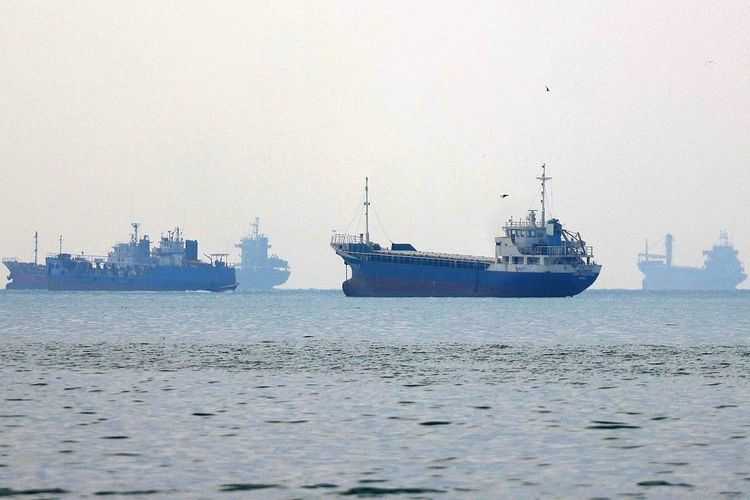
For all the damage Iran has suffered, geography still gives Tehran leverage. The Strait of Hormuz remains one of the world's most important energy corridors. Approximately 20% of global oil consumption and 20% of global LNG trade pass through the strait, with about 20.9 million barrels per day of oil flowing through the waterway in the first half of 2025, representing roughly one-quarter of all seaborne oil trade worldwide.
About 84% of crude oil and 83% of LNG moved through the Strait of Hormuz goes to Asian countries, with China, India, Japan and South Korea receiving 69% of all crude oil flowing through the strait in 2024, according to the US Energy Information Administration.
Washington can destroy missile launchers, escort merchant vessels and move its warships farther offshore, but permanently removing Iran's ability to threaten shipping is far more difficult. That helps explain why Tehran appears willing to take greater risks there even as its economy comes under mounting pressure.
Iran cannot match the United States ship for ship or missile for missile. But if its weapons are becoming capable of getting closer to American warships, Tehran does not need to win a naval battle to change Washington's calculations. It only needs to make every US ship operating around Hormuz a more dangerous — and potentially more politically costly — proposition.