Iran expands regional influence through Iraqi militias and Houthis as traditional proxies weaken
Tehran increasingly relies on groups in Iraq and Yemen after Hamas and Hezbollah suffered major losses, with evidence emerging of deeper coordination between Houthi operatives and Iraqi militias in attacks on Saudi Arabia.
 Sara Khan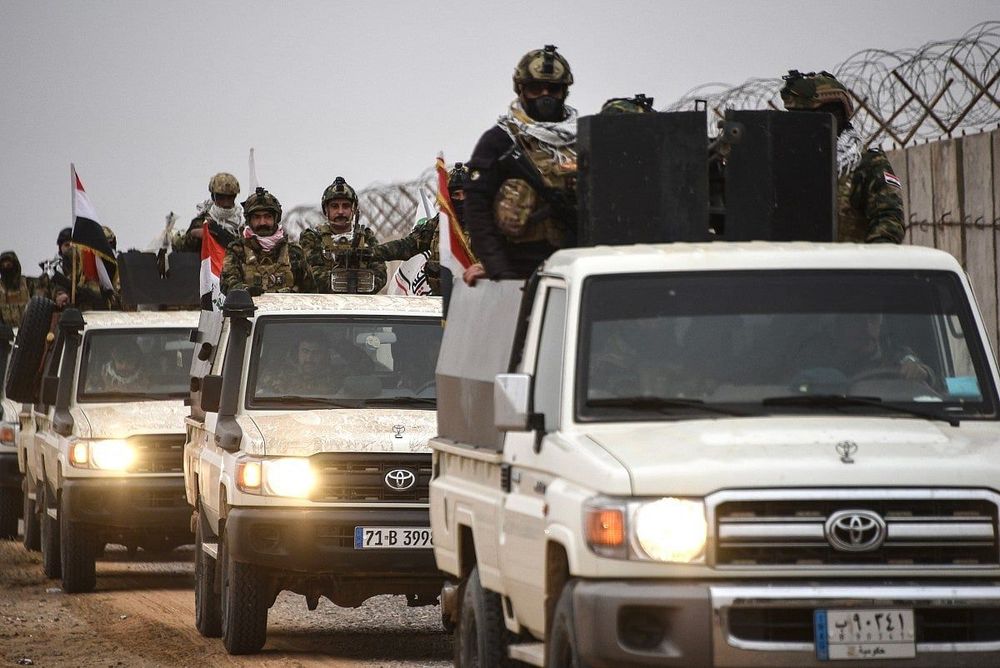
Strategic pivot from Israel's borders
Iran is reconfiguring its network of armed allies across the Middle East, placing greater emphasis on groups in Iraq and Yemen after Hamas and Hezbollah emerged significantly weakened from recent conflicts. Evidence now indicates these forces are coordinating more closely as the US-Iran confrontation expands regionally.
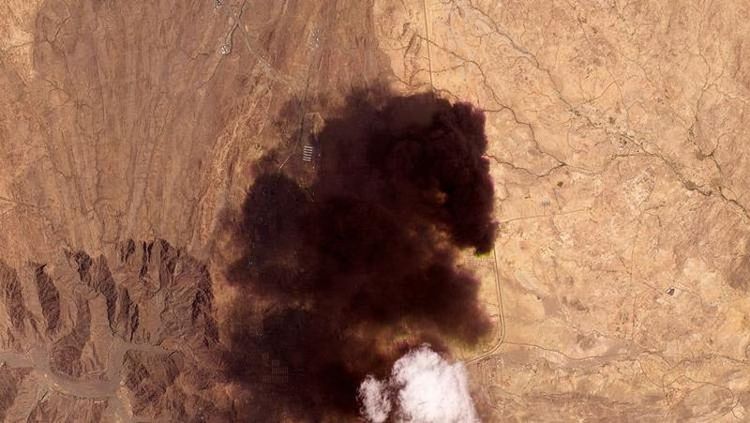
The shift became evident on Tuesday when Houthi missile and drone attacks struck oil facilities in Saudi Arabia, wounding 73 people. But the clearest indication of enhanced cooperation between Iran's proxies came from attacks on Saudi oil infrastructure in July.
Houthi operatives worked alongside Iran-backed Iraqi militias to plan and execute the two-day assault, according to two Saudi officials and a senior Iraqi security official. The Houthi emissaries operated inside a command center run by Iraqi militias, demonstrating a level of coordination that exceeds groups simply pursuing parallel campaigns.
Saudi Arabia and the United States subsequently launched joint airstrikes against the militias, killing at least 20 Iraqi fighters, six Iranian advisers and at least one Houthi official, according to official accounts.
Two officials from Iraq's Popular Mobilization Forces denied involvement in the attacks and denied hosting Houthi operatives under the group's auspices.
Strategic pivot from Israel's borders
The development reflects a fundamental change in Iran's regional deterrence architecture. For decades, Tehran constructed much of its strategic leverage around armed groups positioned near Israel, particularly Hezbollah in Lebanon and Palestinian militants including Hamas.
Those groups suffered severe degradation in conflicts following the October 7, 2023 Hamas attack on Israel. With Iran itself now engaged in direct confrontation with the United States and Israel, groups in Iraq and Yemen have assumed heightened strategic importance.
The transformation did not occur abruptly. Cooperation between Iraqi militias and the Houthis grew during the Gaza war, when the groups coordinated attacks against Israel. Houthi leader Abdul Malek Al Houthi had spoken at the height of that conflict about establishing a joint operations room.
The US-Israel attack on Iran on February 28 fundamentally altered the strategic landscape. Iran and allied groups subsequently began targeting Gulf countries as Tehran sought to distribute the costs of conflict and pressure states hosting American forces.
Mahdi Mohammadi, an adviser to Iran's parliament speaker, characterized Tehran's approach in June as a hybrid strategy, noting Iran was neither fighting on a single front nor relying on a single instrument.
Houthi military capabilities expand influence
The Houthis' growing military capacity has made them particularly significant in Iran's evolving network. The group possesses ballistic and cruise missiles, drones and unmanned underwater systems. Their Burkan-3 ballistic missile has a range exceeding 1,200 kilometers, while newer systems including the Toophan missile may reach targets approaching 1,950 kilometers away, allowing strikes from northern Yemen across much of the Arabian Peninsula.
These capabilities extend far beyond Yemen's borders. On Tuesday, the Houthis launched a major assault against southern Saudi Arabia, hitting oil and other facilities. It was among the largest Houthi attacks on the kingdom since the US-Israel war with Iran began in February.
Since late July, the group has conducted more than a dozen attacks against Saudi oil facilities and tankers in the Red Sea, according to conflict-monitoring group ACLED.
That positions the Houthis at the intersection of two conflicts: Iran's confrontation with the United States and their own protracted struggle with Saudi Arabia.
Ahmed Nagi, a senior Yemen analyst at the International Crisis Group, said the Houthis' prominence during the Gaza conflict generated greater interest among Iraqi armed groups. In return, the Houthis began sharing military expertise with Iraqi militias.
Houthis pursue independent agenda
The distinction matters because while Iran backs the Houthis, the Yemeni movement maintains its own political and territorial ambitions and does not necessarily act solely on Tehran's instructions.
The Houthis seized Yemen's capital Sanaa in 2014, prompting Saudi Arabia to intervene the following year alongside Yemen's internationally recognized government. The conflict killed at least 150,000 people and left more than two-thirds of Yemen's approximately 30 million people requiring humanitarian aid before a UN-mediated truce in April 2022 largely halted major fighting. That ceasefire, which was renewed twice for two-month periods, expired in October 2022 after six months.
The truce is now unraveling. Saudi-backed Yemeni forces are fighting the Houthis on several fronts, including around Hodeida and Taiz, while the Houthis have attacked Mokha, the main Red Sea port still held by the internationally recognized government.
Renewed fighting could also allow the Houthis to pursue control of energy-rich territory in eastern Yemen. That means escalation involving the Houthis could develop its own momentum, even if the wider US-Iran confrontation moderates.
Iraqi militias face domestic pressures
Iran's Iraqi allies operate under different constraints. The Popular Mobilization Forces are formally part of Iraq's security establishment, but the umbrella organization includes powerful Iran-backed factions that have at times operated independently.
Baghdad has ordered militias to disarm by the end of September, coinciding with the scheduled withdrawal of US troops deployed as part of the anti-Islamic State coalition on September 30, 2026. The timeline has intensified pressure on the Iraqi government to bring these groups under state control, but some powerful groups have resisted.
Hardline Iranian-backed militias including Kataeb Hezbollah and Harakat Hezbollah al-Nujaba have publicly declared they will not disarm or integrate into the Iraqi state despite the September 30 deadline.
That places the Iraqi government in a difficult position as it seeks to prevent its territory from becoming another battlefield in the regional confrontation. IRGC-Quds Force commander Esmail Qaani traveled to Baghdad in August 2026 to discuss militia disarmament with Iraqi militia leaders and Shiite politicians, demonstrating Iran's direct involvement in negotiations over its proxy forces.
The reported presence of Houthi operatives alongside Iraqi militias adds another dimension. It suggests Iran's allied groups are not merely operating on separate fronts but may increasingly be exchanging expertise and coordinating operations across national borders.
Evolving network, persistent risks
Hezbollah remains a major armed organization, Hamas has not disappeared, and Iran retains relationships with several other groups across the region. The Houthis and Iraqi militias are not interchangeable with the network Tehran built around Israel over several decades. Each has its own leadership, interests and domestic pressures.
But the balance within Iran's network appears to be changing. The Houthis bring long-range missiles, drones and experience attacking commercial shipping. Iraqi militias provide another geographical front and operate in a country where American forces and interests have long been present.
Together, their growing cooperation gives Tehran additional methods of applying pressure beyond its own borders. It also introduces another risk: The more actors that participate in the conflict, the harder escalation becomes to control.
An attack by a militia in Iraq can trigger US or Saudi retaliation. A Houthi strike can reopen the Yemen conflict. An assault on a tanker can affect global energy prices.
Iran's proxy network may therefore be evolving, but the groups within it are also pursuing interests of their own. That makes the emerging configuration potentially more unpredictable than the one it is replacing.
Energy corridor vulnerabilities
The changing proxy landscape is unfolding around two of the world's most important energy corridors. To the east lies the Strait of Hormuz, which before the current conflict handled approximately 20 to 25 percent of global seaborne oil trade and about 19 to 20 percent of global liquefied natural gas trade, with approximately 80 to 90 percent destined for Asian markets, particularly China, India, Japan and South Korea. Shipping through the strait remains severely disrupted by the US-Iran conflict.
That has made Saudi Arabia's Red Sea route increasingly important. After disruption in Hormuz, the kingdom redirected more crude towards its western coast and north towards the Suez Canal and Egypt's SUMED pipeline. The SUMED pipeline, which has a maximum capacity of 2.5 million barrels per day and runs 320 kilometers from Ain Sokhna on the Red Sea to Sidi Kerir on the Mediterranean, is currently operating at maximum capacity after flows surged 150 percent since the Iran conflict began.
According to Kpler figures, flows along that route rose from about 650,000 barrels a day in June to more than 1.9 million barrels a day in August.
But Houthi attacks have now put pressure on the western route as well. The group has declared a blockade against Saudi shipping in the Red Sea and has attacked tankers and energy infrastructure.
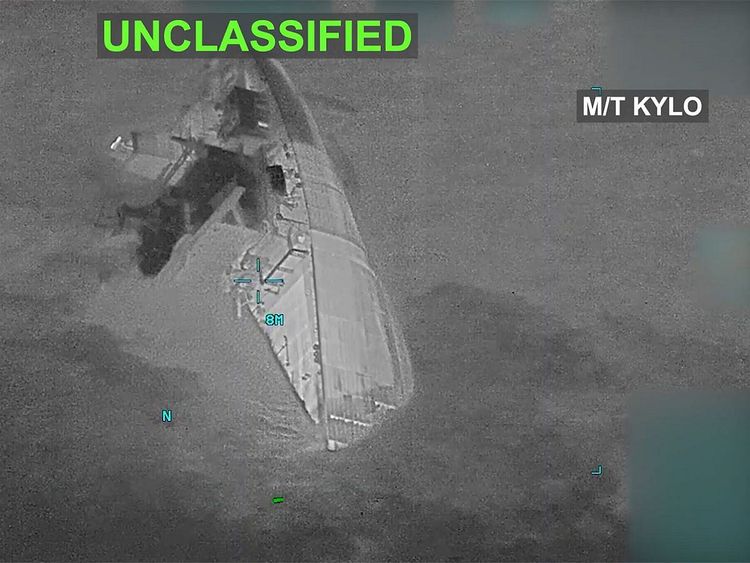
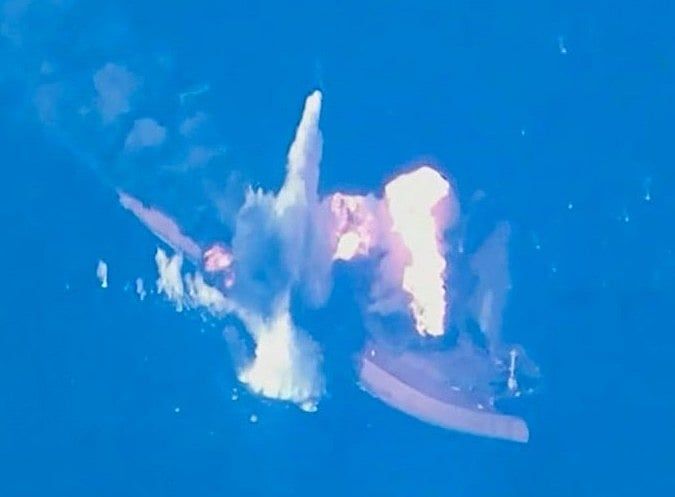
Last month, the Houthis struck a Saudi tanker in the northern Red Sea after it reportedly traveled from Yanbu towards the Suez Canal — around 1,000 kilometers from Houthi territory.
Meanwhile, shipping through Hormuz remains far below normal levels. Only six commodity vessels were recorded crossing on Tuesday, according to preliminary Kpler data, compared with about 125 large commercial vessels a day before the war.
The result is that instability involving Iran's allies in Yemen and Iraq is no longer only a security issue. It has become part of the wider struggle over the routes that keep Gulf energy moving to the world.