Violence mars historic parliamentary elections in Philippines' Muslim autonomous region
Three people killed and 15 wounded in gunfire outside polling station as more than two million voters in Bangsamoro cast ballots for their first elected parliament, marking a crucial test for a decades-long peace process.
 Sara Khan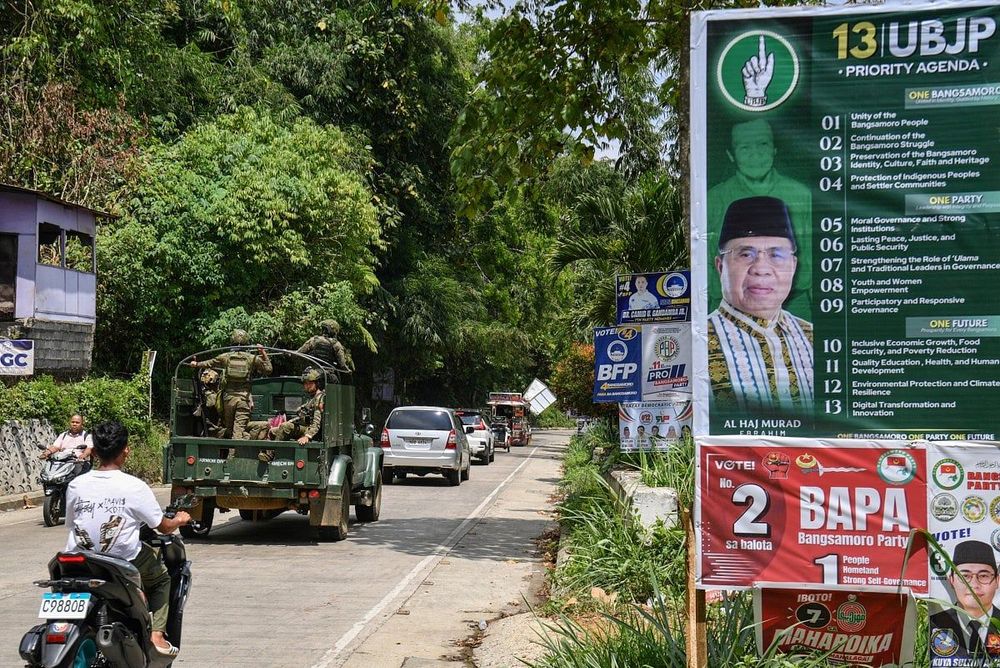
Violence mars historic parliamentary elections in Philippines' Muslim autonomous region
Voters across the Philippines' autonomous Muslim region began casting ballots Monday for their first elected parliament, a landmark moment in a fragile peace process that has been repeatedly delayed and now marred by deadly violence just hours before polls opened.
Three people were killed and 15 others wounded when gunfire erupted outside a school-turned-polling station in regional capital Cotabato just before midnight, as members of rival political factions clashed over who would vote first.
The incident underscored the volatile political landscape in the Bangsamoro Autonomous Region in Muslim Mindanao (BARMM), where more than two million voters are eligible to choose 80 parliament members from among 13 competing parties. The elections represent the culmination of a peace process that began with the signing of the Comprehensive Agreement on the Bangsamoro in March 2014, following 17 years of negotiations between the Philippine government and the Moro Islamic Liberation Front.
Cotabato police chief Jibin Bongcayao said the shooting began as a struggle for position in the queue between two groups.
It started as a struggle for position in the queue between two groups. It led to shoving, escalated into a fistfight, and eventually gunfire broke out in a crowded area.
The men involved belonged to rival parties that have emerged from the MILF, the group that spent decades fighting for regional autonomy in the predominantly Catholic country. The decades-long conflict in Mindanao has cost an estimated 120,000 lives since the 1970s and displaced approximately two million people.
Peaceful voting in Marawi despite security concerns
Despite the violence, voting proceeded peacefully in many areas. In Marawi, a city where ISIS-affiliated militants including the Maute group and Abu Sayyaf seized control in May 2017, triggering a five-month military campaign that killed 920 fighters, 165 government soldiers and at least 45 civilians while displacing over 360,000 people, voters lined up early at polling stations guarded by tanks and security personnel.
We're excited, we came here early in the morning. I'm nervous because there might be chaos. Before there was chaos. Now it's peaceful. I'm excited for the results.
said Mohammad Actar Macabada, 18, who had just cast his vote.
Repeated delays and complex political landscape
The elections have been postponed at least four times since they were originally scheduled for May 2022, with subsequent delays to May 2025, October 2025, and March 2026, before finally being set for September 14, 2026. The repeated postponements reflected the complex political negotiations and security concerns in a region that remains one of the poorest in the Philippines, with a poverty incidence rate of 63 percent and high infant and maternal mortality rates.
BARMM was formally established in February 2019 following the ratification of the Bangsamoro Organic Law through plebiscites held in January and February 2019, in which 1,540,017 voters overwhelmingly approved the law with 88.57 percent voting yes. The legislation, signed by then-President Rodrigo Duterte in July 2018, replaced the older Autonomous Region in Muslim Mindanao established in 1989, which was widely considered ineffective.
Heavy security deployment amid ongoing threats
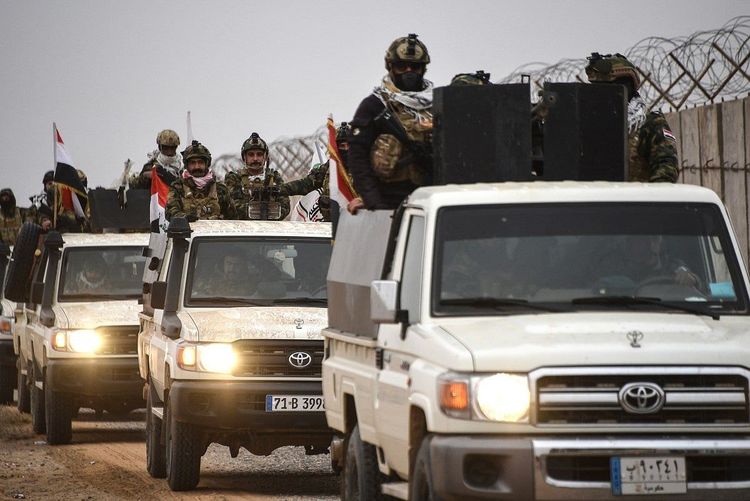
More than 20,000 security personnel have been deployed across BARMM in recent days, with quick response teams assembled to address potential violence. The heightened security comes after a motorcade carrying the region's interim chief minister, an appointee of President Ferdinand Marcos, was ambushed and peppered with bullets last month.
In a separate incident Monday, a man died in hospital in the early hours following an explosion near another polling station. Police are still investigating the cause.
Given the region's long history of political violence and blood feuds between powerful families, party leaders have said a peaceful election would be considered a successful one. The elected parliament members will serve an extended five-year term from October 30, 2026 to June 30, 2031, after which standard three-year terms will apply with elections synchronized to national polls in May 2031.