Houthi escalation threatens Saudi energy security as Red Sea conflict intensifies
Iran-backed militants launch heaviest strikes on Saudi Arabia in years, hitting oil facilities and cities while advancing towards strategic Bab al-Mandab strait, threatening critical alternative to blocked Hormuz route.
 Sara Khan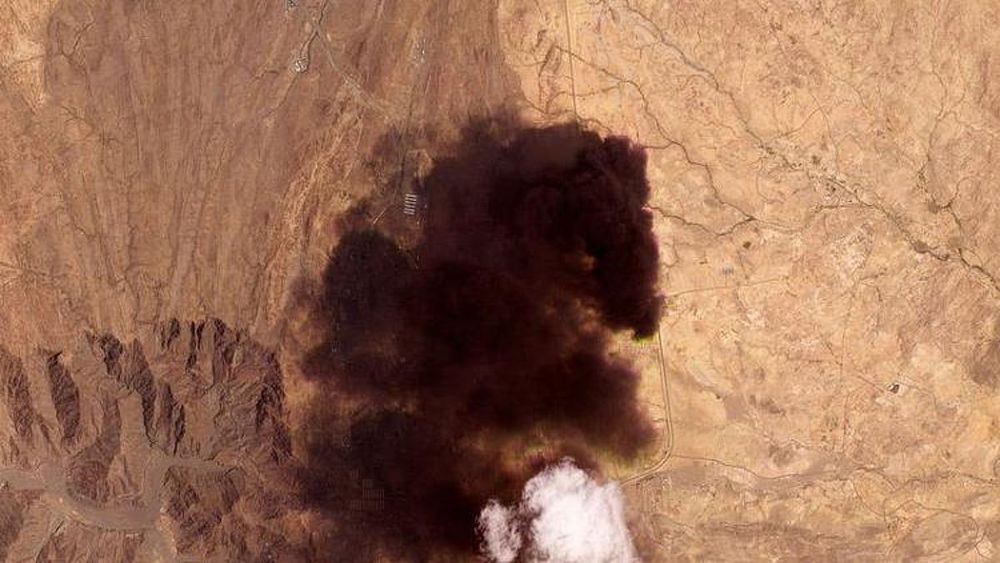
Houthi escalation threatens Saudi energy security as Red Sea conflict intensifies
Yemen's Iran-backed Houthi militants launched their most intensive attacks on Saudi Arabia in years on Tuesday, injuring 73 civilians and striking energy infrastructure in the kingdom's southern regions. The assault marks a dangerous escalation in a conflict that has transformed a Yemeni rebel movement into a threat capable of disrupting global energy markets.
Fires erupted at multiple sites and some operations were temporarily suspended following the strikes. Saudi Arabia has vowed to take all necessary measures to defend its sovereignty.
The attacks come at a particularly precarious moment. Iran's disruption of the Strait of Hormuz has halted approximately 15 million barrels per day of crude shipments that normally leave the Persian Gulf, forcing Saudi Arabia to dramatically increase reliance on its Red Sea export routes. The kingdom quadrupled crude oil shipments from its Red Sea terminals to approximately 4 million barrels per day by early 2026, up from about 1 million barrels per day before the Iran war, using its East-West pipeline system which has a capacity of 7 million barrels per day.
The Tuesday strikes on Saudi facilities included the Abqaiq complex, which houses the largest crude oil stabilization plant in the world with a maximum processing capacity of 7 million barrels per day. This facility is no stranger to devastating attacks. In September 2019, a drone and cruise missile assault on Abqaiq and Khurais knocked out 5.7 million barrels per day of oil production, representing over half of Saudi Arabia's output and about 5% of global supply in what was the largest ever outage in volume terms in modern oil history.
Four years of relative calm shattered
For nearly four years following a 2022 truce, Saudi Arabia and the Houthis had largely avoided direct confrontation. That ceasefire effectively froze front lines and sharply reduced cross-border attacks.
The arrangement unraveled in July this year after an Iranian aircraft landed in Houthi-controlled Sanaa without Saudi authorization, breaching restrictions that had been in place during the truce. Strikes on Sanaa airport followed, blamed on Saudi Arabia, before the Houthis retaliated. They also declared a blockade on Saudi shipping and resumed attacks on the kingdom.
Battle for Bab al-Mandab
The cross-border strikes are unfolding alongside fierce fighting inside Yemen. More than 500 combatants and civilians have been killed since the Houthis launched their latest offensive towards the Red Sea, according to an AFP tally based on sources on both sides.
The offensive aims to give the Houthis greater control over territory approaching Bab al-Mandab, the narrow strait connecting the Red Sea with the Gulf of Aden. The passage is approximately 29-32 kilometers wide at its narrowest point, with two navigation channels divided by Perim Island, a Yemeni possession.
Approximately 10-12% of global seaborne trade and about 8.7 million barrels per day of crude oil and petroleum products normally transit through Bab al-Mandab, making it the third busiest chokepoint in global oil trade after the Straits of Malacca and Hormuz. When the strait is disrupted, ships must detour around the Cape of Good Hope at the southern tip of Africa, adding 10-14 days to transit time and approximately $1 million in fuel costs per round-trip Asia-Europe voyage.
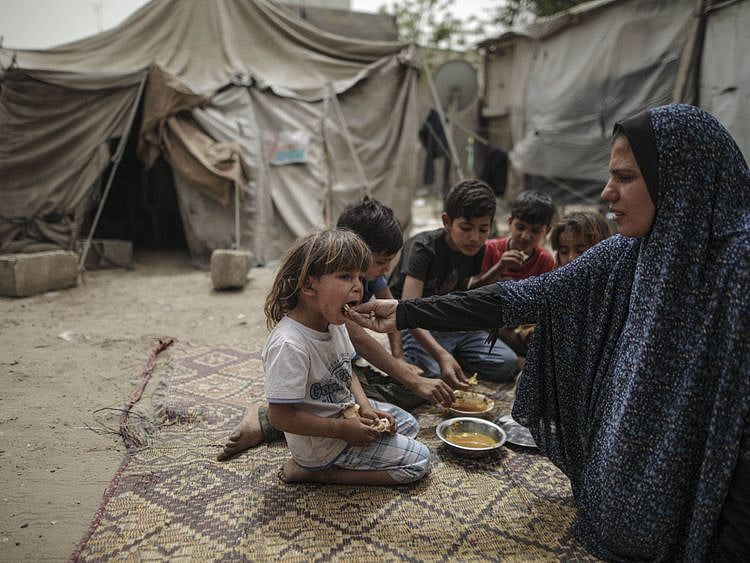
Saudi-backed Yemeni government forces are fighting to halt the Houthi advance. Thousands have already been displaced. The UN's International Organisation for Migration estimated about 18,500 people had been uprooted in Taiz and Hodeidah, with the number rising rapidly. This new displacement occurs against a backdrop of severe humanitarian crisis, with more than 22 million people requiring humanitarian assistance in Yemen, 5.2 million internally displaced and 18.3 million acutely food-insecure, according to UN data from March 2026.
From tribal militia to regional force
The Houthis' transformation from a tribal militia into a well-armed fighting force capable of threatening major oil producers and disrupting global shipping lanes has been years in the making.
Iran has smuggled increasingly sophisticated weapons to the group since at least 2009. By 2015, the Iranian Revolutionary Guards' Qods Force were sending missile components for local assembly. The Houthis now possess an arsenal including drones with claimed ranges up to 2,500 kilometers, ballistic missiles and anti-ship weapons, with components sourced from 16 different countries.
The group seized Sanaa and much of northern Yemen in 2014, prompting Saudi Arabia to intervene the following year in support of the internationally recognized government. Years of devastating war followed before the 2022 truce.
After the Gaza war began in 2023, the Houthis demonstrated their capacity to cause disruption far beyond Yemen's borders. They launched missiles and drones towards Israel and attacked commercial vessels in the Red Sea. Between November 2023 and December 2024, they targeted more than 100 merchant ships, sinking two and killing four sailors. The attacks sharply reduced traffic through a corridor that normally handles about $1 trillion worth of goods annually.
US and Israeli strikes in 2025 helped suppress that campaign, and the Houthis initially remained largely on the sidelines when the US-Iran war erupted. That restraint has now ended.
Iran's role and Saudi Arabia's dilemma
The Houthis are backed and supplied by Iran and form part of Tehran's Axis of Resistance. Their attacks clearly serve Iranian interests by putting additional pressure on Saudi Arabia while Tehran contests control of Hormuz.
Analysts disagree over the degree of Iranian operational control. Yemeni researcher Ahmed Hazaa argues the latest offensive is aimed at helping Iran's Hormuz strategy, while Chatham House researcher Farea Al Muslimi says Iran benefiting from the attacks does not prove it is directing every Houthi move.
What is clear is the predicament facing Riyadh. Saudi Arabia spent years trying to extricate itself from Yemen's war. Now, with Houthi forces pushing towards a vital Red Sea chokepoint, Saudi tankers under threat and attacks once again reaching its cities and energy infrastructure, staying out may be getting much harder.
Oil markets are already responding to the heightened tensions. Brent crude touched $99 a barrel after the latest attacks, its highest level since late July.
As one analyst noted, Yemen is sliding back toward large-scale war.