Trump says Putin wants Ukraine deal, blames delay on 'two people that hate each other'
US President Donald Trump said Russian President Vladimir Putin is eager to reach a peace agreement to end the war in Ukraine, but argued that deep personal animosity between Putin and Ukrainian President Volodymyr Zelenskyy remains the central obstacle to diplomacy.
 Sara Khan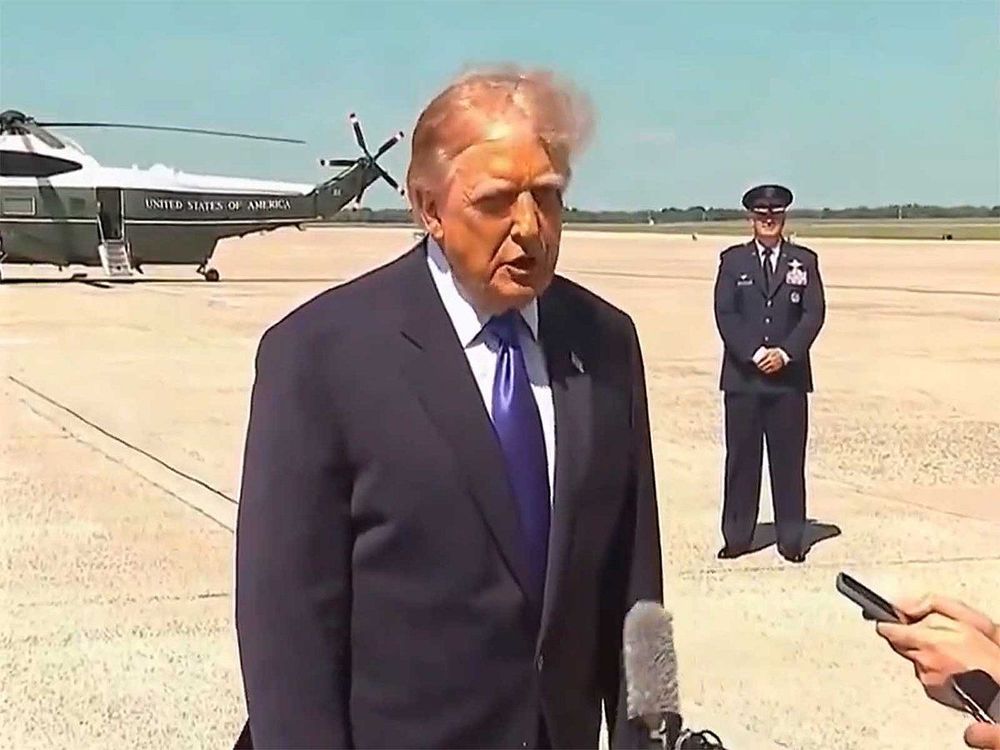
Trump Points to Personal Animosity as Key Obstacle
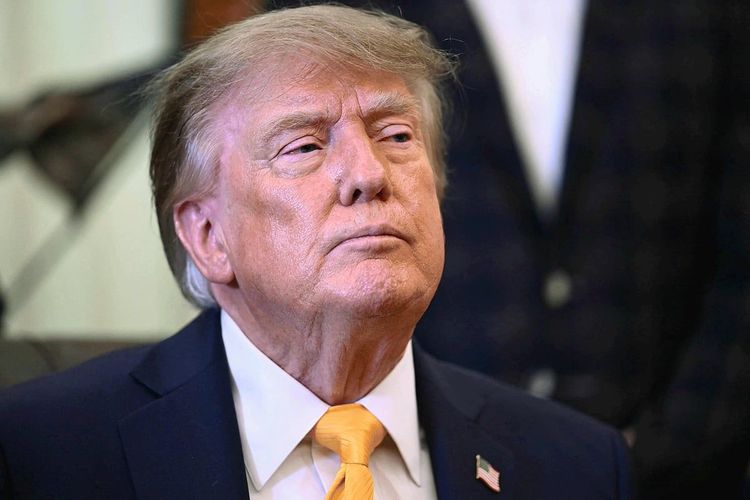
US President Donald Trump said on Wednesday that Russian President Vladimir Putin is eager to reach a peace agreement to end the war in Ukraine, but argued that deep personal animosity between Putin and Ukrainian President Volodymyr Zelenskyy remains the central obstacle to diplomacy.
Speaking to reporters before departing for a Republican midterm convention in Dallas, Texas, Trump detailed a recent phone call with the Russian leader, expressing optimism about the potential for a diplomatic resolution.
"We had a great conversation," Trump said. "He is wanting to make a deal, and if Zelenskyy is wanting to make a deal, that'd be very nice."
When asked what was preventing a breakthrough, Trump pointed directly to the intense hostility between Moscow and Kyiv. "The holdup is two people that hate each other," Trump stated. "I think more than anything else, it's two people that hate each other."
The conflict, which began with Russia's full-scale invasion on February 24, 2022, has now lasted over four years and exacted an enormous human toll. The UN Office of the High Commissioner for Human Rights verified 68,147 civilian casualties as of the end of July 2026, though the true number is acknowledged to be likely much higher.
Despite the ongoing friction, Trump voiced confidence that his background in negotiation gives him insight into the state of the conflict. "I think that because I speak to people, that's all I do is speak to people my whole life. I know about deals, and these are two people that are tired of fighting," Trump said.
The president also left open the possibility of hosting direct, three-way negotiations involving himself, Putin, and Zelenskyy. When asked if a trilateral meeting could take place, Trump indicated that high-level direct talks remain on the table. "It could happen," Trump said. "We had a good conversation. It could happen. Too many people are dying in that war. 25,000 last month."
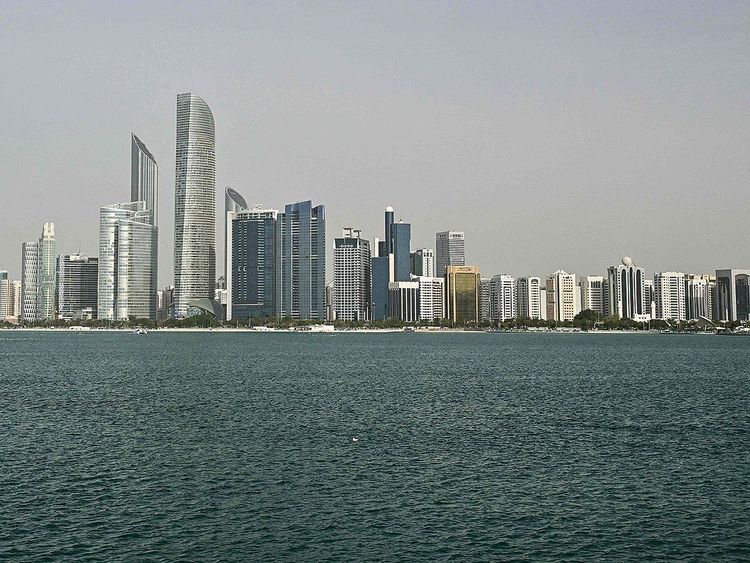
Such trilateral negotiations would not be unprecedented. Russia and Ukraine held their first trilateral peace talks with the United States in January 2026 in Abu Dhabi, marking the first such meeting since Russia's full-scale invasion began in 2022.
Diplomatic restructuring under consideration
Russian presidential press secretary Dmitry Peskov told Financial Times that Putin and Trump discussed potential restructuring within the US negotiating team during their telephonic conversation. The conversation touched on potential adjustments to Washington's diplomatic lineup as efforts surrounding shuttle diplomacy continue.
The White House has been evaluating a potential overhaul of its diplomatic mediation structure since February. The proposed restructuring under consideration involves scaling back the roles of US Special Envoy Steve Witkoff and presidential adviser Jared Kushner, with a view toward expanding the role of CIA Director John Ratcliffe.
Witkoff, a New York real estate magnate and long-time Trump associate, was initially appointed as Trump's special envoy for the Middle East before his portfolio expanded to include U.S.-Russia relations and Ukraine peace negotiations. Ratcliffe was confirmed as CIA Director on January 23, 2025, by a Senate vote of 74-25, making him the first person to serve as both Director of the CIA and Director of National Intelligence.
Peskov dismissed reports alleging that a scheduled meeting between President Putin and CIA Director John Ratcliffe had been cancelled, clarifying that no such meeting had ever been arranged.
Recent diplomatic push
Two of Trump's key aides, US special envoy Steve Witkoff and President's son-in-law Jared Kushner, visited Kyiv in a first since the conflict broke out. The US representatives pushed for Kyiv and Moscow to come to the table after they held "substantive" discussions with Ukrainian officials.
Witkoff and Kushner held a three-hour meeting with Putin at the Kremlin on September 5, 2026, followed by dinner with the Russian leader, before traveling to Kyiv the next day.
While no major breakthroughs were announced after Sunday's talks, Witkoff said he was "confident that there'll be a good resolution here."
"One thing Steve (Witkoff) and I really thought would be productive is to go back to the trilateral format, which we were able to do about six months ago," Kushner said in a news conference following the talks in Kyiv. Kushner further said that he prefers trilateral talks as they allow all parties to communicate directly, without the US having to speak for Ukraine or Russia.
"Everyone was speaking, you know, in Russian to each other and really discussing these issues in a very actually friendly manner, all in Russian," he said of previous rounds of trilateral negotiations. While adding that Washington has spoken to both parties about this idea, he added, "Hopefully we'll have progress on that very soon."
Speaking about his recent visit to Russia, Witkoff said his team had a "good, concrete conversation" with Putin. "If you don't have relationships with both sides, and you have poor communication, then you probably have very, very little chance of getting to a peaceful resolution," Witkoff said.
The US-Ukraine talks concluded on Sunday evening local time after two rounds of discussion, followed by a third round of negotiations with European representatives.
Addressing wider diplomatic efforts, Peskov informed journalists that Moscow has not received updates regarding Kyiv's stance following its recent discussions with American officials.
Recent battlefield developments may be adding urgency to the diplomatic push. Russian forces lost more ground than they captured in both April and May 2026, representing their first monthly net territorial losses since August 2024.