Trump approves nuclear deal allowing Saudi Arabia uranium enrichment capability
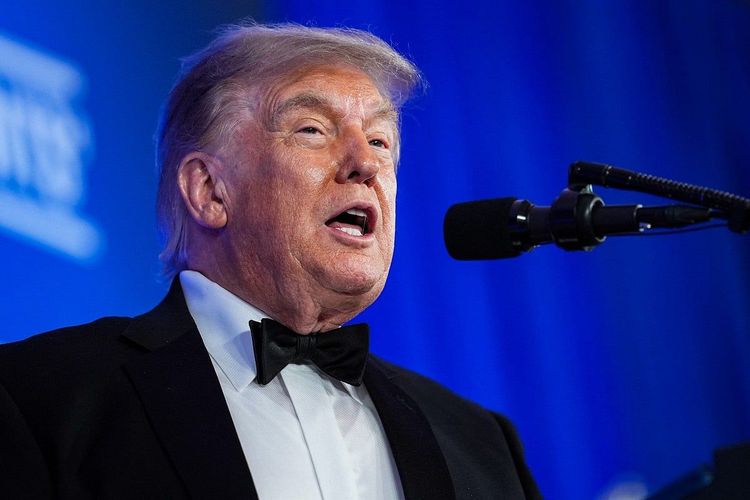
President Donald Trump has approved a 30-year nuclear cooperation agreement with Saudi Arabia that could enable the kingdom to enrich uranium for civilian nuclear power, departing from the UAE's stricter 'gold standard' agreement that prohibited enrichment.
Trump Approves Nuclear Agreement That May Allow Saudi Arabia to Enrich Uranium, Two AP Sources Say
President Donald Trump has approved a nuclear cooperation agreement with Saudi Arabia that could provide the kingdom with uranium enrichment capability for its civilian nuclear program, according to two people familiar with the matter who were not authorized to comment publicly.
The agreement, expected to be announced as early as Wednesday, would last 30 years and involve U.S. firms in developing Saudi Arabia's nuclear program. It could allow for the construction of a uranium enrichment facility in the kingdom following a joint U.S.-Saudi study.
Congressional Review and Legal Framework
Under Section 123 of the U.S. Atomic Energy Act, which governs such agreements, Congress will have 90 days in continuous session to review the deal after it is submitted. The agreement will automatically become law unless Congress adopts a joint resolution opposing it. Section 123 establishes nine nonproliferation criteria that all conforming agreements must contain, including legal obligations for partners to maintain IAEA safeguards and physical security of nuclear material.
However, the deal is expected to face resistance among lawmakers who fear that helping Saudi Arabia fulfill its long-standing desire to enrich uranium could open new rounds of nuclear proliferation and competition in the Middle East.
Monitoring Concerns
The agreement is not expected to include the IAEA's Additional Protocol, which grants complementary inspection authority beyond standard safeguards agreements. The Additional Protocol enables inspectors to provide assurance about both declared and possible undeclared nuclear activities through short-notice inspections and expanded access to nuclear-related facilities.
Saudi Arabia is a member state of the International Atomic Energy Agency, a Vienna-based agency that promotes peaceful nuclear work and inspects nations to ensure they don't have clandestine atomic weapons programs.
Contrast with UAE Model
The Saudi deal stands in contrast to the UAE's approach. The UAE's 123 Agreement, signed in 2009, is referred to as the 'gold standard' for civilian nuclear partnerships because the UAE agreed to forgo domestic uranium enrichment and reprocessing. The UAE's Barakah Nuclear Power Plant, developed with South Korean assistance, comprises four reactors with a total capacity of 5.6GW that generate 40 terawatt-hours of electricity annually, providing up to 25 percent of the UAE's electricity needs—all without domestic enrichment capability.
Most civilian nuclear reactors use low enriched uranium enriched to between 3-5 percent uranium-235, which is sufficient to sustain a controlled chain reaction for electricity generation. However, nonproliferation experts warn that any spinning centrifuges within Saudi Arabia could open the door to a possible weapons program, particularly since enriching uranium to 20 percent represents approximately 90 percent of the effort needed to produce weapons-grade fissile material.
Regional Context
The announcement comes amid the ongoing war against Iran launched by the U.S. and Israel, partly aimed at eliminating Tehran's ability to develop a nuclear weapon. Iran has consistently maintained its nuclear enrichment program is peaceful.
Crown Prince Mohammed bin Salman, Saudi Arabia's assertive de facto leader, has previously suggested he could pursue nuclear weapons if Tehran obtains an atomic bomb. Already, Saudi Arabia and nuclear-armed Pakistan signed a mutual defense pact after Israel launched an attack on Qatar targeting Hamas officials. Pakistan's defence minister then stated his nation's nuclear programme 'will be made available' to Saudi Arabia if needed—a warning directed at Israel, long believed to be the Middle East's only nuclear-armed state.
Long History of Nuclear Ambitions
Saudi Arabia's nuclear aspirations date back decades. The kingdom started its civilian nuclear program in the 1970s with the establishment of the King Abd Al-Aziz Centre for Science and Technology in 1977, and signed the Treaty on the Non-Proliferation of Nuclear Weapons in 1988. In May 2008, Saudi Arabia signed a Memorandum of Understanding with the United States for cooperation in peaceful nuclear energy. Since 2017-2018, the kingdom has pursued nuclear cooperation with multiple countries including China, France, and Russia.
Both Trump and former President Joe Biden attempted to reach a nuclear deal with the kingdom to share American technology. The U.S. has entered into approximately 26 nuclear cooperation agreements governing peaceful nuclear cooperation with 50 countries, the International Atomic Energy Agency, and Taiwan as of 2025.
Energy Secretary Chris Wright traveled to Saudi Arabia last year shortly before Trump visited the kingdom and discussed building out the kingdom's commercial nuclear power industry with his Saudi counterpart. The White House, Saudi officials in Riyadh, the U.S. Department of Energy, and the U.S. Energy Secretary did not immediately respond to requests for comment late Tuesday.