World Bank forecasts 32% energy price surge in 2026 as conflicts disrupt supplies
Wars in the Middle East and Ukraine are expected to lift global commodity prices by 23% in 2026, the World Bank said Wednesday. Energy prices are forecast to rise 32%, reaching a four-year high and adding to inflation risks.
 Omar Al Nuaimi

Oil shortages and higher gas prices
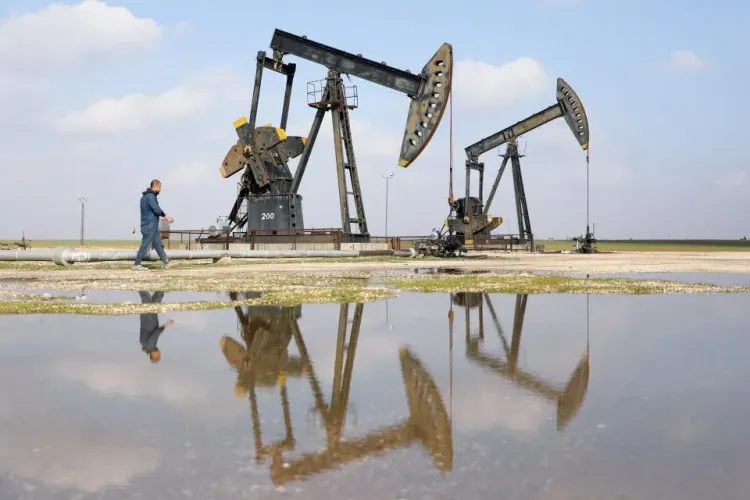
The bank's October Commodity Markets Outlook describes markets strained by depleted oil inventories, disrupted energy exports and interruptions to Black Sea grain shipments. The Middle East conflict has drawn down oil stocks, while global oil supply is projected to shrink 5.2% this year, the largest decline since the 1980s oil embargo.
Brent crude traded near $115 a barrel on Wednesday, October 28. The bank expects its full-year average to reach $91, compared with $69 in 2025, then fall to $79 in 2027.
Oil demand is also weakening. The bank forecasts a 2.5% decline in global consumption in 2026, which would be the third-largest annual contraction on record, behind 2020 and 1980. Supply shortages and high prices are restraining demand, while electrification is cutting oil use, particularly in China.
Reduced liquefied natural gas shipments through the Strait of Hormuz have intensified competition among buyers. European natural gas prices are forecast to rise 58.3% this year to $19 per million British thermal units, followed by a 7.9% decline in 2027.
The broader energy price forecast calls for an 11.5% decline next year after this year's surge. Even so, the bank's October projections are higher than its April estimates by 7% for 2026 and 14% for 2027, according to Anadolu Agency's account of the report. As supply constraints gradually ease, overall commodity prices are expected to fall 7% in 2027 and another 8.8% in 2028.
Food and metals add to inflation pressure
"Commodity markets are being hit by several major shocks at once," said Ayhan Kose, the World Bank's deputy chief economist. He warned that rising energy costs and disrupted trade were spreading price increases across commodities, threatening to aggravate inflation and food insecurity while hurting economic growth.
The International Monetary Fund's forecast earlier in October put global headline inflation at 4.7% in 2026, easing to 4.1% in 2027. It said countries that import energy face the most challenging outlook.
Russia's invasion of Ukraine continues to disrupt grain shipments. The World Bank expects food commodity prices to rise roughly 10% this year and a further 7% in 2027. Within that category, grain prices are forecast to increase 14.1% in 2026 and 9.3% next year. A projected 3% contraction in global wheat output accompanies an expected 28% jump in wheat prices this year.
Fertilizer prices are expected to average 14% higher in 2026, reflecting an earlier surge in urea prices. The bank anticipates a return to 2025 price levels next year as energy costs decline and ammonia and sulfur become more accessible.
For metals and minerals, the forecast is a 25% annual increase to a record high in 2026, with substantial gains expected for aluminum, copper, tin and other base metals.
Geopolitical and policy uncertainty is also sustaining demand for precious metals as safe-haven assets. The bank forecasts a 40% increase in their prices this year. Although prices are expected to moderate somewhat in 2027, they would remain more than three times the 2015-19 average.
Gold is forecast to average a record $4,600 per troy ounce in 2026, a 33.6% increase from 2025, before declining to $4,250 next year. Silver's projected annual average is $70 an ounce this year, up 75.9%.
Further conflict and weather risks
The bank warned that an intensifying Iran war or persistent damage to Russia's oil infrastructure could push energy prices higher still.
Its adverse scenario combines continued Middle East conflict and damage to Russian oil infrastructure with a record El Nino and further interruptions to Black Sea grain shipments. Under those conditions, Brent would average $105 a barrel in 2027, while food commodity prices would stand 12% above the baseline forecast.
The outlook says food insecurity affected 779 million people worldwide in 2025. Higher food prices under the adverse scenario would worsen that situation.
Financing for affected countries
The World Bank has provided $8.7 billion to 25 countries affected by the Iran war, the report said. Ten countries redirected existing programs toward crisis expenses, and 19 obtained new financing; some used both approaches.
To help countries manage higher prices, the World Bank Group says it has made $50 billion to $60 billion available through existing instruments. That amount includes $25 billion in pre-arranged financing that can support social safety nets, strengthen fiscal capacity and provide working capital for businesses and farms.
The bank said it could expand its support to between $80 billion and $100 billion if the economic fallout persists.