Living costs fuel protests across Europe and Asia amid a widening wealth gap
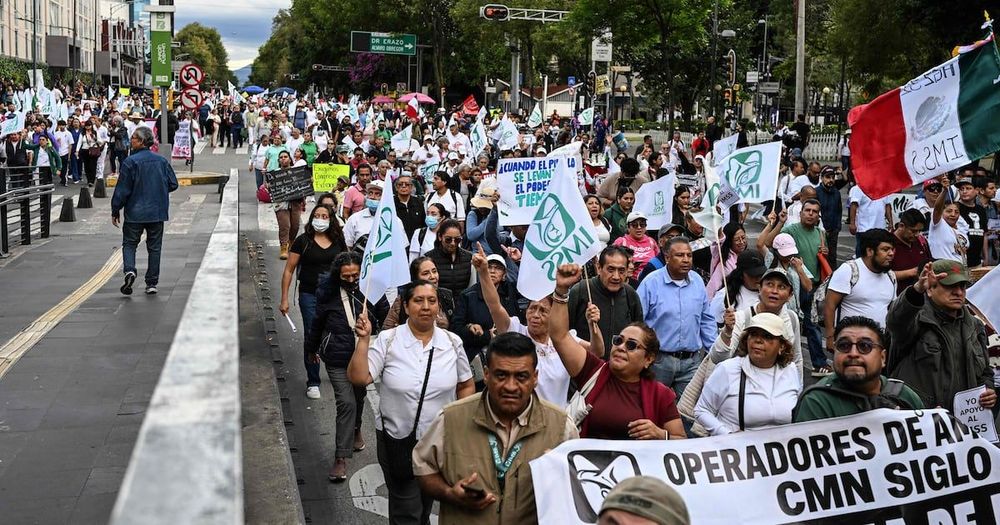
More than 500,000 people marched in France over the weekend, the largest demonstrations among protests across several European and Asian countries. Anger over household costs, public services and economic prospects is a recurring theme, though the movements have distinct demands and cannot all be explained by inflation or inequality.
 Omar Al Nuaimi
France's demonstrations and budget pressures
France's nationwide protests on October 17, 2026, included rioting and looting. CNBC, citing French Interior Ministry figures, reported almost 2,400 arrests and injuries to nearly 1,000 police officers and gendarmes. Shops suffered looting or damage, buildings were defaced, and estimated business losses ran into hundreds of millions of euros. Fire largely destroyed the 143-year-old town hall in Limoges.
ABC News traced the European protest wave to demonstrations in France on September 17. It reported that the unrest had spread to six countries, with the first demonstrations in Spain on September 26, Belgium on October 1, Italy on October 5, Portugal on October 10 and Albania on October 12. Authorities announced curfews in parts of Paris and Lille after some rallies became violent.
The French unrest coincided with a budget dispute. Prime Minister Sébastien Lecornu's minority government was seeking €54 billion ($61 billion) in savings in its 2027 budget, CNBC reported. A National Assembly vote on the bill's first part was scheduled for Tuesday. France's debt reached a record €3.6 trillion in the second quarter, equivalent to 119% of GDP.
Housing, fuel and the accumulated cost of inflation
Portugal illustrates the range of pressures on household budgets. According to Reuters, home prices there have more than doubled since 2017, while rents on new tenancies have almost doubled. Inflation was 3.6% in September 2026, and fuel prices were up 15% from a year earlier.
Housing has also become a political issue in Spain. ABC News reported that Prime Minister Pedro Sánchez called a snap general election for November 29, 2026, shortly after lawmakers rejected his proposed housing reforms, which were intended to address public discontent.
The National's consumer-price comparison shows how increases have accumulated over decades. A basket priced at $100 in France in 2000 cost $151 in 2025; in Serbia, the corresponding cost reached $1,054. The increases in Iran and Turkey were greater still, prompting the use of a logarithmic scale in the chart.
Slower inflation does not reverse those increases: it means prices are climbing at a reduced pace, not falling back to earlier levels. Prices remain well above their historical levels, and wages in some countries have failed to keep up. Energy costs have also contributed to public anger and protests across Europe and Asia.
Local demands extend beyond living costs
In Italy, protests concerning living costs, public services and wars led to clashes in Milan's Piazza del Duomo during the October 17-18 weekend. ProtoThema English, citing Reuters, reported 271 detentions and 32 arrests. A significant number of those arrested were minors. Prime Minister Giorgia Meloni condemned the violence.
Albanian students have focused on corruption, youth unemployment and conditions at universities. Thousands gathered outside the Ministry of Education on October 17, the fifth day of an expanding student movement, to demand Prime Minister Edi Rama's resignation, according to ProtoThema English.
Serbia's movement has an earlier and different starting point. On November 1, 2024, a canopy at the Novi Sad railway station collapsed, killing 16 people. The disaster prompted allegations of corruption and inadequate oversight, followed by a political crisis and resignations, including that of Prime Minister Miloš Vučević, ProtoThema English reported.
India's demonstrations, meanwhile, center on changes to voter lists. Such differences limit what economic statistics alone can explain about the protests.
Wealth gains are unevenly shared
For some protesters, a widening wealth gap compounds frustration over inflation. The figures describe a sharp imbalance, but they do not establish that inequality caused the demonstrations.
UBS's Global Wealth Report 2026 estimates that 58 million adults have more than $1 million each. That group represents 1.5% of the world's adult population but holds 48.4% of global wealth. By contrast, the 1.62 billion adults with less than $10,000 each account for 42.1% of adults and hold a combined 0.6% of wealth.
Growth in total wealth has not meant gains throughout the distribution. Fortune reported that UBS recorded a 10.8% increase in global personal wealth in 2025, the fastest growth since 2017, alongside nearly one million new dollar millionaires. Yet median wealth, the amount held by the person at the midpoint of the distribution, fell in most of the 56 markets UBS tracks, even as average wealth rose sharply.
Fortune also cited the World Inequality Report 2026, which found that 56,000 ultra-wealthy people, the top 0.001%, control more wealth than the poorest 4 billion people combined. That group's share of global wealth has nearly doubled since 1995.