Gulf oil producers shift tanker transfers to India as Hormuz congestion intensifies
Ship-to-ship oil operations are expanding to India's west coast as traditional Gulf transfer hubs reach capacity limits. Gulf producers are cutting crude prices and absorbing transit risks to maintain market share in Asia.
 Omar Al Nuaimi
Oil transfers off India's west coast surge as Gulf shipping congestion worsens
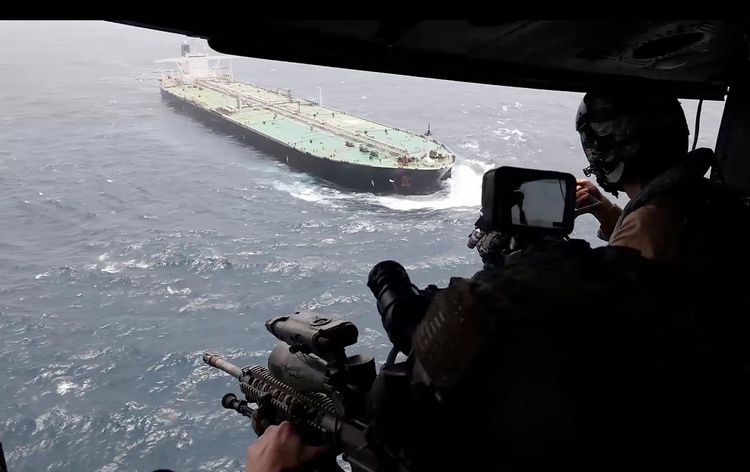
Gulf oil producers are extending ship-to-ship transfer operations as far as India's western coast and implementing steep price cuts to sustain crude flows to Asian markets, as the makeshift export network bypassing the Strait of Hormuz struggles under mounting congestion and security threats.
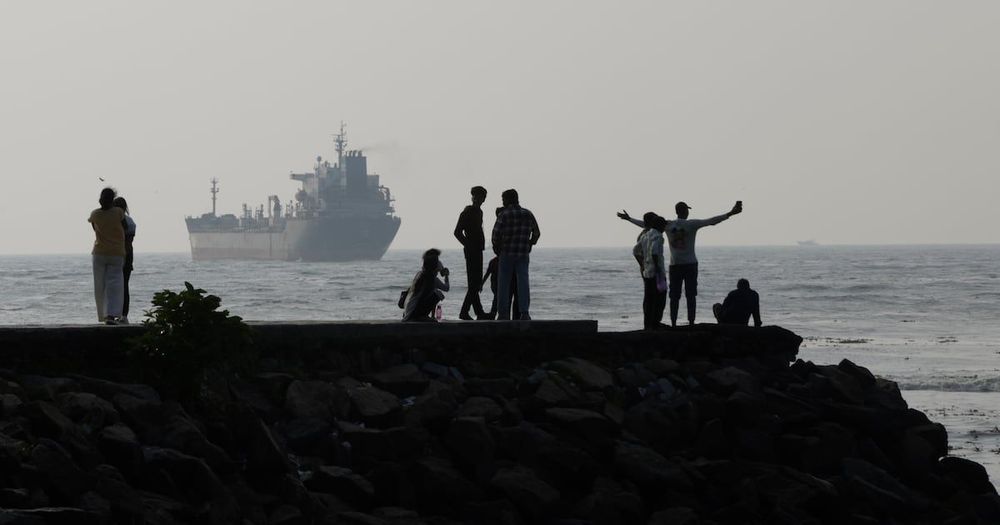
Ship-to-ship transfers in India's Gulf of Kutch reached 82 cargoes in September, equivalent to approximately 680,000 barrels per day, according to shipping analytics company Vortexa. Refined products accounted for roughly 65 per cent of the volume, with crude oil comprising the remainder.
Before the Iran war, approximately 20 million barrels per day of crude oil and petroleum products transited the Strait of Hormuz, representing about 25 per cent of global seaborne oil trade. China and India combined received 44 per cent of crude oil exports passing through the strait, making Asian buyers the primary customers Gulf producers are fighting to retain.
"Fujairah and Sohar ship-to-ship zones were handling record volumes with some indications of delays relating to operational limitations, and thus the activity has spilled over to India," said Varaleka Pant, senior market analyst at Vortexa.
The expansion reveals how the workaround sustaining Gulf exports is approaching its breaking point. Producers have been shuttling oil through Hormuz before transferring it to supertankers outside the strait, but congestion and extended voyages are immobilizing vessels and escalating costs.
Shore-side support facilities at Fujairah and Sohar are operating at or close to maximum capacity, with the Gulf of Oman ship-to-ship capacity approaching practical limits. European Space Agency satellite imagery documented 19 separate ship-to-ship cargo transfers occurring simultaneously in Gulf of Oman anchorage zones on October 4, including 11 crude oil transfers, illustrating the operational intensity driving the search for alternative locations.
Crude transfers onto very large crude carriers have maintained levels of approximately 5 million to 7 million barrels per day since September, accounting for 60 to 70 per cent of total Hormuz flows, according to Rystad Energy. The complete process, including waiting time, now requires approximately 10 days, compared with five to six days earlier in the conflict.
"The overflow has started to move into the Arabian Sea, but it is still small," said Rahul Choudhary, vice president for oil and gas at Rystad. Some supertankers previously used for Saudi transfers are now discharging directly off India's west coast, he noted.
A recent tanker strike off Fujairah, the first there in six months, has intensified pressure to disperse operations. Attacks on Saudi Arabia's East-West pipeline have further exposed the vulnerability of alternative export routes. The pipeline has a maximum capacity of 7 million barrels per day and currently flows at 5.8 million barrels per day as of October 2026, with approximately 2 million barrels per day directed to domestic refineries and the remainder exported through Yanbu.
Operations extending eastward
The shift towards India is expanding, though analysts differ over its scale. South Korea, India, China and Japan took almost 70 per cent of the Kutch volume, according to Vortexa.
In one such transfer, a 2 million-barrel cargo of Saudi Arab Medium loaded at Ras Tanura on September 9 was moved onto the Front Forth very large crude carrier tanker off Kutch in late September. It was bound for S-Oil's Onsan refinery in South Korea, according to Kpler data.
Bimco, the shipping industry association, reported a much smaller figure of 12 ship-to-ship operations in the area in September, based on Signal Ocean data that counts transfers differently from Vortexa's cargo-based tally.
"The Gulf of Oman remains the main area for this," said Niels Rasmussen, Bimco's chief shipping analyst. The increase is unlikely to have changed overall tanker demand significantly, he said, though longer voyages to transfer points mean more ships are needed.
Very large crude carrier charter rates on the Middle East to China route have surged from approximately $100,000 per day in early 2026 to record levels exceeding $1.27 million per day by September 2026, reflecting heightened transit risks through Hormuz.
Yui Torikata of Kpler cautioned that some eastern transfer arrangements were in place before the recent shift, including Japanese refiners receiving Aramco and Adnoc cargoes off Malaysia. Kpler has yet to establish how much activity has shifted east.
Reported tanker activity near Sri Lanka is largely unrelated. Vortexa said vessels there were primarily sanctioned Iranian tankers stranded after discharging pre-blockade cargoes, while Bimco recorded no ship-to-ship operations off the island.
Security versus economic trade-offs
Moving transfers farther from Hormuz reduces the exposure of receiving tankers but does not eliminate the danger of transporting oil out of the Gulf.
"The ship-to-ship transfer itself is relatively low risk. The real risk lies in getting the barrels out of the west of Hormuz to the ship-to-ship zone," Pant said.
Kutch offers relatively calm waters and proximity to Indian refiners, but the cargoes must still pass through contested routes before reaching the transfer point. Buyers could retreat after a security incident on that route, if discounts fail to cover higher freight and ship-to-ship costs, or if congestion spreads to India, she said.
Egypt's Sidi Kerir terminal is the safest place to take delivery, according to Kpler, because receiving tankers can avoid both Hormuz and the Bab Al Mandeb strait. But the journey to Asia takes about 55 days, compared with just over 20 days from the Gulf of Oman, according to Torikata.
Disruptions to Saudi Arabia's East-West pipeline have also left Japanese-chartered tankers waiting for cargoes there, he said. Japanese refiners, and to a lesser extent South Korean ones, rely on medium-sour crude for blending, limiting their ability to switch suppliers. Japan relies on approximately 90 to 95 per cent of its crude oil from the Middle East, with roughly 70 to 74 per cent of total Japanese crude imports passing through the Strait of Hormuz directly before the conflict.
A Japanese refiner paid a record high price of above $80 million to charter a tanker from the US Gulf Coast to Japan, Torikata said.
"If they paid such high rates to buy US crude, they would go to Sidi Kerir to buy Arab Light as it takes approximately the same time as sourcing from the US Gulf Coast," he added. Arab Light is also favoured by Japanese refiners over US light sweet oil.
Price cuts deepen divide
The disruption is dividing Gulf producers between those cutting prices to compensate buyers for transit risks and those able to command premiums for more secure supply.
Iraq, which has no export route around Hormuz, offered October-loading Basrah Medium at a discount of $34.50 a barrel and Basrah Heavy at $37, compared with discounts below $30 in August, according to Rystad.
The reductions have helped restore Iraqi production to within 10 per cent of pre-war levels, Rystad said. Iraq now pumps almost 70 per cent as much crude as Saudi Arabia, compared with less than 40 per cent before the conflict.
Saudi Aramco cut its November Arab Light price for Asian buyers by $3 to $5 a barrel below the Oman/Dubai average, the widest discount since 2020, defying market expectations of an increase.
QatarEnergy also cut its November prices by $3, setting Qatar Marine at $8 a barrel below the Oman/Dubai average and Qatar Land at $7.50 below, according to a pricing document.
"In the short term, deep discounting of crude is protecting market share more effectively by providing price incentive for buyers to lift crude from the Gulf, but it's a situational move," Pant said.
Adnoc has taken a different approach, benefiting from its ability to export Murban crude through Fujairah without passing through Hormuz. The UAE's Habshan-Fujairah pipeline has a capacity of 1.8 million barrels per day and has allowed Adnoc to export Murban crude directly to Fujairah without transiting the Strait of Hormuz since 2012.
"Murban carries none of the transit risk the other cuts compensate for," Choudhary said. "It reaches Fujairah by pipeline and loads outside Hormuz, so buyers pay a premium for it."
The grade traded as much as $26 a barrel above Dubai swaps in late September before easing to about $15, according to Rystad.
For its other grades, Adnoc has used spot tenders rather than resetting official prices, preserving flexibility while testing what buyers will pay, according to Vortexa.
The divergence underscores how secure access to export infrastructure has become a competitive advantage, allowing some producers to protect margins while others sacrifice revenue to keep their oil flowing.
Producers absorb transit risks
Gulf producers are increasingly taking on transit and security risks themselves to keep Asian customers.
Adnoc, Aramco, Iraq and Qatar now offer ship-to-ship deliveries outside Hormuz, and Kuwait has adopted the same approach to attract buyers, according to Choudhary. These arrangements let buyers receive cargoes without sending their own tankers through the strait.
The UAE has also moved to lock in Asian demand. Adnoc agreed in May to explore raising its crude storage in India to as much as 30 million barrels, from about 5.9 million at Mangalore.
Aramco, which sold more than 60 million barrels for transfer off Sohar for September and October deliveries, is negotiating term contracts for next year involving loadings outside Hormuz, Choudhary said, signalling that buyers and sellers alike expect the arrangement to last.