IMF warns Gulf economies face prolonged downturn as war-driven shock reshapes regional outlook
The Middle East and Central Asia region is forecast to contract 0.3% in 2026, a sharp reversal from earlier growth projections, as the Iran war inflicts lasting damage on infrastructure and budgets across energy-exporting economies.
 Omar Al Nuaimi
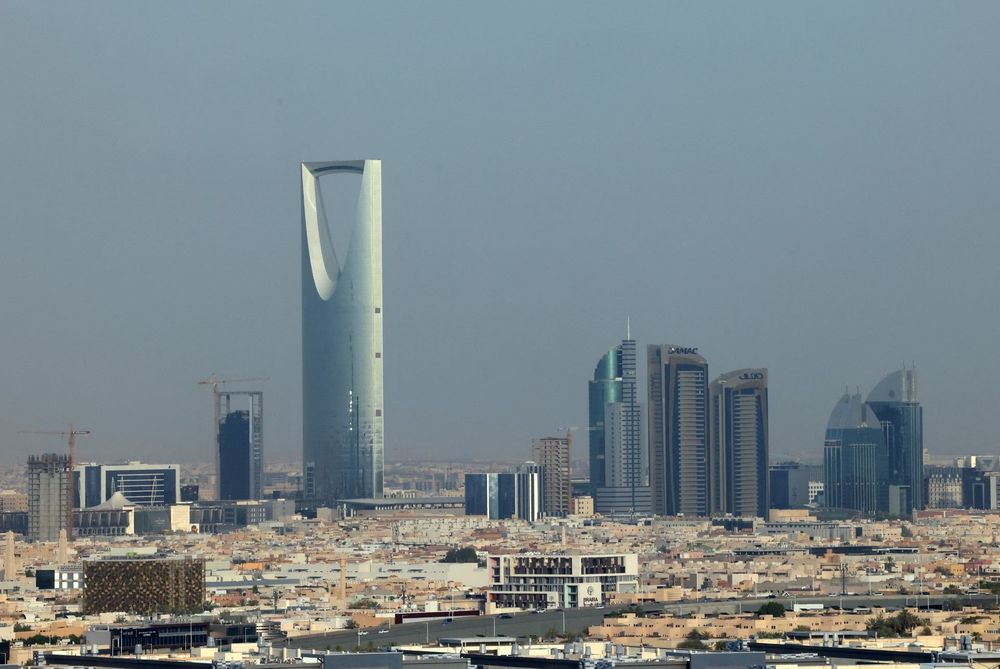
Gulf economies may not recover to pre-war levels soon as shock will hit many sectors, IMF warns
Energy-dependent economies across the Middle East face a prolonged recovery from the Iran war, with the economic shock expected to leave lasting scars across multiple sectors, the International Monetary Fund's regional director warned on Thursday.
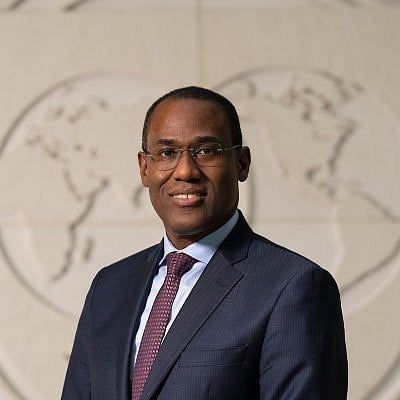
Speaking at the IMF-World Bank Annual Meetings in Bangkok, Jihad Azour told reporters that the region will not return to its pre-war economic trajectory in the medium term. The conflict has disrupted critical infrastructure and forced governments to redirect spending toward resilience measures, he said.
The IMF projects the Middle East and Central Asia region will contract 0.3% in 2026, making it the only major region globally forecast to experience negative growth this year. The projection marks a sharp reversal from the 1.9% expansion the fund had forecast for the region in April, before hostilities escalated.
By contrast, emerging and developing Asia is expected to grow 5.1% in 2026, while Sub-Saharan Africa is projected to expand 4.5%, underscoring the unique severity of the war's economic impact on the Middle East.
Saudi Arabia, the region's largest economy, is expected to contract 3.3% in 2026, a dramatic turnaround from the 4.5% growth the kingdom recorded in 2025, when its GDP reached $1.28 trillion. That expansion was driven by 5.7% growth in oil activities and 4.9% growth in the non-oil sector.
While Saudi Arabia faces a rare recession, other Gulf states are projected to suffer even steeper contractions. Kuwait's economy is forecast to shrink 16.7%, Iraq's by 16%, and Qatar's by 15.6%, reflecting the widespread disruption to energy exports and infrastructure across the region.
The outlook comes as fighting involving Saudi Arabia and Yemen's Houthis has intensified, with missile strikes hitting airports and energy facilities, including the headquarters of state oil giant Aramco. IMF chief Kristalina Georgieva has warned that attacks targeting Saudi Arabia could have repercussions far beyond the region.
The broader Middle East, North Africa and Pakistan region is projected to contract 1.3% in 2026, following 3.3% growth in 2025, before rebounding to 6.6% growth in 2027, according to IMF projections.
Debt burden squeezes developing economies
The war's economic fallout is compounding pre-existing financial pressures on developing countries, which are already grappling with elevated debt costs and shrinking fiscal space.
UN Development Programme chief Alexander de Croo warned at the Bangkok meetings that millions more people could fall into poverty as energy costs surge, interest rates remain elevated, and climate risks intensify.
The UNDP estimates that about 130 million people could be pushed into poverty this year if increases in energy and food prices are fully passed on without subsidies. South and East Asia and sub-Saharan Africa are particularly vulnerable.
Developing countries paid nearly $1 trillion in net interest on public debt in 2025, almost triple the $363 billion they paid in 2010, according to UN trade agency UNCTAD. The median developing country now spends about 9.5% of government revenue on interest payments, the highest proportion in 25 years and more than three times the share in high-income countries.
In 51 developing countries, home to 3.7 billion people, governments now spend more on interest payments than on either health or education, according to a UNCTAD report released in October. If developing countries could borrow at the same rates as advanced economies, they could collectively save approximately $500 billion annually in interest costs, the agency said.
De Croo said repeated crises had left many developing countries with little room to respond to the latest energy shock. Governments have used broad subsidies to cushion consumers, but mounting debt and previous emergencies have depleted their financial buffers.
You have to repair your roof while at the same time your home is on fire.
He urged advanced economies and multilateral institutions to invest in growth, resilience and job creation across the developing world, warning that cuts in international aid were adding to the pressure on vulnerable countries.
Climate risks compound economic threats
De Croo also flagged further risks from this year's El Niño climate phenomenon, which meteorologists say is strengthening rapidly.
The US National Oceanic and Atmospheric Administration says there is a greater than 90% chance of a very strong El Niño event during fall and winter 2026-27, with potential to become the strongest since at least 1950. The phenomenon could bring widespread flooding, droughts and other extreme events, with impacts expected to peak in early 2027.
De Croo called for private capital to help address some of the most severe consequences of climate change as governments struggle to finance adequate responses.
The IMF has noted that global growth has remained resilient partly because of investment in artificial intelligence, but poorer countries without exposure to that technology boom continue to struggle with sluggish expansion and limited fiscal capacity.
More than 15,000 policymakers, economists, officials, business executives and journalists from 191 countries are attending the week-long meetings in Bangkok, which run from October 12 to 18.