Dubai seeks Chinese manufacturing expertise to double sector contribution to 20% of economy
Dubai is targeting Chinese manufacturing companies to help grow its industrial sector from the current 10-11% to 20% of GDP, as part of broader economic diversification plans under the Dubai Economic Agenda D33.
 Omar Al Nuaimi
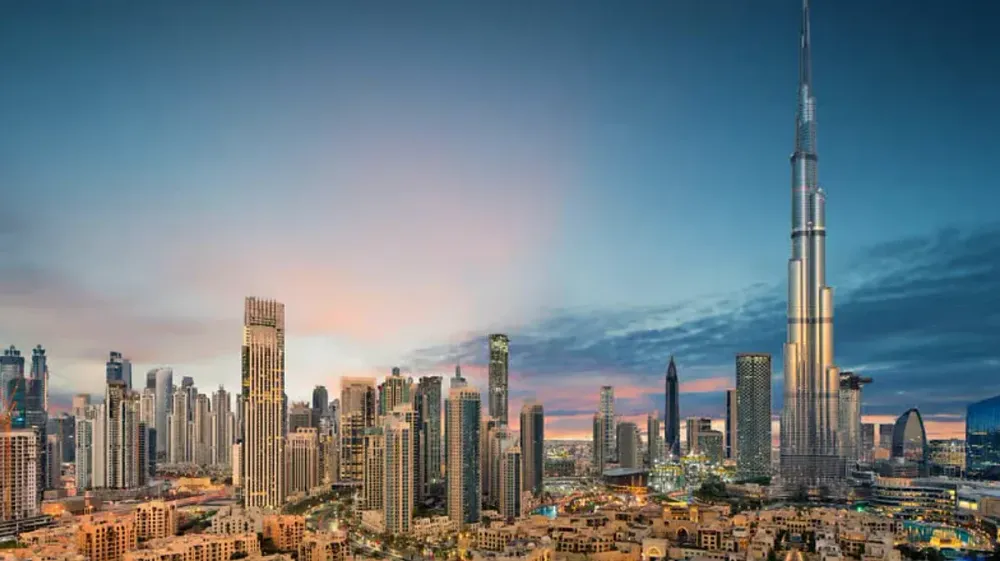
Dubai targets 20% growth in manufacturing industry through Chinese ties
Dubai is pursuing Chinese manufacturing expertise to expand its industrial sector to 20% of the emirate's economy, Chairman of Dubai Chambers Sultan Al Mansoori announced during a business forum in Shenzhen.
The emirate aims to leverage China's manufacturing capabilities to build infrastructure and expertise that will serve the broader region. China currently accounts for approximately 30% of global manufacturing output and has maintained its position as the world's largest manufacturing powerhouse for 16 consecutive years.
Manufacturing contributed AED 47.4 billion to Dubai's real GDP in 2025, representing approximately 10-11% of the emirate's economy. The push to reach 20% aligns with the Dubai Economic Agenda D33, launched in January 2023, which aims to double the emirate's economy by 2033 and specifically targets doubling manufacturing value-added output.
We need to jump with our numbers from 9 or 11 percent right now, up to maybe 20 percent. To do that, we need to be able to build the right infrastructure with the right people who succeed in industrial manufacturing.
Al Mansoori outlined the emirate's approach during the Dubai Business Forum in Shenzhen, where Dubai Chambers led its largest delegation outside the emirate. Manufacturing ranks among Dubai's key priorities for Chinese cooperation, alongside artificial intelligence, mobility, logistics, and renewable energy.
Deep-rooted bilateral relationship
UAE-China diplomatic relations were formally established on November 1, 1984, marking over 42 years of bilateral ties. The relationship was elevated to a comprehensive strategic partnership during Chinese President Xi Jinping's state visit to the UAE in 2018, representing the highest level of diplomatic relations in China's framework.
Bilateral non-oil trade exceeded $111.4 billion (AED 409.1 billion) in 2025, up 25% year-on-year, according to UAE Minister of Foreign Trade Thani Al Zeyoudi. The UAE has become China's largest trading partner in the Arab world, with bilateral trade reaching approximately $101.8 billion in 2024, representing roughly 800 times the volume when diplomatic ties were first established.
In Dubai specifically, non-oil trade with China reached AED 363.5 billion in 2025, reflecting 172-fold growth over 35 years. Between 2016 and 2025, this trade volume increased by 118.4%. The two countries expect bilateral trade to reach $200 billion by the end of the decade.
Growing Chinese business presence
The number of Chinese companies registered as active members of Dubai Chamber of Commerce has more than tripled since 2016, reaching 6,650 by the end of September 2026. The Dubai Multi Commodities Centre has recorded 9.4% growth in Chinese companies over the past year, with over 60% of its 1,000 registered Chinese firms operating in energy, engineering and machinery, and technology and telecommunications sectors.
China's major financial institutions have established a significant presence in Dubai. Five of China's largest banks—Agricultural Bank of China, Bank of China, Bank of Communications, China Construction Bank, and Industrial and Commercial Bank of China—have set up regional headquarters or branches at the Dubai International Financial Centre. These institutions collectively account for more than 30% of total assets in DIFC's Banking and Capital Markets sector.
Most recently, Beijing-based China Securities became the latest bank to establish a regional office at DIFC, joining the cluster of Chinese financial institutions in the centre.
The deepening cooperation is facilitated by comprehensive mutual visa exemption between the UAE and China, which took effect in January 2018, making the UAE the first Middle Eastern country to achieve this arrangement with China.
Dubai's economy demonstrated strong momentum to support its manufacturing expansion plans, with GDP reaching AED 232 billion in the first quarter of 2026, representing 2.4% growth. The emirate recorded 6.4% economic growth in the fourth quarter of 2025.
The message is we are ready, we are open, and we would like to work together to establish this kind of structure in Dubai.
China's manufacturing sector reached RMB 34.67 trillion (approximately $4.85 trillion) in 2025, representing about 24.7% of China's total GDP, demonstrating the scale of expertise Dubai seeks to replicate in its own market.