Healey's first UK budget offers targeted relief and reassurance to investors
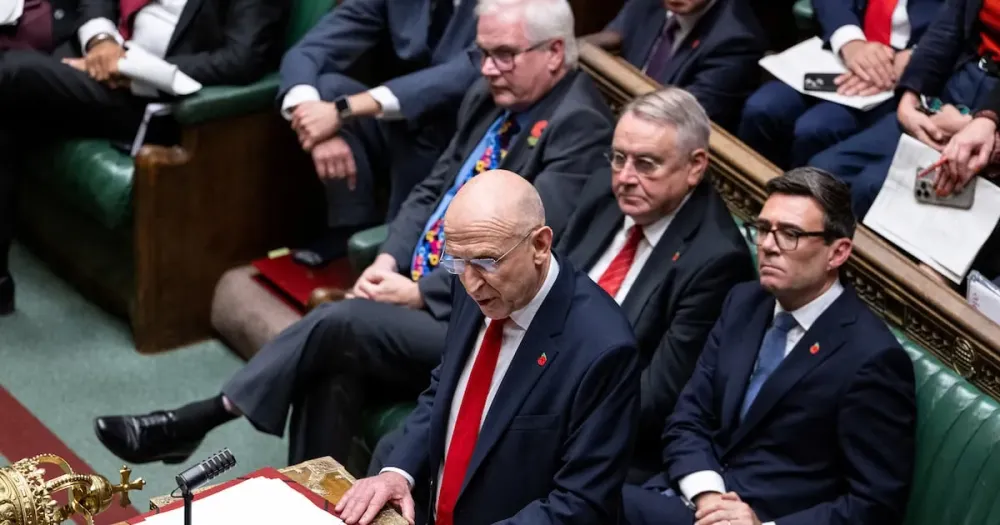
UK Chancellor John Healey delivered a cautious first budget on October 28, 2026, combining help with household costs and a temporary increase in bank taxes. The National's Chris Blackhurst sees the package as an effort to restore investor confidence while leaving much of Prime Minister Andy Burnham's longer-term agenda for later.
 Omar Al Nuaimi
Energy support, higher wages and pension tax relief
Household energy assistance is among the budget's main measures. HM Treasury says a £100 Household Energy Payment will reach up to 20 million households in England's council tax bands A through D, with payments beginning in January 2027. The rest of the UK will receive funding for comparable support.
The government will also keep the temporary electricity VAT cut in place until July 1, 2027. According to the Treasury, that extension will reduce Ofgem's annual price cap by around £50 in April 2027. Ministers will ask the regulator to remove gas standing charges and incorporate them into charges based on consumption; the budget does not itself abolish those charges.
The National Living Wage will reach £13.21 an hour on April 1, 2027, a 3.9% increase. The Treasury puts the resulting gain in gross annual earnings for a full-time worker on that wage at £910. PwC UK says younger workers' minimum wage rates will also increase by 3.9%.
A new Pension Tax Allowance takes effect in April 2027. People above State Pension age whose total income does not exceed the value of the new State Pension will owe no income tax. The Treasury estimates that around 500,000 pensioners will benefit in 2027-28, including around 290,000 who will pay no tax at all.
The package also includes a state pension increase, business rates relief for small firms, measures supporting social and affordable housing, and tax-raising powers for regional mayors.
Banks face a temporary surcharge increase
For banks, the principal change is a temporary doubling of the Bank Corporation Tax Surcharge from 3% to 6%. The higher rate applies for 15 months, ending March 31, 2028, and is expected to raise £1.5 billion, the Treasury says. Together with corporation tax of 25%, it brings the tax rate on bank profits to 31% during that period, according to The Standard.
The increase follows strong quarterly earnings at major lenders. The Standard reports that HSBC's profits for the three months through September rose 32% to £7.14 billion, while Barclays reported a 12% increase to £2.3 billion for the same period.
Blackhurst writes that lenders had expected a larger tax increase and that bank shares rose after the announcement. Even at 6%, he notes, the surcharge remains 2 percentage points below the rate introduced by a Conservative government in 2016.
A deliberate break from earlier budget shocks
The budget had been promoted as a landmark for Burnham's government. Its limited scope instead drew criticism from Conservative leader Kemi Badenoch, who suggested listeners would ask, "Is that it?" Her response centered on the spending and welfare cuts Labour had not made.
For Blackhurst, however, restraint was central to Healey's approach. There was no mansion tax or measure aimed directly at the wealthiest. UK stocks and government bonds rose, a response he attributes partly to Healey's assurance that the package was fully funded.
Blackhurst contrasts that reception with the backlash to Rachel Reeves's first budget. Her increase in employers' National Insurance contributions, alongside measures affecting farmers, non-doms and private schools, angered businesses that believed Labour had courted them before the election. He also links those changes to wealthy people moving to more tax-friendly jurisdictions.
In his assessment, Healey and Burnham wanted to repair that relationship and reassure international investors without abandoning fiscal restraint. The approach also distanced them from Liz Truss's unfunded mini-budget. Healey's repeated promise of "breathing-space" described limited help for households and small firms facing higher living costs and energy bills pushed up by the Iran conflict, rather than a large expansion of spending.
Numerous measures, limited fiscal room
PwC's initial analysis illustrates the package's unusual scale: it contained almost 100 policy measures, more than in any budget the firm had examined in at least 15 years, yet the average measure was the smallest on record. The package included £5 billion in immediate household cost-of-living support for 2026-27.
The room available under the government's fiscal framework has also narrowed. PwC says headroom against the stability rule fell to £14.5 billion from £23.6 billion at the Spring Statement. That is roughly half the average margin chancellors have maintained since 2010. Around £30 billion in broader fiscal pressures remains unresolved, the firm says.
Blackhurst argues that caution also reflected the economic backdrop. He describes the UK as having weathered the Iran war relatively well and edged ahead of France and Germany, while stressing that taxes remain at post-1945 highs and borrowing is substantial.
Burnham's larger agenda awaits harder decisions
The immediate package falls well short of the ambitions Burnham outlined at Labour's recent party conference. Those included a National Care Service, action for young people not in education, employment or training, changes to public housing, better infrastructure and higher defense spending.
Blackhurst interprets that program as Burnham's vision for a decade in office, rather than a set of measures ready for this budget. He views Healey's restrained approach as election-minded: an attempt to broaden support and calm investors without a pre-election tax giveaway.
The budget arrived barely 100 days into the administration. Blackhurst argues that ministerial and staffing changes, the party conference and geopolitical demands left little time to prepare a major package. More consequential choices may begin next year with the spending review, including decisions on defense, social care, welfare, public utilities and pensions.