S&P Sees Qatar's Economy Rebounding 15% in 2027 as Gas Supply Increases
Qatar's economy is expected to grow 15% in 2027 after shrinking a projected 14% this year, S&P Global Ratings said Friday. The forecast depends on more gas supply coming online despite war damage that will take years to repair.
 Omar Al Nuaimi
Gas damage limits the recovery
S&P projects average real GDP growth of 8% across 2028 and 2029 after next year's rebound. It also affirmed Qatar's AA sovereign credit rating and stable outlook, pointing to financial reserves that can help the country withstand conflict-related disruptions.
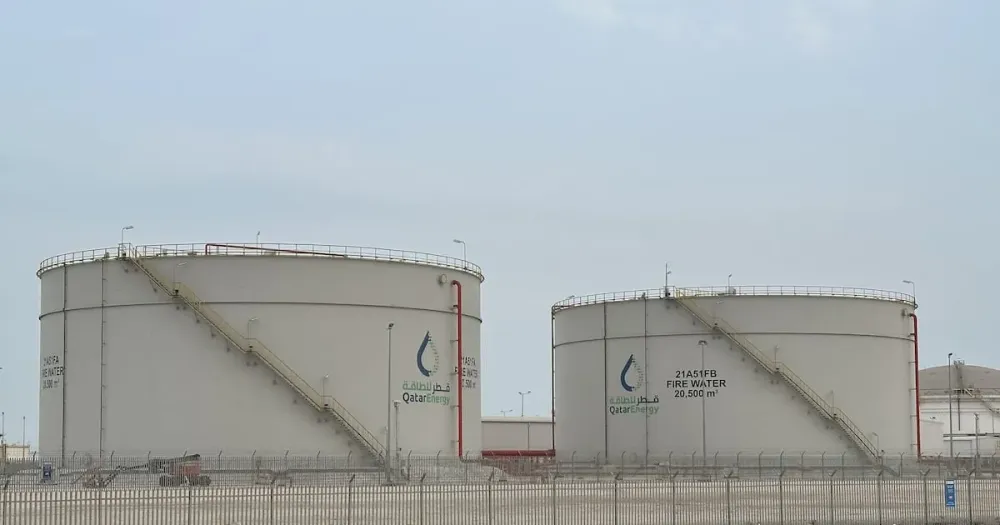
Iranian attacks disabled about 17% of Qatar's LNG export capacity, or 12.8 million metric tons annually, by damaging two of its 14 export trains. AGBI identified the facilities as Trains 4 and 6 at Ras Laffan Industrial City, struck on March 18, 2026, in what it described as perhaps the conflict's most devastating single attack.
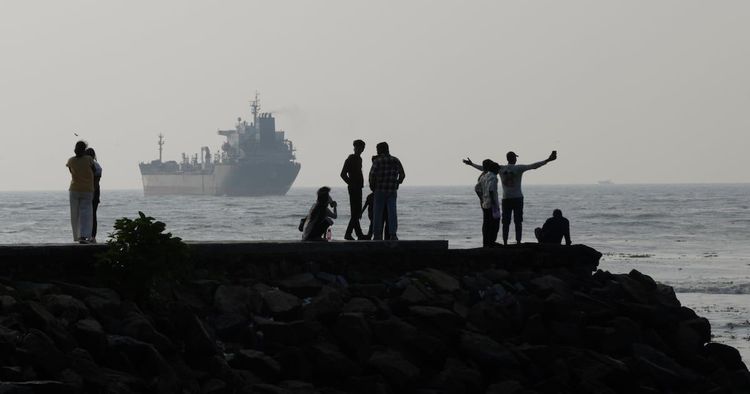
QatarEnergy estimates that repairs will require three to five years. Reopening the Strait of Hormuz safely would therefore restore access to only some of Qatar's prewar supply. The disruption has driven gas prices sharply higher worldwide.
A July assessment by Wood Mackenzie, reported by AGBI, outlined a staged recovery: restarting undamaged trains could bring capacity to 10% to 25% of prewar levels within weeks of a durable ceasefire, followed by a rise to roughly 80% by late 2026 as other operable trains are recommissioned.
Wood Mackenzie expected a lengthy pause after that. It described the remaining 20% as the two destroyed trains, whose restoration depends on replacement gas turbines. Only three manufacturers worldwide make the necessary equipment, and delivery delays run from two to four years. Under that assessment, full recovery would come no earlier than 2028 and could slip to 2029 or 2030.
Expansion projects offer new supply
S&P expects the North Field expansion to proceed, though behind schedule, and substantially increase Qatar's ability to meet overseas energy demand. The agency sees demand from rapidly developing Asian economies and LNG's use as a transitional fuel supporting export volumes.
QatarEnergy expects the first North Field East train to begin operating in the first half of 2027, according to Oil & Gas Journal. That train will have annual capacity of 8 million metric tons within a 32-million-metric-ton-per-year expansion. The Strait of Hormuz crisis will determine the timing of subsequent trains.
Production from North Field South, with planned annual capacity of 16 million metric tons, is scheduled to start in 2028. Together with North Field West, the expansion program is designed to lift Qatar's LNG production capacity from 77 million to 142 million metric tons a year.
Other QatarEnergy projects have separate recovery and expansion schedules. CEO Saad al-Kaabi said a war-damaged gas-to-liquids train should return to service in the first quarter of 2027. He also expects Golden Pass, the company's LNG joint venture with ExxonMobil, to reach its full annual capacity of 18 million metric tons in 2028 when Trains 2 and 3 enter service. Golden Pass shipped its first cargo in April 2026.
Al-Kaabi said Qatar would not build pipelines to bypass Hormuz, calling such a route "redundant" and saying it would make "no economic sense" given the North Field expansion. He said Qatar was ready to resume normal operations within a few weeks of the strait reopening, although the damaged LNG capacity faces the longer repair schedule.
Export losses weigh on public finances
The decline in LNG exports cut government revenue by 42% in the first half of 2026, Emir Sheikh Tamim told a Shura Council meeting in October. AGBI estimated in July that annual revenue losses from the disruption could reach $20 billion.
More than 90% of Qatar's exports pass through the Strait of Hormuz, according to AGBI, which noted that LNG, unlike oil, cannot be rerouted overland.
S&P warned that an extended shutdown or further disruption of LNG production and exports remains a major risk to its forecast. At the same time, it expects economic diversification and work to rebuild damaged LNG infrastructure to support growth outside the hydrocarbon sector over the next two to three years. The agency forecasts a modest rise in inflation to about 4%.
Financial reserves underpin the AA rating
Qatar's fiscal and external assets were central to S&P's decision to retain its rating despite security risks and disrupted trade flows. AA is the agency's third-highest rating and places Qatar in the high-investment-grade category, helping it access capital markets when it needs to borrow.
The stable outlook assumes that damage to civilian and energy infrastructure will remain limited. S&P said a sharp escalation in hostilities would prompt a reassessment. Fitch Ratings expressed similar views about Qatar's financial buffers in its May and September assessments.
S&P said those buffers "provide significant scope to counter volatility, support economic fundamentals, or aid recovery during and after a period of conflict." Its analysts added: "Qatar's policymaking, significant asset buffers and the sound financial profiles of many public sector entities, including QatarEnergy, have enabled the country to adapt to stress situations."
AGBI put the Qatar Investment Authority's assets at approximately $520 billion in July. Its report also documented mounting fiscal pressure: Qatar went from a $1.5 billion surplus in 2024 to a $2.2 billion deficit in 2025. By the time of the July report, it had issued $3 billion in bonds, its first significant borrowing in years, and posted a $1.2 billion trade deficit during the Hormuz closure, also its first in years.
S&P separately lowers Meta's outlook
In a separate assessment, S&P changed Meta Platforms' outlook to negative over cash-flow concerns surrounding its AI spending. Meta recently put those investments at $135 billion to $145 billion, while S&P judged its ability to monetize them to be "more limited" than that of its peers.
The agency said Meta intends to generate returns through better advertising tools and faster advertising revenue growth, but the timing of returns sufficient to exceed rising costs remains unclear over the next few years. Several competitors, it noted, already earn revenue by leasing data-center computing capacity to outside customers, including frontier model labs and businesses.