Iran proposes reopening Hormuz within two days, pending US action
Iranian Foreign Minister Abbas Araghchi has outlined a proposal that would restore normal transit through the Strait of Hormuz on the second day, after US measures on the first. The framework emerged from Qatar-mediated talks, but Washington has neither publicly responded to it nor accepted it.
 Omar Al Nuaimi
A shorter timetable, not an agreement
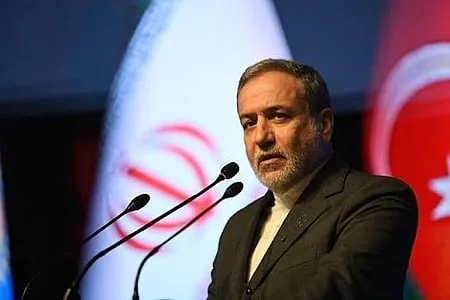
Clash Report quoted Araghchi as saying: "I can say that we have now reached a two-day plan." Under that sequence, Washington would act first to meet Iran's conditions, followed by Iran reopening the strait and allowing navigation to return to its previous state.
Consultations with Qatari mediators brought the proposed timetable down from seven days to 48 hours. Al Jazeera and The Washington Times also corroborated Araghchi's account. Although he described the talks as "moving toward implementation," consultations remain underway and have not produced a definitive agreement.
Araghchi said he had not traveled to Doha for direct talks with US representatives; Qatar continued to carry the discussions between the two sides.
The proposal does not confirm that a reopening has begun. Separately, the US military says the Strait of Hormuz is open.
What Tehran wants Washington to do
Araghchi detailed Iran's conditions in an Al Jazeera interview published November 1, 2026. Tehran wants Washington to lift recently imposed sanctions, restore the oil waivers granted in June and scale back its military presence in the region.
Iran also seeks recognition of new shipping routes designated by Iran and Oman in the Strait of Hormuz. Another condition is an end to fighting on all fronts, including Israel's attacks on Lebanon.
US Secretary of State Marco Rubio confirmed on November 1 that Qatar-led negotiations were continuing, but said he knew of no timetable. "Talks have actually never stopped," Rubio said. He added that Washington remained open to a diplomatic solution.
Diplomatic contacts alongside military threats
The latest diplomatic activity followed a letter from Vice President JD Vance to Iranian security chief Mohsen Rezaei, Al Jazeera reported. The letter was reportedly intended to assess whether negotiations could restart and another round of military escalation could be avoided.
Rezaei confirmed on November 1 that he had read the letter. Compared with earlier correspondence from President Donald Trump, he said, its tone had "completely changed."
Pakistan has joined Qatar in mediating between Washington and Tehran. Pakistani army chief Field Marshal Asim Munir has made several visits to Tehran as part of those efforts. According to Al Jazeera, both Doha and Islamabad were central to the June memorandum of understanding, which collapsed in August 2026.
Trump's public comments have combined support for talks with the prospect of further attacks. As of November 1, he described the latest negotiations as "going fine" but also "not very reliable." He has repeatedly suggested that the US could strike Iran after the November 3 midterm elections, identifying the suspected underground nuclear complex known as Pickaxe Mountain as a target still to be "taken care of."
The disruption to oil supplies
The strait's closure during the US-Israel war on Iran has contributed to a severe energy crisis. Restoring navigation would ease disruption at a major global energy chokepoint and reduce risks for shipping and oil markets, but Iran's proposed sequence remains contingent on US action.
In a July 27, 2026, blog post, the European Central Bank said the closure followed US-Israeli strikes on Iran in late February. It disrupted shipments totaling about 20 million barrels a day, equivalent to one-fifth of global oil supply. Saudi and Emirati pipelines offset some of that disruption, but the average supply loss was still around 14 million barrels a day, or 14% of global supply.
A September 17 analysis by CSIS traced Brent crude's rise from roughly $70 a barrel in February to $145 in April, followed by a retreat to around $90 by the end of August. The analysis also reported that International Energy Agency members had pledged 400 million barrels from strategic reserves; about 290 million barrels had been released by the end of July.