Trump threatens tariffs over EU proposal to make Canada associate member
US President Donald Trump warned he may impose tariffs or halt trade with the European Union after Commission President Ursula von der Leyen proposed making Canada the bloc's first associate member, escalating tensions between Washington and its traditional allies.
 Sara Khan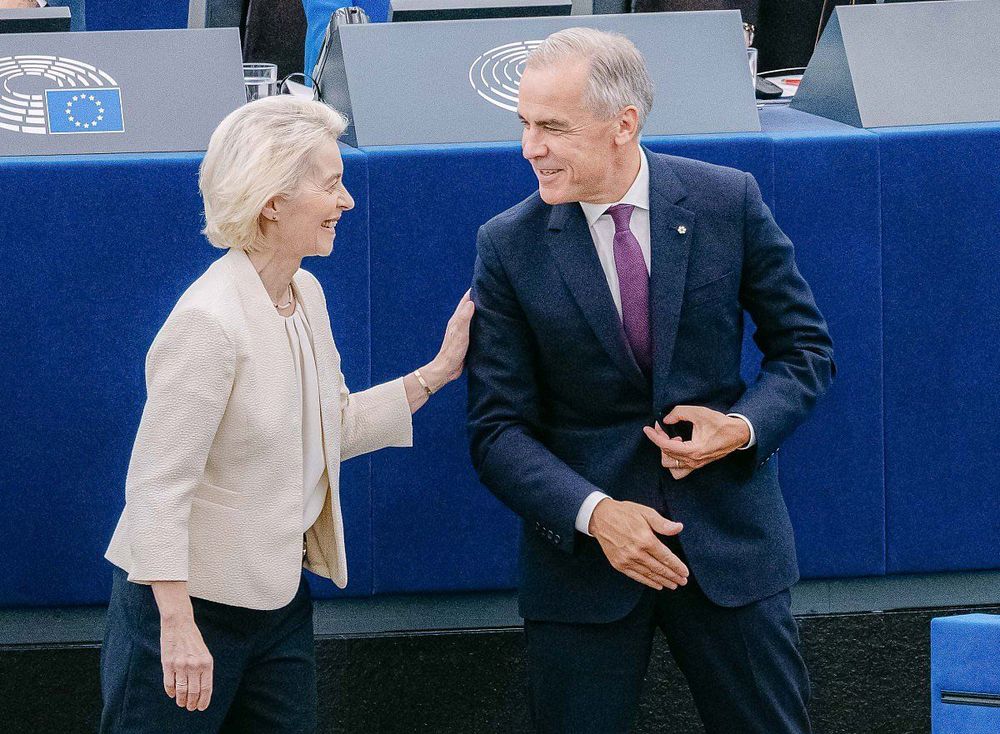
Trump threatens tariffs over EU proposal to make Canada associate member
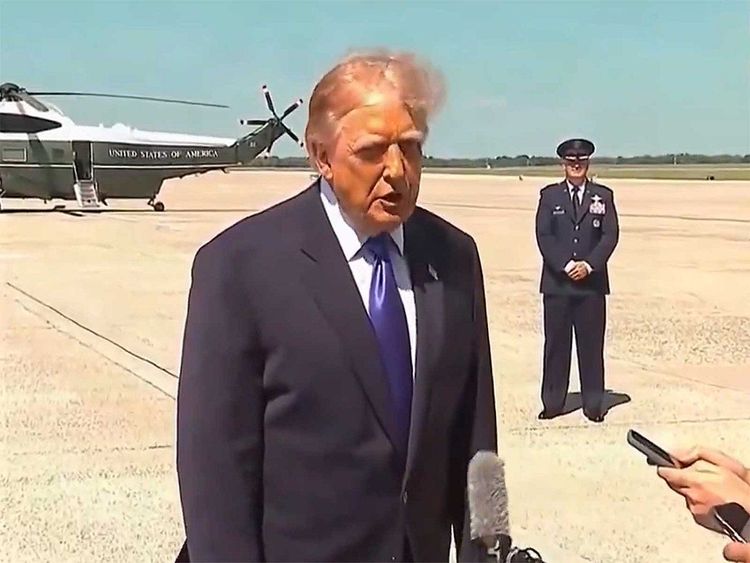
US President Donald Trump threatened late Wednesday to impose tariffs or stop trading with the European Union after the bloc proposed making Canada its first associate member, marking a sharp escalation in transatlantic tensions.
EU Commission President Ursula von der Leyen floated the proposal during her annual State of the European Union address in Strasbourg, with Canadian Prime Minister Mark Carney in attendance as the first non-European head of government to witness the keynote speech.
"I think it's laughable," Trump told reporters when asked about the plan. "If they do that, if I think it's at all a hostile act, I will put very serious tariffs or stop trading with Europe, on many things."
The US president added that his response would depend on the intention behind the move. "If it's a good intention, that's fine. If it's a bad intention, we'll put very heavy tariffs on Europe, which is a possibility," he said.
EU and Canada seek closer ties
Von der Leyen's proposal comes as both Canada and the European Union seek to recalibrate their international relationships amid an increasingly aggressive posture from the United States under Trump's leadership. The EU chief told the European Parliament that as democracies face "a fracture in the international rules-based system," Brussels and Ottawa needed to strengthen their partnership.
"I would like to work with you on opening the door for Canada to be the first associate member of the EU," von der Leyen told Carney, drawing a standing ovation from lawmakers. She said it was time to move beyond trade-based cooperation toward a broader "alliance for the future."
Carney, who became Canada's 24th Prime Minister in March 2025 after succeeding Justin Trudeau as Liberal Party leader, has been actively pursuing closer ties with the European Union as Canada finds itself increasingly drawn into trade conflicts with the United States. The former Governor of the Bank of Canada and Bank of England secured a majority government in April 2026 following floor crossings and byelection wins, strengthening his mandate to push back against Trump's policies.
At the World Economic Forum in Davos in January, Carney articulated his vision for middle powers, stating they should not negotiate bilaterally with hegemons from positions of weakness. He called for countries to combine forces to create "a third path with impact" rather than accepting subordination.
Scope of proposed partnership
The proposed partnership would encompass multiple sectors including energy, critical minerals, batteries, artificial intelligence, and cyber and economic security. "We will work on intelligent manufacturing. We will create a tech alliance. We will integrate defense industrial bases. We will make the Arctic a flagship joint project," von der Leyen said.
Canada and the EU have already laid substantial groundwork for deeper cooperation. The countries signed a Security and Defence Partnership agreement in June 2025, and in February 2026, Canada became the first non-European country to join the EU's Security Action for Europe (SAFE) defense loan programme, a €150 billion initiative designed to support joint defense procurement.
Strong economic foundation
The economic foundation for closer ties is robust. In 2025, EU-Canada trade in goods and services amounted to over €130 billion, making Canada the EU's second-largest trading partner after the United States. For Canada, the EU represents its second trading partner, accounting for 8.7% of its trade.
The CETA free-trade agreement, which entered into force provisionally in September 2017, has driven remarkable growth in the bilateral relationship. Between 2016 and 2025, trade in goods grew by more than 76% and trade in services by around 90%.
Uncertain path forward
While EU treaties do not currently envision associate membership, the concept was first floated by German Chancellor Friedrich Merz in May 2026 for Ukraine. Under that proposal, which received a mixed reception, Ukraine would have been allowed to attend EU summits and have a representative in the European Commission, benefiting from parts of the EU budget but without full voting rights. Ukraine ultimately pushed for full membership rather than the associate status.
"We don't really know yet what it means," said Tobias Cremer, a center-left German lawmaker and main sponsor of a resolution urging stronger EU-Canada cooperation, following von der Leyen's proposal.
Under EU rules, member states must approve any form of partnership with a third country, and it remains unclear how much support the proposal would receive from national capitals.
Carney is scheduled to address the European Parliament on Thursday, with his visit serving as a catalyst ahead of an EU-Canada summit planned for Montreal next month. "In a more dangerous and divided world, Canada is forging stronger relationships with trusted partners," Carney's office said in a statement.
Following his Strasbourg appearance, Carney traveled to Britain for his first meeting with new UK Prime Minister Andy Burnham, who took office on July 20, 2026, as Britain's seventh prime minister in the decade since the 2016 Brexit vote. The two leaders attended a football match between Everton and Wolverhampton before Carney's return to Strasbourg for his Thursday address.
Von der Leyen emphasized that the partnership was "not against anyone else, but for our common strength," though Trump's swift and forceful response suggests Washington views the initiative as a challenge to American influence in the Western alliance.