Sisi rejects Gaza displacement plans during Abbas talks in Cairo
Egyptian President Abdel Fattah Al Sisi firmly rejected any Palestinian displacement plans during a meeting with Palestinian Authority President Mahmoud Abbas, as Israeli officials signal intentions to resume full-scale military operations in Gaza.
 Sara Khan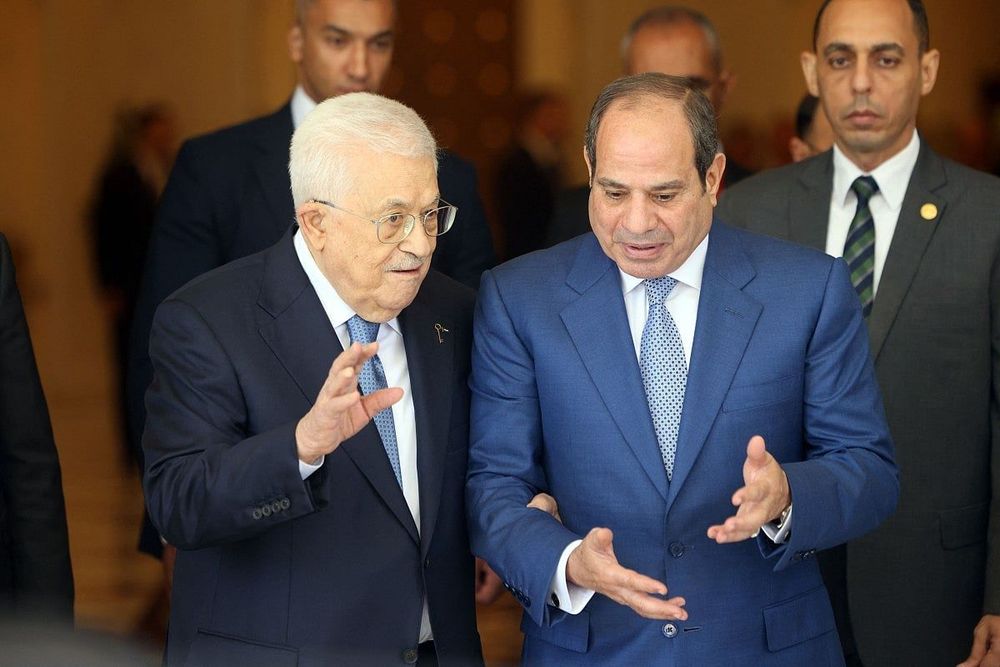
Sisi rejects Gaza displacement plans during Abbas talks in Cairo
Egyptian President Abdel Fattah Al Sisi has categorically rejected any plans for Palestinian displacement during a Wednesday meeting with Palestinian Authority President Mahmoud Abbas in Cairo, hours after Israel's defence minister announced plans to remove Palestinians from Gaza.
During the high-level discussions, Sisi reiterated Egypt's firm stance against the displacement of the Palestinian people or any attempt to annihilate the Palestinian cause. Abbas praised Egypt's steadfast positions, according to Palestinian news agency WAFA.
Egypt's strategic concerns
Egypt's opposition to displacement carries both humanitarian and strategic dimensions. The country shares the only land border with Gaza not directly controlled by Israel through the Rafah crossing. Under a 2007 agreement between Egypt and Israel, Cairo controls the crossing but imports through Rafah require Israeli approval, while Israel monitors activity from its Kerem Shalom military base.
Sisi has previously warned that accepting Palestinian displacement could jeopardize the 1979 Egypt-Israel peace treaty, a cornerstone of regional stability for over four decades. Egypt also faces domestic security concerns, having combated an Islamist insurgency in the northern Sinai Peninsula for over a decade that involved demolishing homes in border areas to create buffer zones.
Last year, Egyptian Foreign Minister Badr Abdelatty revealed that Cairo had turned down multiple offers to forgive parts of its massive foreign debt in exchange for allowing mass displacement into Egyptian territory. This echoes a 1991 precedent when Egypt secured forgiveness of half its $20.2 billion debt owed to the United States and allies in exchange for support during the Gulf War.
Israeli plans for Gaza
Israeli Defence Minister Israel Katz stated Wednesday that full-scale war in Gaza would resume to finish the job and implement what he termed a migration plan. He said earlier this month that Israel was prepared to remove Palestinians from Gaza by sea and land, awaiting confirmation from the United States on potential destinations for the approximately 2.1 million people currently in the territory.
United States Ambassador Mike Huckabee has denied any plan to displace people out of Gaza against their will.
Gaza's population has declined from over 2.3 million before October 2023, with the Palestinian Central Bureau of Statistics revising current estimates to approximately 2.1-2.13 million people, citing casualties, departures, and lower birth rates. Nearly all remaining residents have been internally displaced, with most of the territory reduced to rubble after three years of conflict.
The war began on October 7, 2023, following a Hamas-led attack on Israel that killed 1,221 people, according to an AFP tally based on Israeli official figures. The conflict has since claimed more than 73,700 Palestinian lives.
West Bank settlement expansion
Abbas also briefed Sisi on Israeli moves in the occupied West Bank, including the implementation of the E1 settlement plan, which seeks to separate the northern and southern parts of the Palestinian territory. The plan, covering approximately 12 square kilometers east of Jerusalem, calls for building 3,000-3,500 housing units that would create a continuous Israeli settler presence from East Jerusalem to the Jordan Valley, effectively cutting the West Bank in half.
Israeli Finance Minister Bezalel Smotrich announced approval of the E1 plan in August 2025, explicitly stating it would bury the idea of a Palestinian state and calling it the final nail in the coffin for the concept of Palestinian statehood. The plan, which had been frozen since 2021, has drawn widespread international criticism.
United Nations Secretary General António Guterres has said the E1 plan poses an existential threat to a contiguous Palestinian state.