Philippines Targets December 2027 for First State-Owned Oil Storage Facility
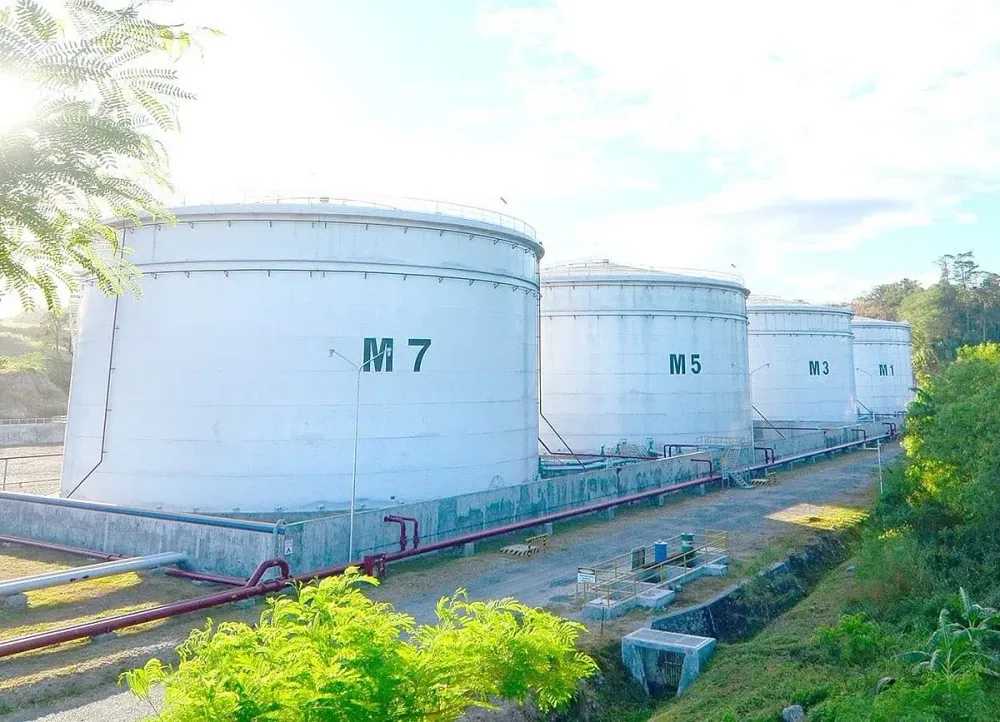
The Philippines plans to build its first government-owned oil storage facility on a Philippine National Oil Corp. property in Bataan, giving the state an emergency fuel reserve under its direct control. The December 2027 target comes as Manila pursues regional stockpiling agreements following supply disruptions triggered by US-Israeli strikes on Iran in February.
 Omar Al Nuaimi
Bataan capacity and costs
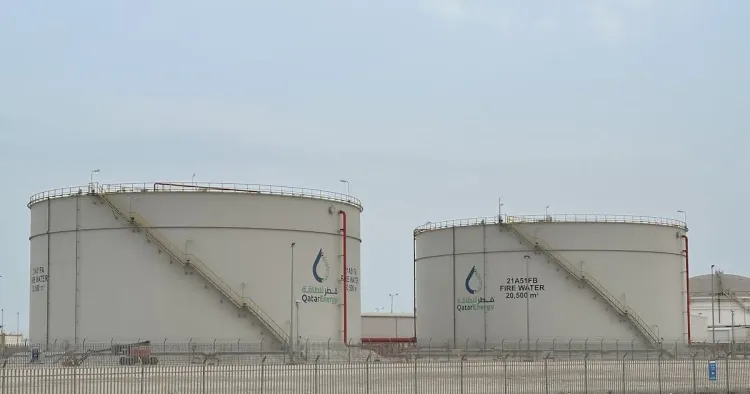
Energy Secretary Sharon Garin said work toward the first tank remains on schedule, with procurement expected before its targeted completion. The government facility would operate alongside the country's privately owned storage, and the complex is ultimately intended to hold one million barrels.
The initial tank would cover roughly five days of oil needs, Garin said, while the Bataan property has room for storage equivalent to as much as 60 days. She put the construction cost of a 500,000- to one-million-barrel storage system at around ₱5 billion ($78.5 million). Manila is seeking partners to invest with the Philippine National Oil Corp. (PNOC) in expanding the site.
With a population of 114 million, the Philippines imports almost all of its energy. Officials liken an oil reserve to an emergency fund that can be drawn on during conflicts, natural disasters or sharp price swings.
The expense remains a concern. The Philippine Star reported that critics have questioned the cost of constructing and maintaining domestic reserves, warning that consumers could eventually bear those costs.
Regional inventories and pilot projects
Manila's plans extend beyond domestic emergency supplies. It is considering letting overseas companies and suppliers keep oil in the Philippines as part of an effort to establish a regional petroleum storage hub. Storage discussions involve Saudi Arabia, Russia, the United States, Japan, Kuwait, the United Arab Emirates and Australia.
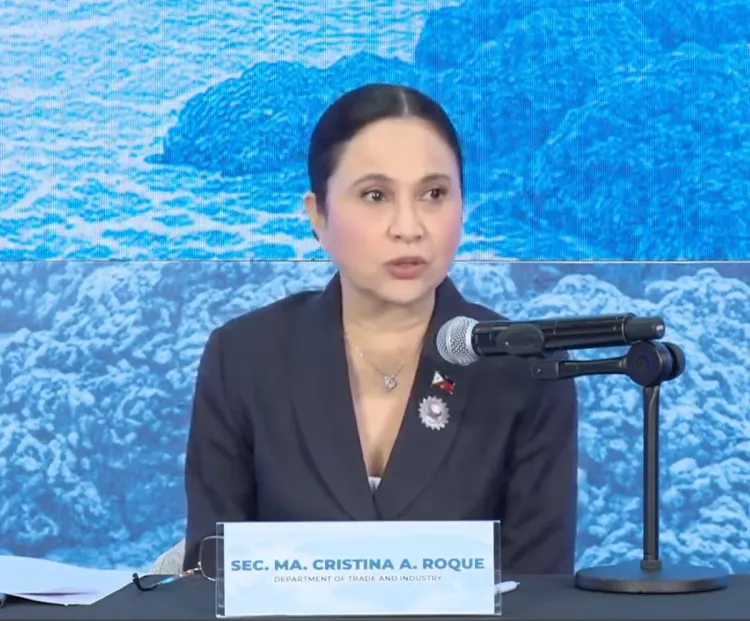
Philippine Trade Secretary Cristina Roque said Singapore, Indonesia, Malaysia and the Philippines had agreed to hold inventories under a proposed regional stockpiling arrangement. The UAE, which belongs to the Gulf Cooperation Council, has also expressed interest. President Ferdinand Marcos Jr. promoted the initiative during the Philippines' 2026 ASEAN chairmanship to give participants access to oil held in the region, rather than depending solely on purchases from farther away.
Another effort would test access to reserves already stored abroad. State-run PNOC Exploration Corp. signed separate letters of intent with Indonesia's PT Interport Mandiri Utama and The Shell Co. of Thailand Ltd. to examine "oil ticketing" mechanisms. The preliminary agreements would support pilots using existing facilities in Indonesia and Thailand to make petroleum reserves available to the Philippines during supply disruptions.
The pilots were announced at the ASEAN Business and Investment Summit in Manila, with the Economic Research Institute for ASEAN and East Asia (ERIA) and the Indonesian Business Council serving as knowledge partners.
An ERIA study offers a potential cost argument for shared reserves. According to The Philippine Star, it estimated annual regional savings of about $610 million in oil stockholding costs if joint reserves increased from 10 days to 30 days without changing overall stock levels. The study also sets out a phased implementation approach.
Japan signs cooperation pact and proposes wider coordination
Japan and the Philippines signed a Memorandum of Cooperation on developing Philippine strategic petroleum reserves in Manila on November 16, 2026. The signatories were Garin and Japan's minister of economy, trade and industry, Ryosei Akazawa, according to the Philippine Department of Energy.
The pact provides for three years of cooperation, but that period starts only after both sides complete their domestic procedures and exchange written notifications. They may extend it by mutual consent.
A day later, at the fourth Asia Zero-Emission Community Leaders' Meeting in Manila, Japanese Prime Minister Sanae Takaichi proposed a Tokyo-based Asia Oil Security Task Force. Intended as an Asian counterpart to the International Energy Agency, it would work with the IEA and ERIA on common rules governing emergency oil releases and transfers.
Takaichi also proposed using idle Japanese tanks for regional stockpiling cooperation, coordinated with the Philippines-led Joint Stockpiling Scheme.
UAE proposal awaits an agreement
A separate proposal involving Abu Dhabi National Oil Co. (ADNOC) remains under discussion. Senate Energy Committee Chairperson Erwin Tulfo said talks took place in Abu Dhabi on October 29, local media reported. The proposed facility would give ADNOC a regional oil hub and form the basis of a wider energy partnership, following the UAE-Philippines Comprehensive Economic Partnership Agreement signed in June.
The two sides tentatively targeted the second quarter of 2027 for rollout. Tulfo said no formal agreement had been finalized, however. The schedule depends on resolving the location, responsibility for infrastructure, commercial terms and implementation timetable.