Four ASEAN countries back proposed regional oil stockpiles
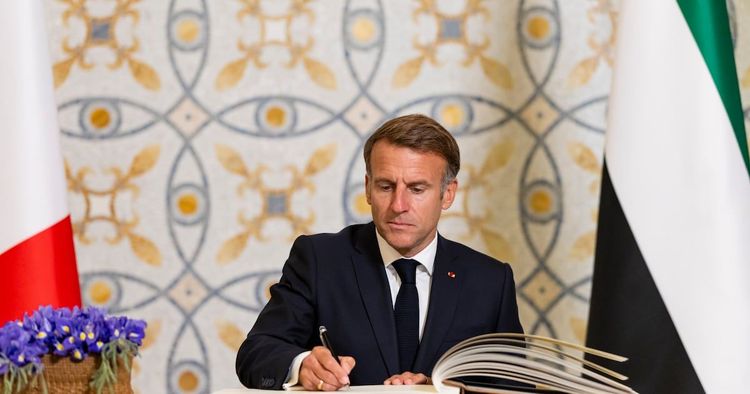
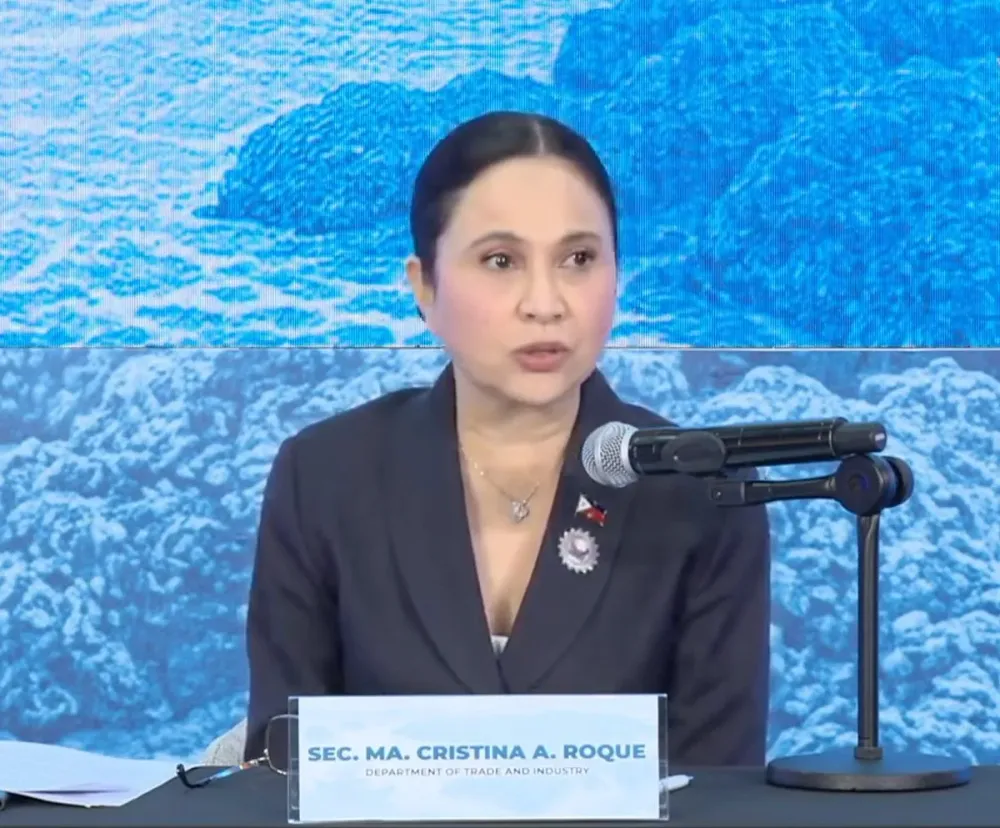
Singapore, Indonesia, Malaysia and the Philippines have agreed to hold oil inventories under a proposed regional arrangement, Philippine Trade Secretary Cristina Roque said on Monday, November 17, 2026. The United Arab Emirates has expressed interest in joining, though access rules and a start date remain unsettled.
 Omar Al Nuaimi
Participation agreed, access still pending
President Ferdinand Marcos Jr. has championed the proposal during the Philippines' 2026 chairmanship of the Association of Southeast Asian Nations. Participants would be able to obtain oil from stocks held in the region instead of depending solely on purchases from distant suppliers. Roque said the arrangement could begin with willing countries without waiting for every ASEAN member to join.
The UAE would participate as an external partner: it belongs to the Gulf Cooperation Council, not ASEAN.
"This will make it easier also in case a country needs oil rather than buying oil from countries that are far," Roque told reporters in Manila after the 28th ASEAN Economic Community Council meeting. The proposal could shorten responses to supply disruptions and reduce transportation and logistics costs.
Participation does not yet give the Philippines immediate access to Indonesian stocks. Asked about that possibility, Roque said: "Not yet. We still have to present the studies of ERIA to the ASEAN member states." The Economic Research Institute for ASEAN and East Asia, or ERIA, will submit its research findings and recommendations to Marcos and ASEAN governments. Roque provided no operating timetable or details of how the mechanism would work.
Emergency-access pilots in Indonesia and Thailand
A proposed pilot would use existing storage facilities in Indonesia and Thailand to explore emergency oil access for the Philippines. ERIA and the Indonesian Business Council announced letters of intent with energy companies on November 14.
The Philippine Star reported on November 16 that state-run PNOC Exploration Corp. had signed separate letters of intent with Indonesia's PT Interport Mandiri Utama and The Shell Co. of Thailand Ltd. to explore cooperation on oil ticketing. ERIA and the Indonesian Business Council are knowledge partners in the projects, which were announced at the ASEAN Business and Investment Summit in Manila.
Under a ticketing arrangement, buyers pay for the right to access a specified quantity of fuel held by a storage operator. Nikkei reported that the proposed system could initially allow the Philippines to buy diesel and gasoline during emergencies. Its report said an ASEAN joint petroleum-products stockpiling scheme could begin as early as 2027, with storage planned in Indonesia and Thailand.
Japan also plans to support joint petroleum-product stockpiling, Jiji Press reported on November 13, 2026, citing people familiar with the matter. The agency noted Japan's involvement in establishing ERIA and reported that the plan was expected to be formalized before the ASEAN summit that began in Manila on Sunday, November 15.
Import dependence and shipping risks
The effort addresses Southeast Asia's exposure to international oil disruptions, including instability in the Middle East and threats to shipping routes. Many ASEAN economies rely heavily on imported crude and petroleum products. ERIA puts the Philippines' dependence on imported crude at about 99%; Philippine Statistics Authority figures show the country's mineral fuel and lubricant imports totaled $16.71 billion in 2025.
ERIA's issue paper highlights the Strait of Hormuz as a supply-chain chokepoint. About 20 million barrels of petroleum liquids moved through it each day in 2024, equivalent to roughly one-fifth of global petroleum liquids consumption.
The region's refining and storage infrastructure is also concentrated. ERIA estimates that Indonesia, Thailand, Singapore and Malaysia together account for about 86% of ASEAN refining capacity. The same four countries hold approximately 79% of the region's observed installed crude oil storage capacity.
Reserve options and estimated costs
ERIA examined national reserves, jointly held inventories and rights to purchase fuel stored in another country. Its November 2026 issue paper, "Operationalising ASEAN Joint Oil Stockpiling," uses demand of 5.0 million barrels a day across all 11 ASEAN members, including Timor-Leste, as its baseline.
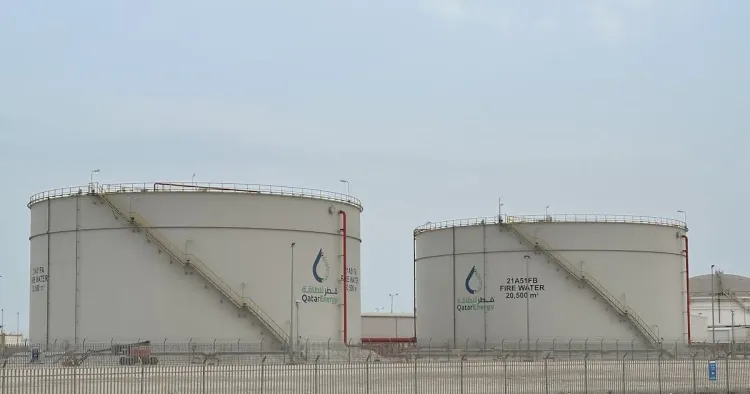
At that level of demand, the study's 90-day coverage benchmark represents about 450 million barrels. It assumes refinery and commercial inventories could supply roughly 30 days, or 150 million barrels. The additional strategic reserves would therefore cover 60 days, approximately 300 million barrels.
The paper estimates annualized stockholding costs at $10.60 per barrel for national reserves, $7.50 for ticket stockpiling and $4.50 for joint stockpiling. In a cooperative scenario combining 25 days of national reserves, five days of ticket access and 30 days of joint reserves, the weighted average annualized cost would be $7.29 per barrel. That is about 21.9% lower than in the national-led scenario.
The Philippine Star reported on November 16 that ERIA estimated annual regional savings of about $610 million from expanding joint reserves from 10 to 30 days without changing total stock levels.
The study and proposed pilots are intended to help establish reserve volumes, storage locations, access arrangements and cost-sharing rules.
The Philippines is also considering hosting other countries' petroleum inventories as a regional storage hub while developing government-maintained reserves of its own. According to The Philippine Star, state-run PNOC aims to complete its first storage tank by the end of 2027.
Power grid agreement advances alongside oil plans
Manila also welcomed an agreement to link regional electricity networks and expand cross-border energy access. The Philippine Department of Energy said on November 17 that all 11 ASEAN members had completed signing the Enhanced Memorandum of Understanding on the ASEAN Power Grid.
The bloc estimates that the grid's transmission and generation components require about $764 billion. Existing cross-border interconnection capacity totals 7,700 megawatts; ASEAN aims to double that capacity by 2040 and achieve full electricity exchange by 2045.