Oman's nine-month revenue rises 16%, with budget surplus at 90 million rials
Oman collected 9.83 billion Omani rials ($25.56 billion) in public revenue during the first nine months of 2026, a 16 percent increase from a year earlier. Spending totaled 9.74 billion rials, leaving a budget surplus of 90 million rials, according to the Ministry of Finance.
 Omar Al Nuaimi
Revenue gains led by energy
The ministry's Financial Performance Bulletin, reported by Oman News Agency, attributed the revenue increase mainly to higher oil and non-oil receipts. Total revenue in the corresponding period of 2025 was 8.48 billion rials.
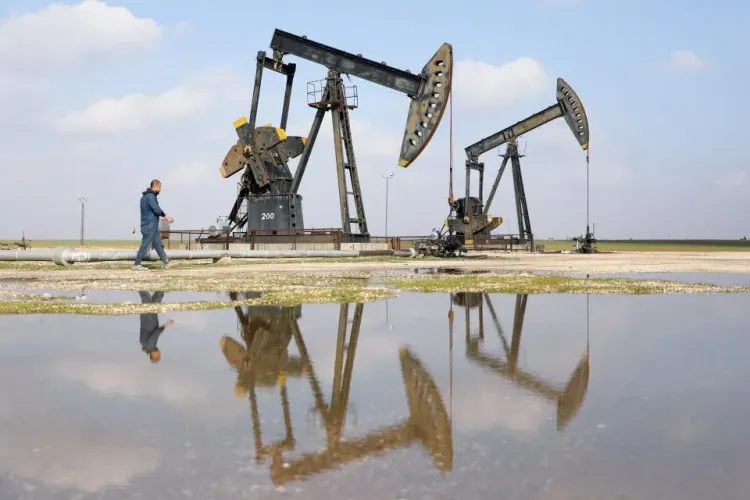
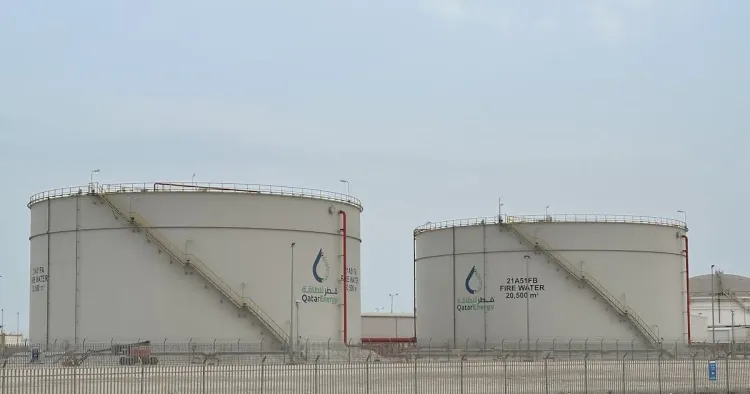
Net oil revenue reached approximately 5.046 billion rials through September, up 7 percent from approximately 4.710 billion rials a year earlier. Oman realized an average oil price of $81 a barrel, with production averaging 1.102 million barrels a day.
Gas delivered a larger percentage increase: net revenue rose 61 percent, reaching 2.09 billion rials against 1.30 billion rials a year earlier. The bulletin also recorded 2.61 billion rials in current revenue, a 7 percent increase from 2.45 billion rials.
Hydrocarbons represent about 30 percent of Oman's GDP, half of merchandise exports and 70 percent of government revenue, according to S&P Global Ratings. The agency expects oil production to average about 1.1 million barrels a day in 2026, compared with approximately 1.03 million in 2025, before approaching 1.2 million between 2027 and 2029.
Spending rises across budget categories
Government expenditure increased across all categories. Overall spending was 824 million rials, or 9 percent, above the 8.91 billion rials recorded in the first nine months of 2025.
Current spending accounted for 6.62 billion rials, an increase of 394 million rials from 6.23 billion a year earlier. Ministries, civil government units and economic transformation projects spent approximately 1.224 billion rials on development through September, using 94 percent of the annual allocation of 1.3 billion rials.
Contributions and other expenditure totaled 1.72 billion rials, up 9 percent from 1.58 billion a year earlier. Support amounted to 486 million rials for social protection programs, 441 million for the electricity sector and 280 million for petroleum products.
The government transferred 225 million rials to the allocation designated for debt repayment. At the end of the third quarter, approximately 170 million rials in expenditure remained pending settlement.
Private-sector payments processed through the financial system exceeded 1.43 billion rials by the end of September for dues with completed documentation. Oman News Agency linked those payments to the ministry's commitment to settle properly documented dues within an average of five working days.
Debt reduction and sovereign ratings
Public debt ended the third quarter at 14.1 billion rials, compared with 14.7 billion a year earlier. The bulletin described the reduction as more than 600 million rials.
The first-quarter implementation report for Oman Vision 2040 placed the debt-to-GDP ratio at 34.6 percent in 2025, down from 67.9 percent in 2020. It said 10 indicators had already reached their 2030 targets, including those for public debt relative to GDP, the budget balance and the current account balance.
The report credited the Financial Balance Plan, the Financial Sustainability Program, improved debt management and the use of budget surpluses to reduce liabilities. It also cited efforts to make public spending more efficient and raise government revenue. Lower debt had eased servicing costs and created more room to fund economic, social and development priorities, the report said.
Alongside continued fiscal discipline and better management of government liabilities, the report highlighted an improvement in creditworthiness. Fitch Ratings upgraded Oman's sovereign rating from BB+ to BBB- in December 2025, restoring investment-grade status.
In September 2026, S&P affirmed Oman's long-term sovereign rating at BBB- and short-term rating at A-3, with a stable outlook. It projected a year-end debt-to-GDP ratio of 30.2 percent and fiscal surpluses equivalent to about 4.8 percent of GDP in 2026 and around 2.2 percent in 2027.
Growth forecasts and diversification
S&P also raised its forecast for Oman's 2026 real GDP growth to 3.5 percent from 1.6 percent. Separately, the IMF increased its growth forecast to 4.5 percent after a mission to Muscat that concluded on November 8, 2026, Oman Observer reported. The IMF projected non-oil growth of 1.4 percent for the year.
The Vision 2040 implementation report recorded real GDP growth of 2.4 percent in 2025, compared with a 3.4 percent contraction in 2020. GDP measured at constant prices increased to 39.29 billion rials in 2025 from 34.48 billion in 2021.
The report also described progress during Vision 2040's first five years in investment, economic diversification, renewable energy, manufacturing, logistics and tourism. More recent figures put Oman's foreign direct investment stock at 32.2 billion rials at the end of June 2026, according to National Centre for Statistics and Information data reported by Oman Observer.
Oman Observer also reported that Omani-made non-oil exports increased 11.4 percent in the first half of 2026 to about 3.6 billion rials, reaching more than 130 markets. In logistics, S&P reported first-half cargo volume increases of 15 percent at Salalah port and 52 percent at Sohar.
Five-year targets and the 2027 budget
The Eleventh Five-Year Development Plan, covering 2026-2030, was launched on January 2, 2026, as Vision 2040's second executive roadmap. The implementation report identified it as the next phase for sustaining fiscal and economic gains and accelerating progress toward targets not yet achieved.
According to the Ministry of Finance, the plan targets economic growth of about 4 percent at constant prices and uses a $60-per-barrel oil price assumption. It aims for non-oil revenue to supply 37.4 percent of total general revenue by 2030 and seeks to create about 300,000 public- and private-sector jobs for Omanis over the five-year period.
Work on the next annual budget is also underway. On November 10, 2026, the Shura Council's Economic and Financial Committee met with officials from the Ministries of Finance and Economy to examine the 2027 State Budget Proposal. Their review covered revenue and spending estimates, debt management, the assumed oil price and inflation rates, ahead of the committee submitting its report for the Council's forthcoming sittings.