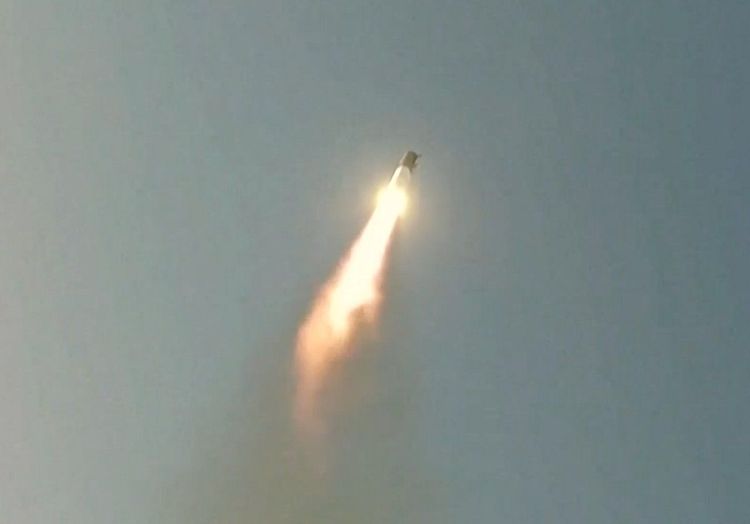
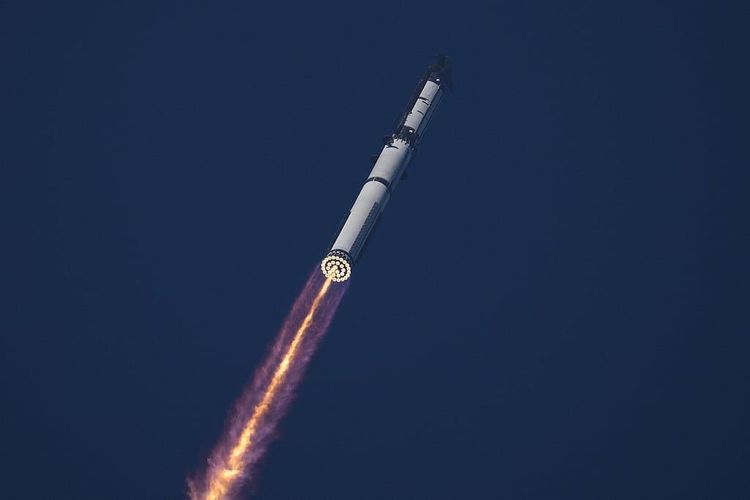
UAE observatory tracks Falcon 9 rocket stage impact on Moon
Abu Dhabi's Al Khatim Astronomical Observatory documented the collision of a SpaceX Falcon 9 upper stage with the lunar surface on Wednesday, expected to create a crater 18 meters wide and eject over 1,000 tonnes of material.
UAE observatory tracks Falcon 9 rocket stage impact on Moon
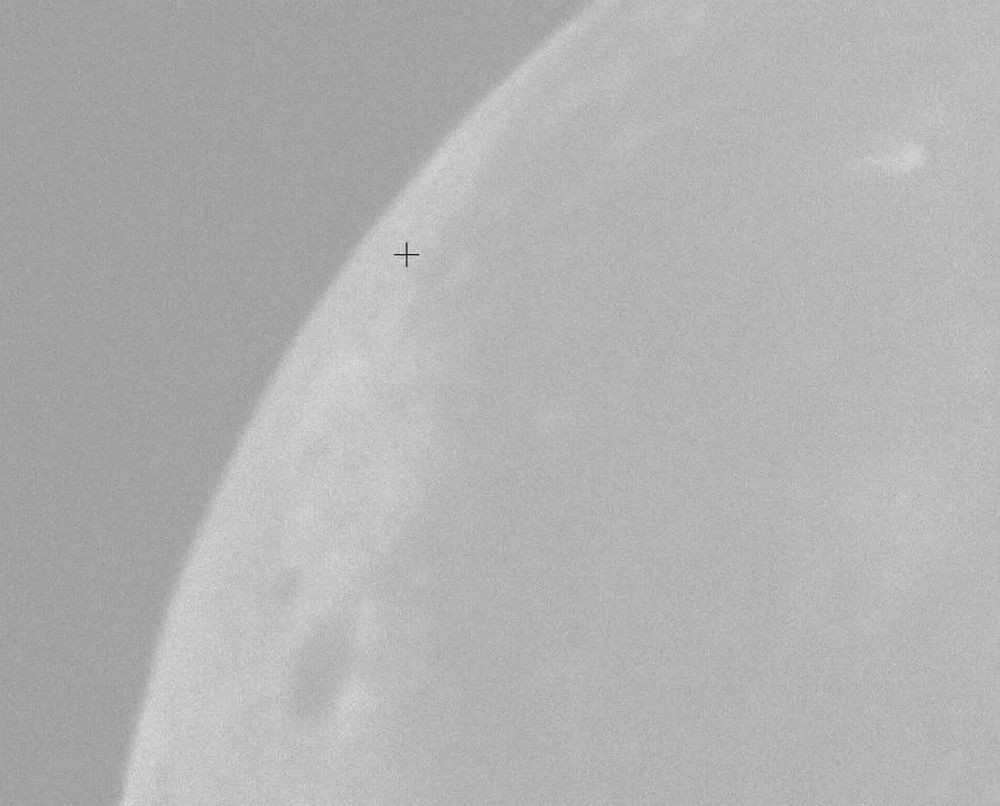
The Al Khatim Astronomical Observatory in Abu Dhabi successfully tracked the impact of a SpaceX Falcon 9 rocket upper stage on the Moon on Wednesday, as the four-tonne piece of space hardware slammed into the lunar surface at approximately 0634 GMT.
The robotic observatory, operated by the International Astronomy Centre in the Abu Dhabi desert, confirmed that the Falcon 9 upper stage, designated 2025-010D, struck near the Einstein Crater in the Moon's northern hemisphere at a velocity of approximately 8,690 kilometres per hour.
Mohammad Shawkat Odeh, director of the International Astronomy Centre, said the rocket stage originated from a Falcon 9 mission launched on January 15, 2025, under NASA's Commercial Lunar Payload Services initiative. The launch carried two lunar landers: the US-built Blue Ghost, which successfully touched down on the Moon on March 2, 2025, marking the world's first fully successful commercial lunar soft landing at Mare Crisium, and Japan's Hakuto-R, which lost contact approximately 90 seconds before its planned touchdown on June 5, 2025, and failed to land.
After delivering the spacecraft onto their lunar trajectories, the Falcon 9's upper stage separated and remained in a highly elongated Earth orbit. Over time, a combination of solar radiation pressure and the gravitational pull of the Earth and Moon gradually altered its trajectory, eventually placing it on an unintended collision course with the lunar surface.
Impact dynamics and crater formation
NASA estimates the collision created a crater approximately 18 meters wide and 3.7 meters deep. The space agency noted that impacts of comparable energy occur naturally on the Moon about every six days from meteoroids.
Odeh estimated the impact excavated approximately 450 cubic metres of lunar soil and rocks, equivalent to roughly 1,100 tonnes of material. Under the Moon's weak gravity, some ejecta likely rose as high as three kilometres above the surface before falling back, while faster-moving fragments may have reached even greater heights. Scientific modeling suggests the debris plume could have extended 15 to 20 kilometres for the ejecta curtain and 75 to 100 kilometres for the central ejecta spike, spreading laterally approximately 183 kilometres from the impact point.
The observatory pointed its main 14-inch telescope at the predicted impact site from one minute before the collision until five minutes afterwards but detected neither a flash nor visible ejecta.
International observation campaign
NASA's Lunar Reconnaissance Orbiter and South Korea's Korea Pathfinder Lunar Orbiter (Danuri) were planning to image the impact site after the collision to measure the newly formed crater and study the effects. Researchers are awaiting observations from these space-based platforms as well as other ground-based observatories to analyse the impact.
The Al Khatim Astronomical Observatory has contributed to international efforts including planetary defense through asteroid monitoring and has participated in NASA's TESS Follow-up Observing Programme since June 2024.
Historical context
This impact marks another instance of human-made debris striking the lunar surface, though unlike previous deliberate collisions conducted for scientific purposes. In 2009, NASA's LCROSS mission intentionally crashed a Centaur rocket upper stage into the Moon, detecting water ice in the resulting debris plume. During the 1970s, four Apollo Saturn IVB boosters were deliberately impacted to collect seismic data for studying the Moon's interior structure.
A previous unintentional rocket body impact on March 4, 2022, near Hertzsprung crater created an unusual double crater approximately 28 meters wide, with the dual-crater formation indicating the rocket had large masses at both ends.
Odeh confirmed the debris produced by Wednesday's impact posed no danger to Earth. The Lunar Reconnaissance Orbiter database, which contains approximately 1.3 million lunar impact craters, provides a comprehensive baseline for tracking and cataloguing new impacts on the lunar surface.