Apple Pay launches in the Philippines with support from major banks and retailers
Apple's digital payment service is now available in the Philippines, allowing customers to make contactless payments using their iPhone, Apple Watch, iPad and Mac at thousands of stores nationwide, marking a significant expansion into Southeast Asia's rapidly growing digital payments market.
Apple Pay launches in the Philippines with support from major banks and retailers
Apple Pay has launched in the Philippines, enabling customers to make contactless payments using their iPhone, Apple Watch, iPad and Mac at thousands of stores, apps and websites across the country.
The launch brings Apple's digital payment service to one of Southeast Asia's fastest-growing digital payments markets, valued at USD 166.7 billion in 2026 and projected to reach USD 307.1 billion by 2030. The Philippines represents only the third Southeast Asian country to receive Apple Pay, following Singapore in 2016 and Malaysia in 2022.
Banking partnerships and payment network support
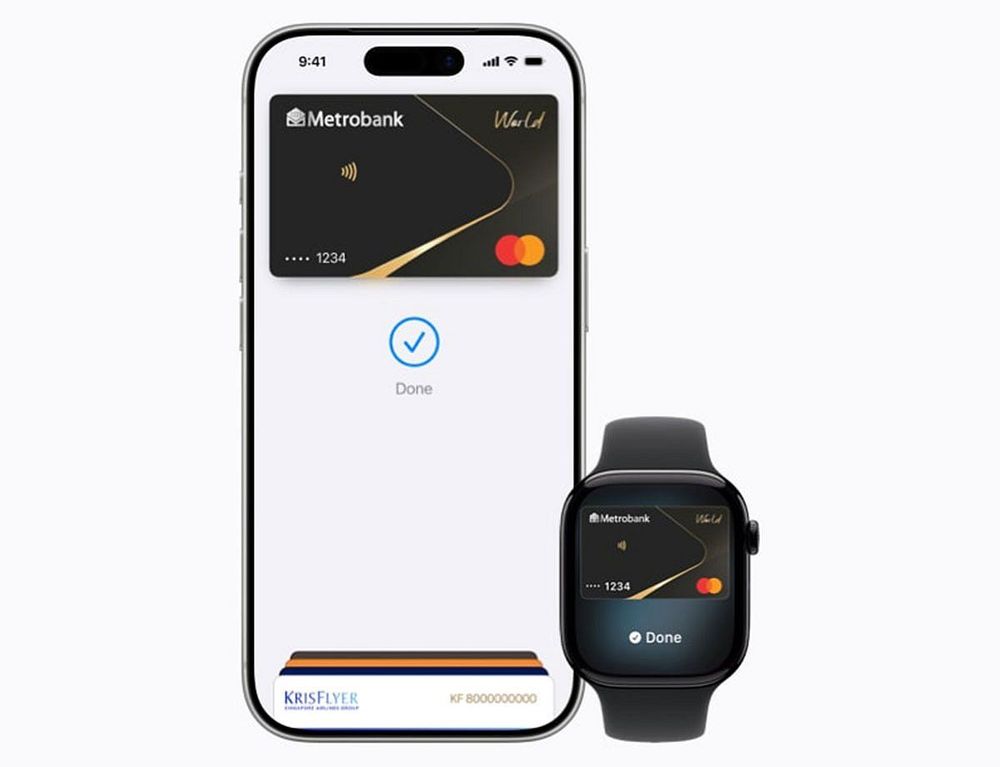
Customers with eligible credit and debit cards issued by Chinabank, GoTyme Bank, Metrobank and UnionBank can add their cards to Apple Pay and make purchases in stores, within apps and online. Some participating banks will allow customers to apply for virtual cards through their banking apps or websites, which can be issued instantly and added to Apple Pay for immediate use.
The launch comes as digital payments accounted for 59% of total transaction value in the Philippines in 2024, a nearly threefold increase from 20% in 2018. However, only 3% of adult Filipinos own credit cards, among the lowest rates in Southeast Asia, making partnerships with banks and digital wallet providers particularly important for Apple Pay's expansion strategy.
Users will continue to receive the same rewards and benefits available through their existing credit and debit cards.
Merchant acceptance across major retailers
Thousands of merchants across the Philippines now accept Apple Pay, according to Apple. Participating retailers include Abenson, Anko, Ayala Malls, Ayala Malls Cinemas, Beyond the Box, Coach, Digimap, Foot Locker, Globe, HOKA, Hollister, Jollibee, Lush, Power Mac Center, Rustan's, SaladStop!, Shake Shack, Smart, The Loop, The Matcha Tokyo, The Movie Snackbar, The Underbelly and WalterMart Supermarket.
Apple Pay is also available on apps and websites including foodpanda, Jollibee, Rustan's and Shopee. Payment processor Maya Business, which surpassed one million registered formal businesses in 2024 and maintains a 44% market share in QR PH Person-to-Merchant payment transactions, will enable Apple Pay for more than 5,000 online merchants.
Entering a competitive digital payments landscape
Apple Pay enters a market where digital wallet adoption has surged, with 393.6 million e-wallet accounts registered by mid-2025. QR-based payments account for about 60% of digital transactions in the Philippines as of February 2026, presenting a competitive landscape for Apple Pay's NFC-based contactless technology.
Digital payments in the Philippines grew by 42% in 2025, with InstaPay and PESONet transfers reaching P24.745 trillion, according to Bangko Sentral ng Pilipinas data. The central bank is targeting 70% digital payment share in total domestic financial transactions by 2028, demonstrating strong government support for the sector's expansion.
About 44% of the adult population in the Philippines, or 34.3 million people, remains unbanked as of 2024, a factor that has driven digital wallet adoption and presents both challenges and opportunities for Apple Pay's market penetration.
How to use Apple Pay
Customers can pay in stores by double-clicking the side button on an iPhone or Apple Watch, authenticating with Face ID, Touch ID or a passcode, and holding the device near a contactless payment terminal. Apple Pay can also be used to make purchases on iPhone, iPad and Mac in supported apps and websites without repeatedly entering payment, billing or shipping information.
Security features
Users' card numbers are not stored on their devices or on Apple servers, according to the company. Instead, a unique Device Account Number is generated and securely stored in the device's Secure Element, an encrypted chip designed to protect payment information.
Apple added that it does not retain transaction information that can be linked back to individual users. If a device is lost or stolen, customers can use the Find My app to locate it, lock it or suspend Apple Pay remotely.
Jennifer Bailey, Apple's vice president of Apple Pay and Apple Wallet, said the Philippines' growing adoption of digital payments made it a natural market for the service, adding that Apple Pay was designed to provide a simple payment experience while maintaining high standards of privacy and security.
Apple Pay is now available in more than 90 countries and regions and works with more than 11,000 banking partners worldwide.