SpaceX Starship achieves landmark reentry success in Flight Test 13
SpaceX's 13th Starship test flight marked the company's most successful mission yet, with the vehicle surviving atmospheric reentry, splashing down intact in the Indian Ocean, and continuing to transmit critical engineering data—a major breakthrough for future Moon and Mars missions.
SpaceX Starship achieves landmark reentry success in Flight Test 13
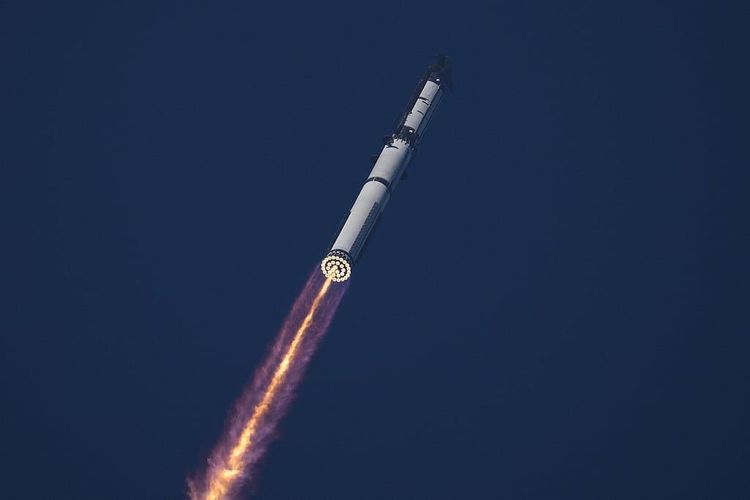
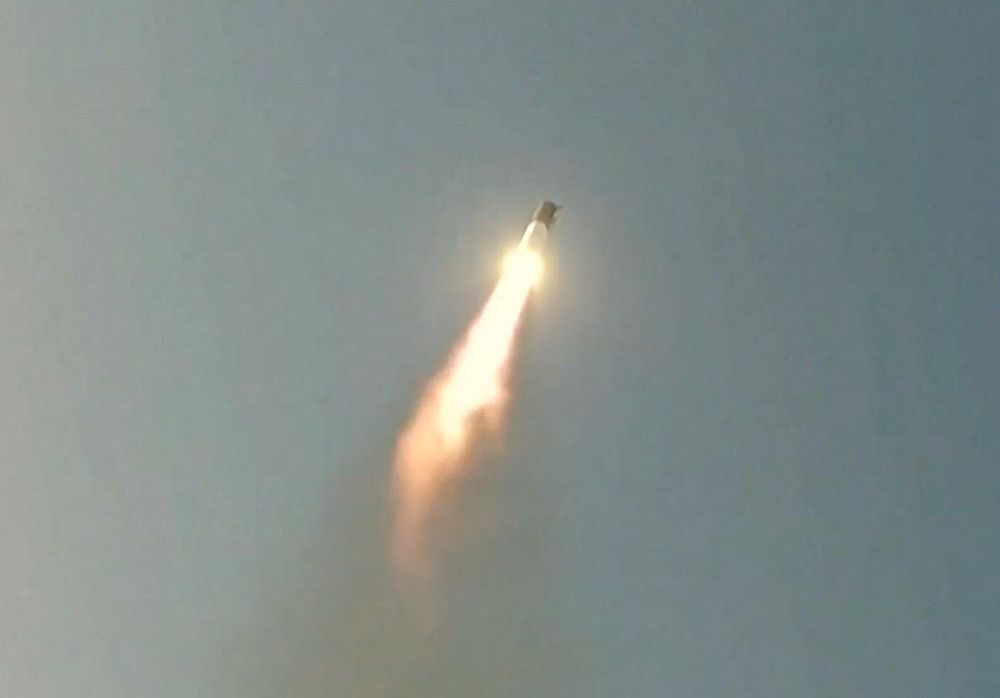
SpaceX achieved a historic milestone on July 24, 2026, when its Starship vehicle completed the company's most successful test flight to date, surviving atmospheric reentry and splashing down intact in the Indian Ocean while continuing to transmit valuable engineering data to ground teams.
The 13th test flight of the world's most powerful rocket lifted off at 5:51 pm CDT on July 24 (2:51 AM GST on July 25) from the company's Texas launch facility. The mission represented the second flight of the Starship and Super Heavy V3 vehicles, following a partially successful debut in May 2026 that experienced engine failures during ascent and landing.
Breaking new ground in reentry technology
The mission's crowning achievement came during reentry, when Starship maintained structural integrity and control while enduring the intense heat and forces of returning through Earth's atmosphere. For the first time, an intact Starship touched down in the ocean and kept transmitting telemetry afterward.
SpaceX spokesperson Dan Huot called it a
dream scenariofor data collection, noting that engineers now have real-world performance information on heat shield behavior, structural loads, landing dynamics, and hardware health under actual flight conditions.
The spacecraft featured an upgraded heat shield with redesigned tiles and new aft skirt attachment mechanisms, improvements made after analyzing data from the May flight. Six of the deployed satellites carried specialized cameras to photograph the heat shield during flight, with certain tiles painted white to simulate missing components and serve as imaging targets for evaluation.
Multiple mission objectives achieved
Beyond the landmark reentry, the flight accomplished several critical goals. Starship successfully deployed 20 Starlink Version 3 satellites during its suborbital trajectory. These next-generation satellites feature 1 terabit per second downlink capacity and 160-200 gigabits per second uplink capacity, representing roughly a tenfold increase in downlink performance and 24-fold improvement in uplink capability compared to Version 2 satellites. The test satellites burned up on reentry approximately 20 minutes after deployment as planned.
The mission also marked Starship's first successful in-space engine relight, a maneuver essential for future orbital operations including the refueling procedures that will be required for lunar missions.
The Super Heavy booster completed its return sequence, though not flawlessly. According to SpaceX, several planned landing engines failed to ignite, resulting in a harder-than-intended ocean impact. Nevertheless, the company gathered crucial data for refining future booster recovery operations.
Path cleared for NASA lunar ambitions
The successful flight carries major implications for NASA's Artemis program. The space agency awarded SpaceX a $2.9 billion contract in April 2021 to develop Starship as the lunar lander for Artemis missions, followed by a $1.15 billion contract modification in November 2022 for a second crewed demonstration landing. NASA targets 2028 for the Artemis III mission that would return astronauts to the lunar surface, aiming to accomplish this ahead of China's lunar program.
NASA Administrator Jared Isaacman, who was confirmed to the position in December 2025 after commanding the private Inspiration4 and Polaris Dawn missions, shared an image of Starship passing the Moon with the comment:
Pretty clear from this shot that SpaceX knows where we are going!
For Starship to safely carry astronauts to the Moon, it must demonstrate repeated reliability in surviving spaceflight, operating in space, landing safely, and proving reusable. Each successful test reduces technical risk and moves closer to operational readiness.
Overcoming setbacks to reach launch
The July 24 success came after SpaceX overcame technical challenges that delayed the mission. An initial launch attempt on July 16 was automatically aborted at ignition when four of the 33 Raptor engines failed to start due to oxygen turbopump issues. Starship requires at least 30 of its 33 engines to achieve safe flight.
Investor confidence grows
The mission also represented the first Starship test flight since SpaceX's historic public market debut on June 12, 2026. The company went public at $135 per share in what became the largest IPO in stock market history, raising $75 billion at a $1.75 trillion valuation.
A successful mission strengthens confidence in SpaceX's long-term business strategy, including expanding its Starlink satellite network with more capable spacecraft, dramatically reducing launch costs through reusability, supporting NASA's lunar exploration goals, and advancing plans for eventual Mars missions and large-scale space infrastructure development.
While engineering work remains—particularly on perfecting booster recovery—the July 24 flight cleared one of the biggest remaining hurdles toward making Starship a fully reusable spacecraft capable of routine operations in Earth orbit and beyond.