Why ceramic window tint keeps cars cooler than darker dyed films
Ceramic window films block infrared heat more effectively than traditional dyed tints, keeping vehicle interiors significantly cooler in hot climates regardless of how dark the windows appear.
Why ceramic window tint keeps cars cooler than darker dyed films
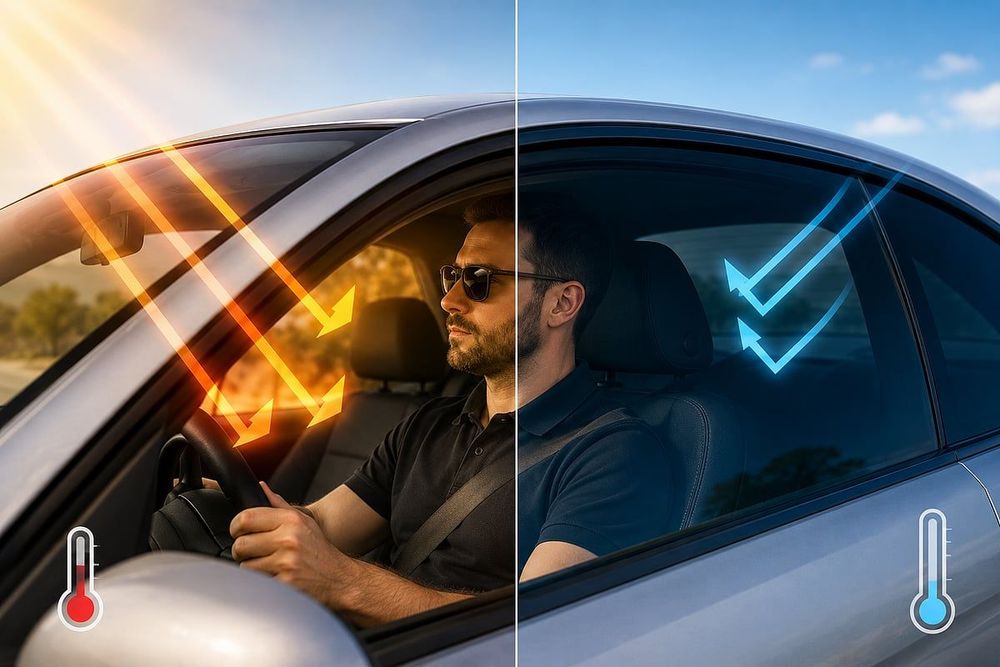
Two cars parked side by side with equally dark windows can feel dramatically different inside after an hour in the sun. The difference comes down to how each film handles infrared radiation, the invisible portion of sunlight responsible for approximately half of all solar energy reaching the Earth's surface. While dyed films rely on pigment to reduce glare and improve privacy, they do little to stop infrared energy from entering the cabin. Ceramic films, by contrast, are engineered specifically to block this heat without requiring extremely dark tints.
How sunlight generates cabin heat
Sunlight consists of three main components: ultraviolet radiation, visible light and infrared energy. Infrared accounts for roughly 49 to 53 percent of total solar energy, while visible light contributes 43 to 44 percent and ultraviolet just three to seven percent. When sunlight passes through automotive glass, infrared energy converts to heat inside the vehicle. A darker tint reduces visible light and can cut glare effectively, but darkness alone does not guarantee lower cabin temperatures. Premium ceramic films can reject 90 to 96 percent of infrared radiation across the near infrared spectrum, where peak heat energy occurs between 900 and 1700 nanometres.
In real world testing, a ceramic tint at 25 percent VLT reduced parked vehicle interior temperatures to between 105 and 115 degrees Fahrenheit on a 100 degree day. The same vehicle with dyed tint at the same darkness level reached 130 to 140 degrees, while an untinted car exceeded 150 degrees. That represents up to a 40 degree difference attributable to the ceramic film's superior infrared rejection, demonstrating that heat management and visible darkness are separate characteristics in modern window films.
Film technologies compared
Dyed films use pigment layers to darken glass and reduce glare. They offer privacy and moderate heat reduction at a lower price point, but infrared energy passes through relatively unobstructed. Metallic films incorporate microscopic metal layers that reflect solar energy more effectively than dye, though these metal particles can interfere with GPS, mobile phone signals, Bluetooth connections, satellite radio, tyre pressure monitors and toll transponders.
Ceramic films replace metal with nano ceramic particles that remain transparent to radio frequencies while blocking infrared radiation. Because the particles are non metallic, they do not disrupt GPS, cellular, Bluetooth, satellite radio, tyre pressure monitors, radar detectors or toll transponders. A 35 percent VLT ceramic tint can reject more total heat than a five percent VLT dyed film, despite transmitting seven times more visible light. This decoupling of darkness and heat rejection represents the core advantage of ceramic technology, particularly in climates where air conditioning loads are high and long term cabin comfort matters.
Understanding performance metrics
Total Solar Energy Rejected, or TSER, measures the percentage of total solar energy that filmed glass blocks. Unlike infrared rejection figures, which focus only on the infrared portion of the spectrum, TSER accounts for the combined energy rejection from ultraviolet, visible light and infrared components. This provides a more comprehensive assessment of a film's overall heat blocking effectiveness. When comparing products, prioritising verified TSER figures alongside infrared performance gives a clearer picture of real world comfort than relying on headline infrared claims or visible darkness alone.
Legal considerations in the UAE
In the UAE, private vehicle windows may be tinted up to 50 percent VLT for side and rear windows, meaning at least 50 percent of visible light must pass through the film. Front windshields are required to remain clear except for a narrow strip at the top, typically no more than 15 centimetres. Violating these regulations can result in an AED 1,500 fine and potential vehicle impoundment. Choosing a film that complies with the 50 percent VLT limit while maximising infrared rejection ensures both legal compliance and thermal comfort.
Product selection guidance
The TOYOCO Ceramic Window Tint Film uses nano ceramic construction with a scratch resistant surface designed to enhance durability by resisting scratches, peeling and bubbles. For drivers in hot climates who spend extended periods parked outdoors, ceramic technology offers the greatest comfort improvement without introducing signal interference. Its value lies in heat management rather than simply darkening windows, making it suitable for applications where legal VLT limits prevent very dark tints.
Proper installation requires the right tools. The YXGOOD Window Tint Application Kit includes nine pieces: multiple scrapers, a carving knife with six blades, an extension pole, a dual ended scraper and a spray bottle. For DIY users, having purpose built tools reduces the chance of wrinkles or dust contamination, helping the finished tint maintain optical clarity and adhesion across curved automotive glass. The YIMIDM Tint Film Squeegee complements any installation kit with a flexible edge and felt covered surfaces that push moisture toward the film's edge without damaging the surface or leaving marks.
A reflective windshield sunshade adds another layer of protection during long parking periods. It reflects sunlight before it enters the cabin, reducing dashboard temperatures and complementing ceramic tint rather than replacing it. Used together, the combination focuses on comfort instead of relying on maximum window darkness.
Market trends and adoption
The global automotive window film market is projected to grow from approximately USD 4.2 to 5.3 billion in 2024 and 2025 to between USD 6.3 and 11.7 billion by 2032 to 2034, with ceramic films accounting for 27.5 percent of market share in 2024. The automotive segment dominates the window film market with 35.7 percent revenue share in 2025, driven by demand for cabin comfort, ultraviolet protection and heat rejection capabilities. Modern films can block up to 99 percent of ultraviolet rays while managing infrared energy, addressing both skin protection and thermal comfort.
Ceramic tint has earned its reputation by targeting the portion of sunlight that contributes most to cabin heat. When two cars with similarly dark windows deliver very different levels of comfort, the difference typically comes down to how each film handles infrared energy. Prioritise TSER and verified performance figures over headline infrared claims, then pair the film with the right installation tools for the best result. The TOYOCO Ceramic Window Tint Film aligns with the advantages that distinguish ceramic technology from traditional dyed alternatives, making it a strong fit for drivers seeking measurable heat reduction in hot climates.