CENTCOM Rejects Hormuz Mine-Strike Reports, Says Main Shipping Lanes Remain Clear
US Central Command denied Iranian media reports of commercial ships hitting sea mines in the Strait of Hormuz, saying US forces had cleared its primary international shipping routes. The Oct. 28 statement offered reassurance about those lanes, but did not resolve conflicting accounts of mine risks or establish that traffic had returned to normal.
 Omar Al Nuaimi
US denial leaves individual incidents unaddressed
In its statement on X, CENTCOM dismissed reports from what it called "Iranian-controlled media" as false. It said: "All internationally recognized primary transit routes through the Strait of Hormuz have been cleared of sea mines by US forces and remain so."
The command also stated: "Thousands of commercial vessels have safely used the transit lanes and continue today." It offered no list of disputed incidents or vessel-by-vessel records, and did not say what period its reference to thousands of ships covered. Its account has not been independently verified across every part of the strait.
Iran's Islamic Revolutionary Guard Corps had claimed on Oct. 17 that mine strikes set two oil tankers on fire. Iranian state media said both carried about 2 million barrels of crude. On Oct. 22, Iranian state television reported another seven tankers had caught fire or sustained damage overnight, a single-night total the Associated Press described as the largest since the war began.
The US Navy-overseen Joint Maritime Information Centre assessed the October threat level as "SEVERE." According to gCaptain, the center found "no substantiation" for multiple individual IRGC claims of mine strikes, while leaving open the possibility of new mining.
Clearance reports and conflicting warnings
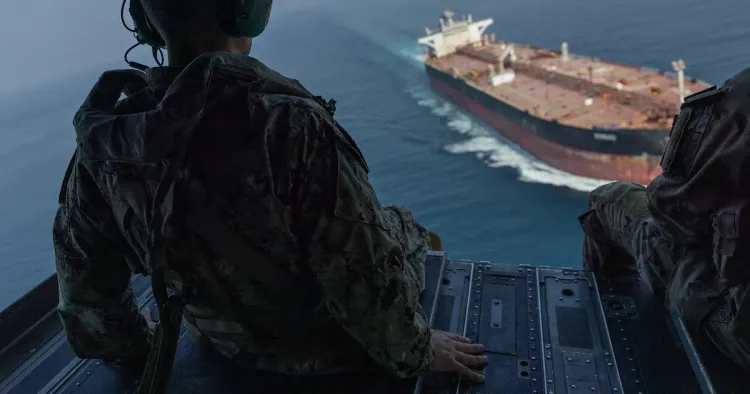
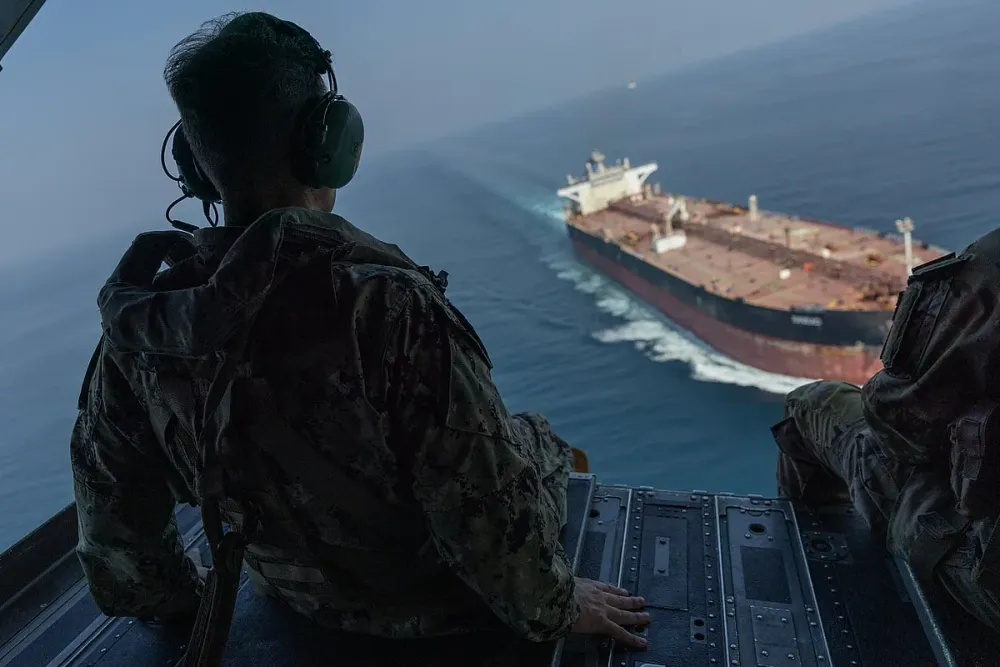
CENTCOM commander Adm. Brad Cooper has described the primary routes as "free and clear of Iranian sea mines." In an Oct. 25 statement, the command said Cooper had surveyed the strait aboard a US Army CH-47 Chinook. It reported that more than 3,000 commercial vessels had passed through with CENTCOM support during the preceding six months, and that over 95% of ships navigating the strait in recent months had done so safely.
US officials had announced on Aug. 25 that the Navy had cleared the Strait of Hormuz Traffic Separation Scheme. They said underwater drones had located more than 100 suspected mines over recent months and that private contractors had dealt with them. Earlier, in May testimony to Congress, Cooper said US forces had "eliminated more than 90 percent of Iran's once-massive inventory of over 8,000 naval mines," according to Stars and Stripes.
The International Maritime Organization offered a different assessment on Oct. 20. Secretary-General Arsenio Dominguez told Fox News Digital that the traffic separation scheme "still has mines" and that the IMO could not guarantee a ship using that route would avoid a mine strike. He described the waterway as "not open for business in the way that it was before the conflict started."
Mine clearance in designated lanes does not establish that the entire Gulf is mine-free or remove other navigation threats. A previous UK Maritime Trade Operations weekly report recorded a container ship being hit by an unidentified projectile during a Hormuz transit.
Tankers continue under costly precautions
Lloyd's List Intelligence said that, as of late October, tanker operators were making nighttime passages with their location systems and mobile phones switched off. They used a US-protected lane close to Oman's coast, then transferred oil to other tankers waiting in the Gulf of Oman.
Lloyd's reported 28 attacks on ships in October, more than in any other month since the war began. It also said spot charter prices had climbed into the hundreds of thousands of dollars per day.
Data from Marsh and LSEG cited by bdnews24 put war-risk insurance premiums for Hormuz passages at 3% to 10% of a ship's hull value, compared with 0.15% to 0.25% before the war. The daily charter rate for a very large crude carrier on the Gulf-to-China route reached $1.2 million by October, up from roughly $80,000 before the conflict.
Safe passages do not measure a trade recovery
Hormuz links the Arabian Gulf to the Gulf of Oman and the Arabian Sea. Before the disruption, it carried roughly one-fifth of global petroleum consumption. The number of ships completing safe passages does not, by itself, show whether trade through the waterway has recovered.
The US Energy Information Administration recorded a drop in Hormuz oil flows from 21.6 million barrels per day in the fourth quarter of 2025 to 4.9 million barrels per day in the second quarter of 2026. Those quarterly readings describe earlier conditions, not October traffic.
In its Oct. 21 outlook, the EIA projected that global crude production and trade flows would recover toward pre-conflict levels by the end of the year. That projection is not evidence that the recovery has already occurred.
Conflict and the remaining evidence gaps
The crisis began on Feb. 28, 2026, when the US and Israel launched an air war against Iran, after which Iran largely blocked the strait. An interim US-Iran truce collapsed on July 8 following Iranian strikes on several commercial ships in the waterway.
The US naval blockade of Iranian ports began on July 14. According to CBS News, CENTCOM reported that it had since turned back 135 commercial ships, destroyed 10 IRGC shadow-fleet tankers and disabled four commercial vessels.
Assessing the disputed mine-strike reports requires findings tied to specific incidents, while current vessel-traffic data would help establish how consistently ships are using the cleared lanes. CENTCOM's assurance concerns mine clearance on the primary routes; it is not a finding that all shipping is safe. Shippers still need current UKMTO advisories, navigational warnings and security assessments specific to their voyages.