Strait of Hormuz: 80% of oil tankers now 'invisible' as US adopts Iran's own evasion tactics
Oil tankers are disappearing from tracking systems while crossing the Strait of Hormuz, with US military support enabling most Gulf crude to bypass Iranian attacks by using methods Tehran perfected under sanctions.
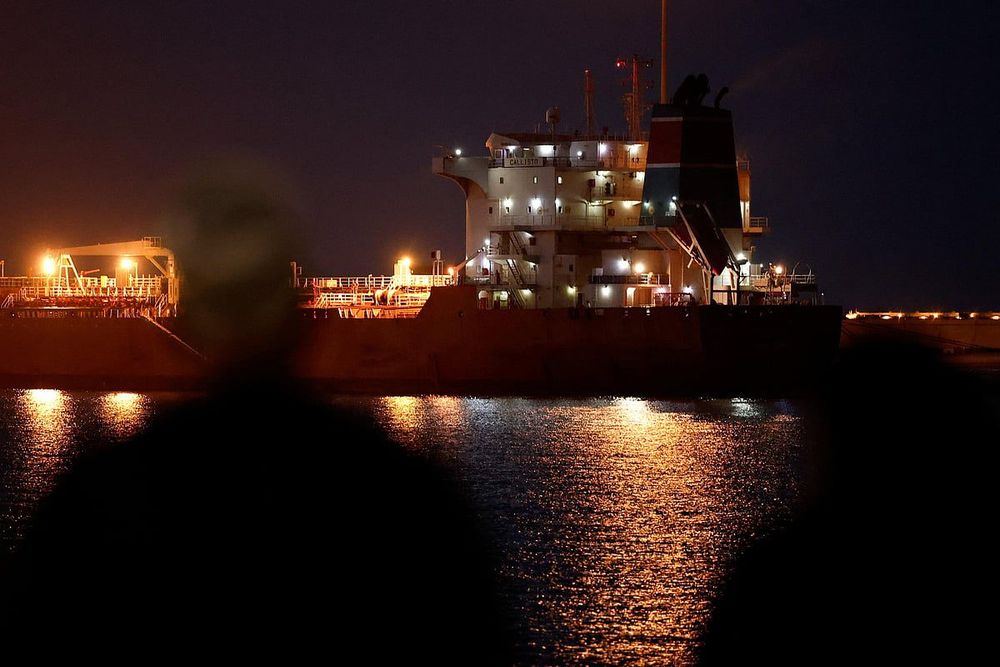
How tankers disappear
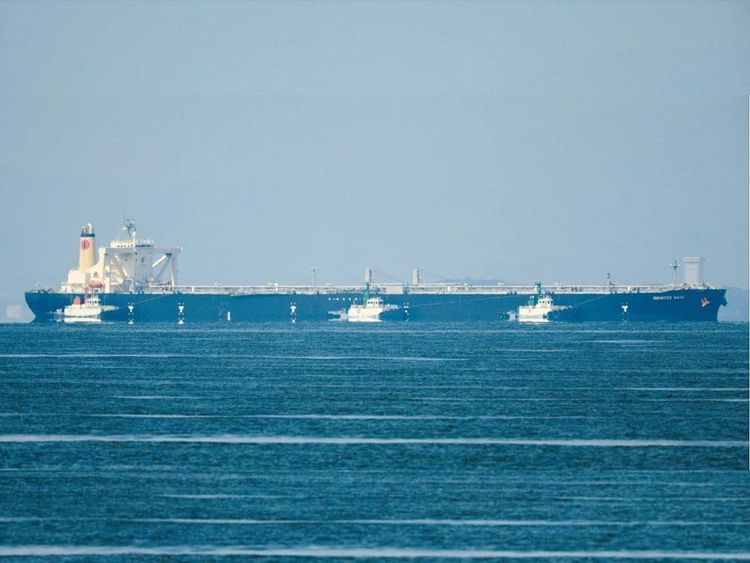
An invisible armada is moving millions of barrels of oil through the world's most strategic chokepoint. Tankers carrying Gulf crude are vanishing from tracking screens as they approach the Strait of Hormuz, only to reappear hours later on the other side.
They are not lost. They are deliberately going dark.
About 80 per cent of traffic through the strait over the past two weeks has operated this way, according to shipping analytics firm Kpler. Vessels switch off their Automatic Identification System transponders—mandatory safety devices that broadcast a ship's identity, position, speed and course every few seconds—and travel close to Oman, as far from Iran as possible.
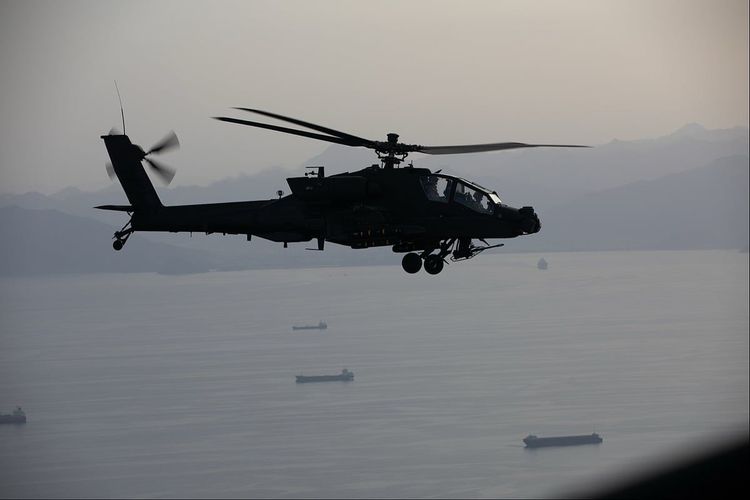
Behind many of these journeys is the US military, which helps protect vessels moving through a southern corridor of the strait. The result is that a largely invisible shipping operation is keeping Gulf oil flowing and preventing crude prices from spiking dramatically during an already severe energy crisis.
The journey of the Greek-owned supertanker Kiku illustrates how the system works. After loading crude at Qatar's Mesaieed terminal, the giant vessel crossed Hormuz and was sailing off Dubai on July 31 when its transponder signal suddenly disappeared. At 10am the next day, Kiku reappeared on the other side of Hormuz.
It had made what has become known as a dark transit, part of a system of nighttime crossings supported by the US military and designed to reduce exposure to Iranian drone attacks. The strategy goes beyond simply getting tankers through the strait. Gulf oil companies have chartered vessels that shuttle crude through Hormuz before transferring their cargo to other tankers waiting in the Gulf of Oman. Those vessels then carry the oil onwards to customers worldwide.
Iran's playbook, reversed
There is a striking irony to the tactic. For years, Iran has relied on a shadow fleet—tankers switching off or manipulating tracking signals and using ship-to-ship transfers—to keep its oil moving despite US sanctions. The aging vessels obscure ownership structures, frequently change flags and names, and disable transponders to evade detection while transporting sanctioned oil primarily to China.
Now, some of those same methods are being turned against Tehran. Gulf oil is moving through Hormuz aboard vessels that disappear from tracking screens before re-emerging beyond the strait, in many cases under US military protection. The difference is in purpose—rather than evading sanctions, the dark runs are designed to reduce exposure to Iranian attacks and keep global oil supplies flowing.
CNN observed more than a dozen such ship-to-ship transfers over two days, with oil subsequently heading towards China, Taiwan, South Korea, the Philippines, Vietnam and Thailand.
The market cannot see everything
Turning off transponders creates another striking consequence: conventional ship-tracking data can substantially underestimate how much oil is actually passing through Hormuz. The US Department of Energy estimates oil traffic through the strait has averaged between 8 million and 9 million barrels a day—roughly double what some Wall Street analysts and tracking services relying on transponder data would suggest.
Before the 2026 war, approximately 20 million barrels per day of crude oil and petroleum products transited the Strait of Hormuz, representing roughly 25 per cent of all global seaborne oil trade. The current flow remains well below that level, but the invisible traffic is substantial enough to matter.
Satellite and radar imagery provides clues to the missing vessels. Images from August 14 showed ships around the Omani side of Hormuz that did not appear in MarineTraffic data at the same time—vessels that were physically present but electronically invisible.
Why this matters for oil prices
The US Central Command has assisted approximately 1,300 commercial vessels transit the strait since early May, helping transport more than 660 million barrels of crude oil through the waterway. In July alone, tankers using US-protected routes carried about 5 million barrels a day out of the Arabian Gulf, according to analysts cited by The New York Times.
That additional supply matters enormously. The war has disrupted a major share of global oil supply and depleted commercial inventories. Yet the feared complete shutdown of Hormuz has not materialised. Instead, producers and traders have repeatedly found ways around the disruption.
Saudi Arabia has rerouted about 5 million barrels a day through its East-West pipeline, which has an expanded capacity of up to 7 million barrels per day, to the Red Sea port of Yanbu. Another roughly 2 million barrels a day has been rerouted around Hormuz, while Brazil, Guyana and Venezuela together have added more than 1 million barrels a day of production. US output has also increased.
Together with the dark Hormuz crossings, these measures have helped prevent the supply shock from translating into the kind of explosive oil-price surge once feared.
America is paying a price
Keeping the southern corridor operating is neither simple nor cheap. US Central Command uses ships, helicopters and aircraft, along with weapons capable of intercepting Iranian drones and missiles. At least 15 ships using southern routes have been hit since the beginning of June, according to a New York Times analysis of International Maritime Organization data. Iran also retains the ability to intensify attacks against shipping and Gulf energy infrastructure.
The US military faces another problem: endurance. With its Bahrain naval base severely damaged by Iranian missile strikes—the Fifth Fleet headquarters building was rendered unusable, with repair costs estimated at approximately $200 million for the headquarters alone and $386 million total for all damaged facilities—Navy supply ships now have to travel to Diego Garcia in the central Indian Ocean. The remote base is over 2,500 miles from the Strait of Hormuz, meaning the journey takes more than five days each way.
Around 20 US warships are operating in the Gulf of Oman, while maintaining carrier and destroyer deployments over an extended period is becoming increasingly difficult.
A workaround, not a solution
The invisible fleet has therefore bought the oil market something precious: time. But it cannot permanently replace a freely navigable Strait of Hormuz. Countries including Iraq, Kuwait, Qatar, Bahrain and Iran have zero pipeline bypass infrastructure around the strait, leaving approximately 14 million barrels per day of their oil exports structurally dependent on maritime passage through the waterway.
Oil inventories have already been depleted by as much as 1.9 billion barrels during the war. If those reserves continue falling, there could eventually come a point when supply can no longer meet demand without substantially higher prices.
For now, however, one of the strangest consequences of the Hormuz crisis is also one of the most important. Ships are disappearing from tracking screens precisely so their oil can keep appearing on the world market.