Lula Wins Fourth Term as Brazil's Right Strengthens Its Hold in Congress
Luiz Inácio Lula da Silva defeated Flávio Bolsonaro in Brazil's October 25 presidential runoff, winning 51.79% of valid votes. His fourth, non-consecutive term will begin with a divided electorate and a Congress in which right-wing parties are assessed to hold majorities in both chambers.
 Mariam Al Mansoori
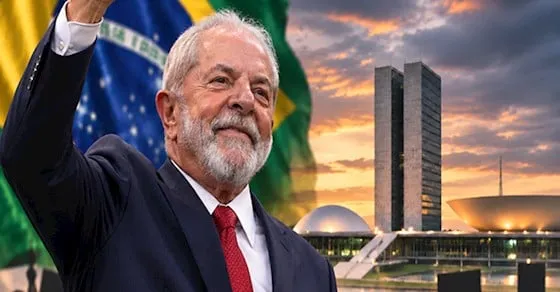
Lula reverses Bolsonaro's first-round lead
The runoff gave Lula 64.26 million votes, compared with Bolsonaro's 59.83 million, or 48.21%. Bolsonaro, the Liberal Party candidate, had finished ahead on October 4 with 47.03%, about 56.1 million votes, while Lula received 45.16%, about 53.9 million. Never before in a Brazilian presidential election had the first-round winner lost the runoff.
Participation increased between the two rounds, from about 78.9% of eligible voters to 80.78%. The regional divide remained pronounced: the North and Northeast helped underpin Lula's victory, while Bolsonaro led in the South and Center-West. Despite losing the presidency, the Bolsonaro movement retained a substantial electorate.
Future UAE's analysis attributes Lula's turnaround partly to stronger online campaigning and direct voter outreach after his first-round defeat. It also points to his success in reaching beyond the Workers' Party's traditional base, particularly in the Southeast, and Bolsonaro's failure to make sufficient gains in the Northeast.
According to the Congressional Research Service, Lula is scheduled to take office on January 5, 2027, for a four-year term covering 2027 through 2030.
A different balance of power beyond the presidency
The October 4 elections also covered all 513 seats in the Chamber of Deputies, 54 of the Senate's 81 seats, state legislatures and the governorships of all 26 states and the Federal District. Those contests produced a stronger position for the right and center-right than the presidential result alone suggests.
With 121 deputies, 24 more than in 2022, Bolsonaro's Liberal Party became the largest force in the lower house. Lula's Brazil of Hope federation finished second with 88 seats, an increase of six. The federation unites the Workers' Party, the Communist Party of Brazil and the Green Party. Progressive Union, comprising União Brasil and Progressistas, took 87 seats, down from 105.
The Liberal Party also secured 19 of the 54 Senate seats being contested, bringing its total to 29. That made it the chamber's largest party, but did not give it a majority by itself. The Workers' Party increased its Senate presence to 10 seats.
A party-ideology assessment cited by the Congressional Research Service puts the Liberal Party and other right-wing parties together in the majority in both chambers. The new, 58th legislature runs from February 1, 2027, through January 31, 2031.
Twenty-one gubernatorial contests were settled in the first round. The Liberal Party won six governorships and the Social Democratic Party five. The Workers' Party, Progressistas and Republicanos each won four; the Brazilian Social Democracy Party won two; and the Brazilian Democratic Movement and Podemos each won one. The Workers' Party's strength at the state level remained concentrated in the Northeast.
Legislative friction and foreign-policy continuity
Future UAE's analysis links the right's congressional and state-level strength to its established political organizations, cost-of-living pressures and concern about organized crime. It cautions that these results do not necessarily represent a wholesale shift in voter preferences: Lula still attracted enough support beyond his core electorate to win the presidency.
The analysis anticipates conflict over Lula's legislative agenda and greater congressional pressure on the Supreme Federal Court. It describes the incoming Congress as one of the most conservative since Brazil's return to democracy in 1988, while identifying persistent polarization and succession challenges within both political camps.
Abroad, Future UAE expects Lula to retain a pragmatic approach to Washington and Beijing, emphasizing diversified partnerships and strategic independence. It also expects Brazil to continue advocating for Global South interests, particularly climate justice, amid tensions with Israel.