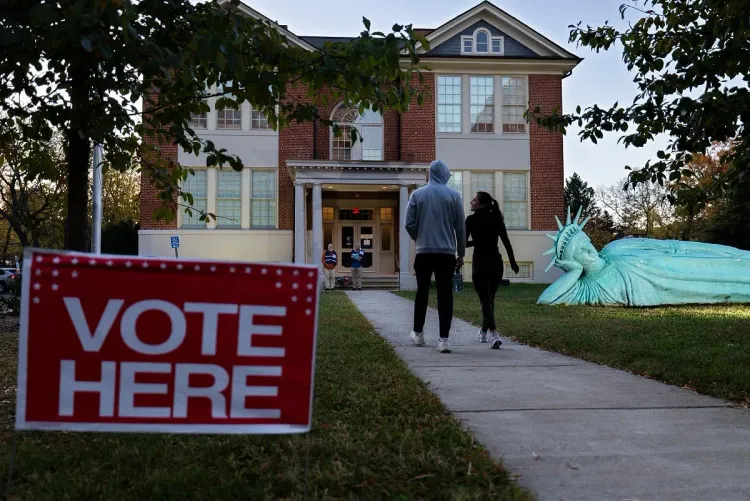
California counts votes on Proposition 40's one-time billionaire tax
California's proposed 5 percent tax on billionaire wealth remained undecided as vote counting continued November 4. Gulf News reported that the outlook favored rejection with about 49 percent of votes counted as of 9:45 a.m. UAE time.
 Mariam Al Mansoori
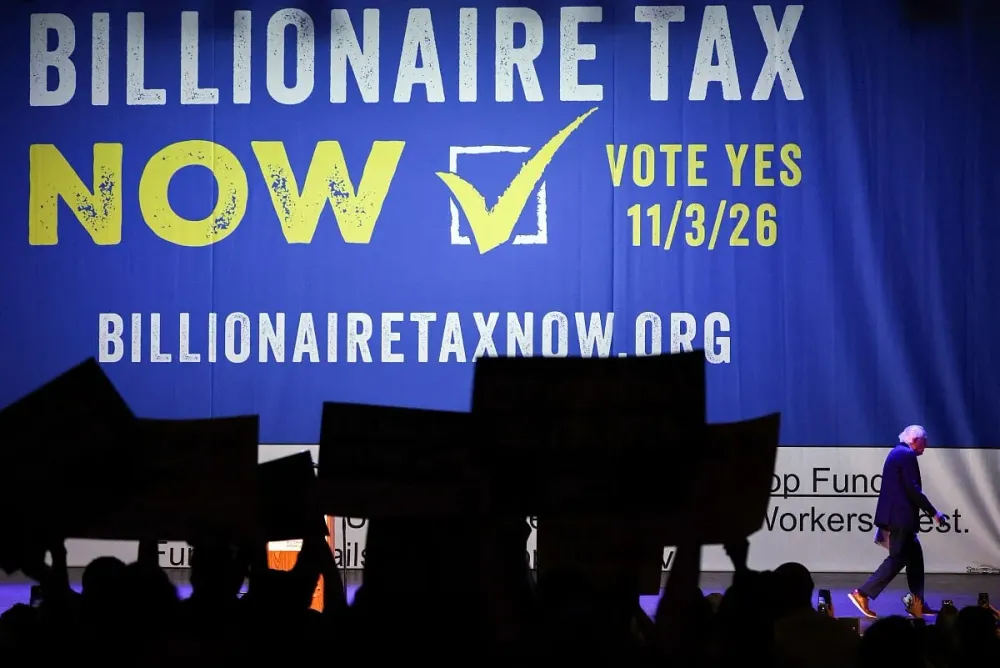
What voters are deciding
Proposition 40 went before voters in the November 3 midterm elections. It would impose a one-time wealth tax on California billionaires, with most of the proceeds reserved for public health care. Approval requires a simple majority, but the outcome also depends on two competing ballot measures.
Either Proposition 41 or Proposition 42 would nullify the tax if it received more votes than Proposition 40. Governor Gavin Newsom backs Proposition 42, which would prohibit new taxes on financial assets.
According to NPR's Planet Money, passage of Proposition 40 would establish the first U.S. wealth tax aimed at billionaires. No state has imposed a wealth tax to date.
Who would pay and how
The proposal covers California taxpayers and trusts with assets valued above $1 billion. For individuals, it ties eligibility to two dates: California residency on January 1, 2026, and a net worth of at least $1 billion on December 31, 2026.
Worldwide net worth would count toward the tax, but directly held real estate would be excluded. Taxpayers could pay the 5 percent levy all at once or through annual installments of 1 percent over five years. The method California would use to value billionaires' assets remains unclear.
The measure combines a statute with a constitutional amendment because California's constitution limits taxes on certain intangible property to 0.4 percent. Proposition 40 would amend that constitution to permit the one-time 5 percent levy and put its proceeds in dedicated health, education and food-assistance accounts outside the General Fund.
Health care funding is the main purpose
Revenue would be held in a dedicated reserve fund. The nonpartisan California Legislative Analyst's Office says 90 percent would be earmarked for public health care services. Education, food assistance and administration of the tax would share the remainder.
The proceeds would be exempt from existing state constitutional provisions that cap spending and set required funding for schools and community colleges.
Proposition 40 is designed to offset federal health care cuts under the One Big Beautiful Bill Act, signed by President Trump in July 2025. KFF estimates those cuts will likely leave California with an annual health spending shortfall of $19 billion. If the state cannot replace that funding, as many as 1.6 million Californians could lose Medi-Cal coverage.
RAND estimates that the federal law will cut California's Medicaid funding by roughly $112 billion through 2034.
Revenue estimates range widely
The Legislative Analyst's Office estimates California "probably would collect tens of billions of dollars" from the levy over several years. It also projects a possible ongoing reduction of less than $1 billion a year in income tax receipts from billionaires.
Economists Emmanuel Saez, Gabriel Zucman and their co-authors, who support the proposal, put the expected proceeds at about $100 billion for 2027-2031, or roughly $20 billion annually. Stanford/Hoover economists Joshua Rauh and Benjamin Jaros estimate collections of only about $30 billion and calculate a net cost to the state of $39 billion.
One point of disagreement is whether some billionaires had already moved beyond the tax's reach. Rauh argues that at least seven left California before the January 1, 2026, residency cutoff: Larry Page, Sergey Brin, Peter Thiel, Don Hankey, Steven Spielberg, Travis Kalanick and David Sacks.
Rauh says those departures alone lowered potential revenue by "around $30 billion." Supporters dispute that the seven had successfully ended their California tax residency before the cutoff.
Supporters and opponents
Senator Bernie Sanders, the California Democratic Party, the California Labor Federation and the Teamsters support Proposition 40.
Newsom opposes the state measure, arguing that it would prompt billionaires to leave California, although he supports a federal billionaire tax. Other opponents include the California Taxpayers Association, the California Teachers Association and the California Medical Association.
NPR, citing a New York Times report, said wealthy opponents had contributed $333 million to a group working to defeat the proposal. NPR described those donors as concerned that the measure could spur a broader wealth-tax movement.
Constitutional challenges and a 2027 court review
The Tax Foundation argues that Proposition 40 faces multiple constitutional vulnerabilities. It calls the January 1, 2026, retroactive residency cutoff "fatally flawed," citing Supreme Court precedent against retroactively imposing a "wholly new tax."
The organization also contends that assigning 100 percent of worldwide wealth to California for tax purposes violates the Commerce Clause's nexus and fair-apportionment requirements. It identifies additional concerns involving the right to travel, excessive fines and federal obligations.
The measure includes a "validation action" requiring courts to assess its facial validity on an expedited schedule in 2027. After that review, challenges would be limited to how the measure applies in particular cases, rather than its validity on its face. The Tax Foundation describes that provision as "astonishing in its overreach."