US midterm voting opens after courts block Trump election challenges
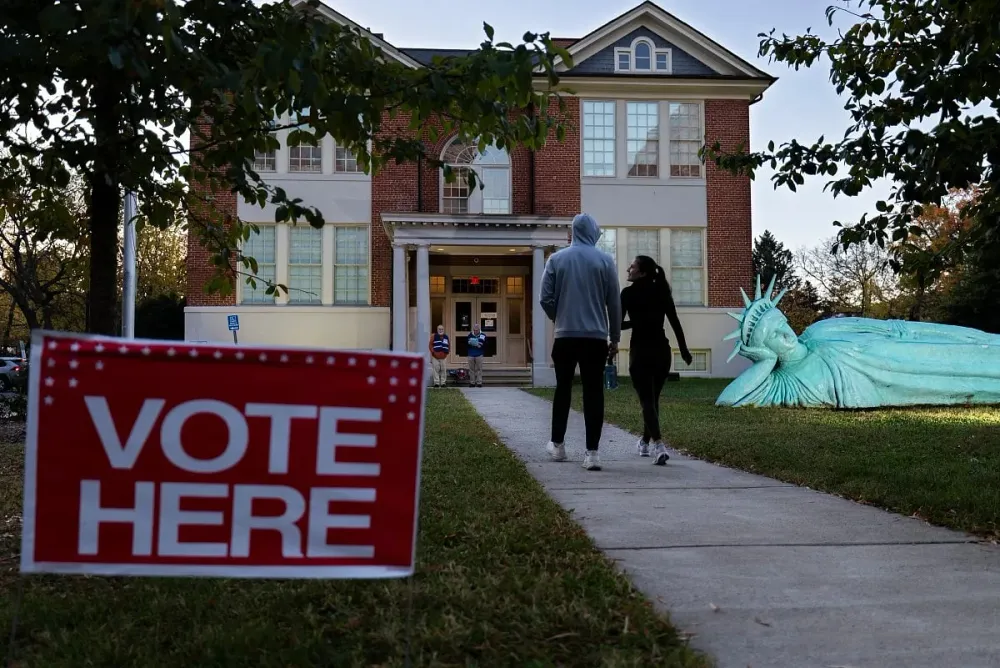
Americans began casting Election Day ballots Tuesday with control of Congress at stake, hours after the Supreme Court rejected the Trump administration's bid to have California set aside thousands of ballots. Despite President Donald Trump's repeated false claims of widespread fraud and efforts to intervene in state elections, voting has proceeded with relatively few problems.
 Mariam Al Mansoori
California ballot challenge rejected
The Supreme Court's action Monday night was the latest setback for the administration's efforts to influence how states conduct the midterms. Its emergency request sought to separate thousands of California ballots as part of a search for noncitizen voters.
The justices denied the request on Nov. 2 in a one-sentence order, with no dissents noted. They ruled without requesting a response brief from California or the other parties, an unusual departure from their practice in high-profile cases.
Solicitor General D. John Sauer had told the court that the Justice Department identified more than 20,000 people who appeared to be registered voters in California and whom the federal government believed were likely not U.S. citizens. That assertion concerned suspected noncitizen registrations, not proof that those individuals had voted. Noncitizen voting remains extremely rare, as years of research and state investigations, as well as the administration's own arrests and charges, have demonstrated.
The case reached the justices after an Oct. 30 ruling by the 9th U.S. Circuit Court of Appeals barring federal intervention in California's mail-in ballot count. Judges Mark Bennett, a Trump nominee, and Gabriel Sanchez, a Biden appointee, wrote the 2-1 decision. It cited the "Purcell principle," which cautions against last-minute changes to election rules.
The Supreme Court had also rebuffed Trump in September, rejecting his proposal to change the nationwide distribution of mail ballots. Election officials had warned of catastrophic consequences if that plan took effect for the midterms.
Federal monitoring and lawsuits draw scrutiny
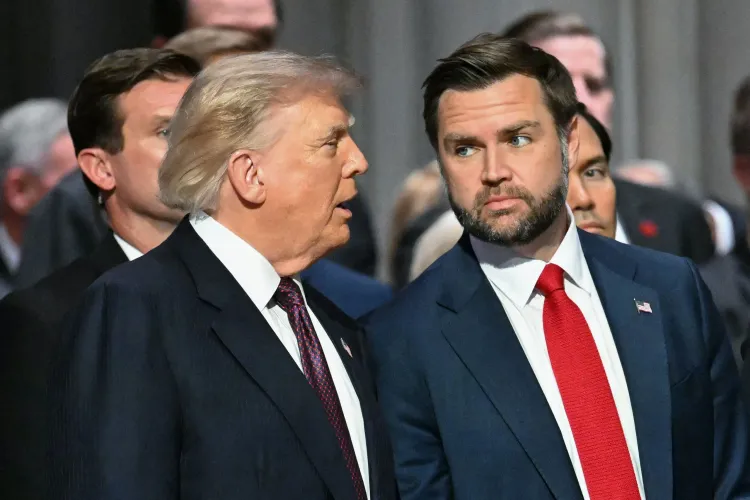
For months, Trump has sought to use presidential authority to shape an election that will decide whether Republicans retain control of Congress. The Justice and Homeland Security departments have conducted a broad search for noncitizen voters, including a predawn California operation staged for cameras that resulted in more than two dozen arrests.
The Justice Department planned to deploy its largest-ever polling-place monitoring effort on Election Day. Democrats and allied organizations prepared an even larger monitoring operation. Separately, at Trump's urging, the department sued to prevent certification of Alaska's election results if Democrats won the Senate race.
Election officials and Democratic groups also prepared for possible appearances by immigration agents at voting sites or attempts by federal officers to seize voting machines. Those preparations followed Trump's persistent false allegations of widespread voter fraud. The administration has said armed federal officials would not guard polling places.
By the eve of Election Day, the actions Democrats most feared had not occurred, and courts had blocked much of the administration's legal campaign. Its attempts to intervene nevertheless accounted for the most significant disruptions before voting day.
Early ballots approach the 2022 total
The first polling places opened at 6 a.m. EST Tuesday in Connecticut, Indiana, Kentucky, Louisiana, Maine, Missouri, New Jersey, New York and Virginia. Millions of voters had already participated, with early voting on track to exceed the previous midterm election's level.
University of Florida Election Lab figures showed more than 54 million people had voted in person or by mail by the morning of Nov. 2. That was nearly as many early ballots as were cast during the entire 2022 midterm early-voting period. Twenty-three states had already surpassed their 2022 early-vote totals.
Texas, where Democrat James Talarico and Republican Ken Paxton are competing in a close Senate race, had exceeded its 2022 early-vote total by more than 138% by Nov. 2, according to data tracked by the Election Lab.
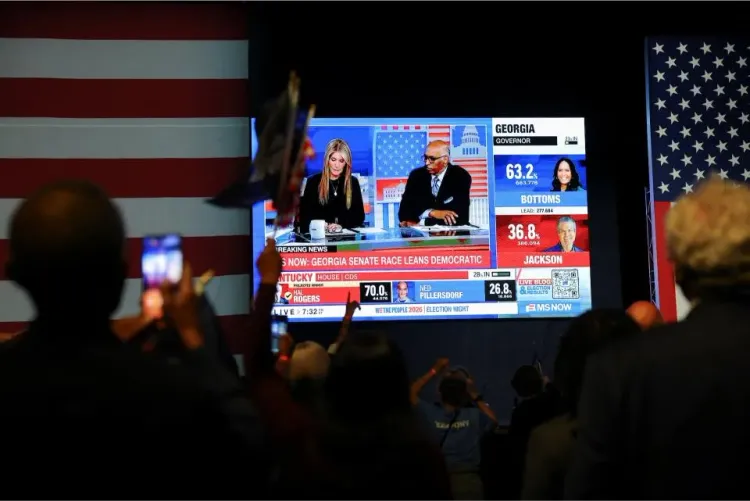
Georgia had received more than 2.8 million early ballots by the same date, with competitive Senate and governor's races on the ballot. Those votes amounted to about 71% of the state's overall 2022 midterm turnout, including votes cast on Election Day.
Flooding and mail delays complicate voting
Beyond the court disputes, some voters faced practical obstacles. Heavy rain and flash flooding were expected to impede access to polling places in parts of Colorado, Arizona, Utah and New Mexico. Navajo Nation election administrators changed several voting locations, while rural San Juan County in Utah allowed electronic voting Tuesday because some residents might be unable to reach the polls.
For voters still holding absentee ballots, election administrators and voting rights advocates recommended using a drop box or making an in-person delivery to a polling place instead of mailing them. They warned that recent operational changes at the U.S. Postal Service could delay postmarks and leave ballots ineligible to be counted.
During this year's primaries, tens of thousands of voters in California, Oregon and Washington lost their chance to have their votes counted because ballots arrived late or received late postmarks. All three states mail ballots to every voter.
Disputes may continue through certification
Voting rights organizations, Democrats and the Justice Department have traded legal filings over suspected noncitizen voters, federal monitors and alleged federal intimidation of election officials, among other issues. With closely contested races and Trump's push for greater federal control over state-run elections, those fights could continue through counting and certification.
Election law experts described Trump's lawsuits as outside historical norms but doubted that the administration's arguments would persuade the courts.
Trump has continued to qualify his willingness to recognize the outcome, casting doubt on the election's legitimacy if Republicans lose. Asked by a reporter a week before Election Day whether he would accept the results, he replied: "I will if they are honest."