Gandhi accuses Modi of "stealing votes," calls for election chief's removal
India's opposition leader Rahul Gandhi called for Chief Election Commissioner Gyanesh Kumar's removal and legal action against him at a Delhi rally on Sunday, November 1. Accusing Prime Minister Narendra Modi of "stealing votes," Gandhi joined tens of thousands protesting a voter-roll revision that the Election Commission says is intended to keep electoral records accurate.
 Mariam Al Mansoori
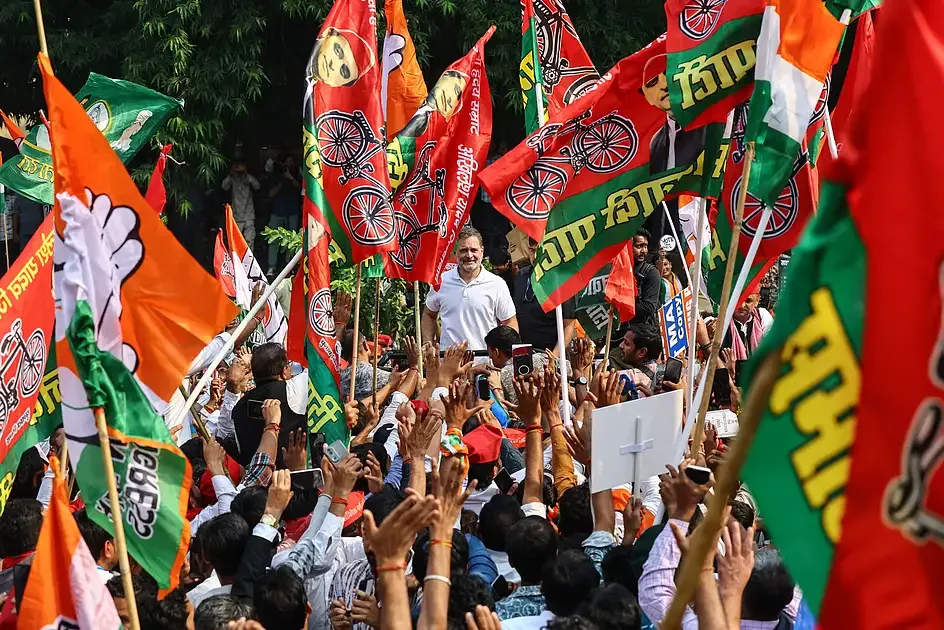
Opposition leaders march through Delhi
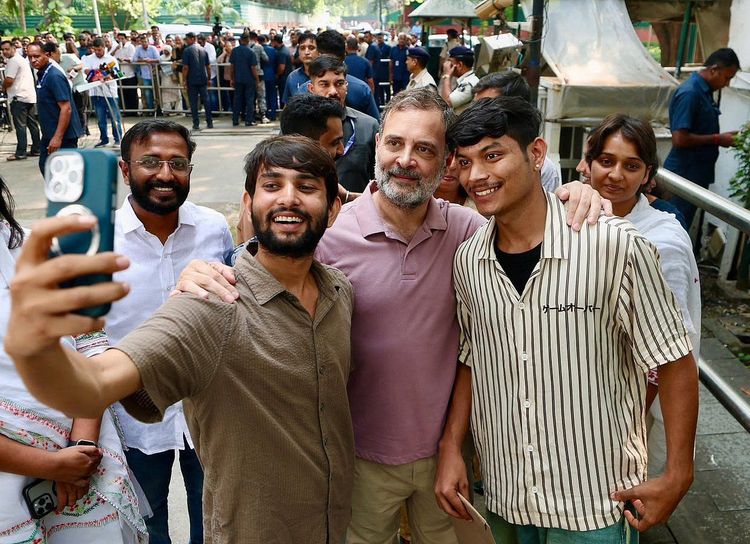
Farmers, laborers, students and activists carried flags and placards through central Delhi to Ramlila Ground for the "Chalo Dilli," or March to Delhi, protest. Congress president Mallikarjun Kharge, Sonia Gandhi and former chief ministers Mamata Banerjee of West Bengal and Akhilesh Yadav of Uttar Pradesh joined Gandhi in leading the march.
Gandhi and other senior opposition figures arrived at the rally ground in an open jeep. Demonstrators demanded Kumar's resignation, chanting "Save the vote, save the country" and "Vote thief, give up power". Authorities deployed more than 4,000 police and paramilitary personnel along the route and at the venue.
"We will not let the Constitution be destroyed... Gyanesh Kumar will be removed from the CEC post. He will go to jail," Gandhi told the crowd.
Gandhi alleged that the Election Commission was acting on Modi's behalf. He said about 130 million voters had been removed since the 2024 general election, describing that as 15% of India's more than 960 million eligible voters. He contrasted the figure with the three-percentage-point gap between the NDA and INDIA blocs' vote shares in that election, when Modi's Bharatiya Janata Party secured a third consecutive term.
"If the deleted voters were not legitimate, that means the 2024 election was illegal," Gandhi said.
Dispute over the voter-roll revision
At the center of the protests is the Special Intensive Revision, or SIR. Opposition parties and civil society activists allege that the exercise has deprived more than 130 million people of voting rights, with Muslims and other marginalized communities making up most of those affected.
The Election Commission of India, an independent constitutional body responsible for parliamentary and state legislative elections, rejects that characterization. It describes the SIR as a "routine clean-up of the rolls" to remove entries for people who have died or moved permanently, duplicate registrations and noncitizens, while retaining every eligible citizen.
India's Supreme Court upheld the commission's authority to conduct the revision in May 2026. The court said the data did not indicate "systemic disenfranchisement" and clarified that the exercise was not a citizenship test.
Human Rights Watch reached a sharply critical assessment in an October 28 report. Calling the removal of more than 130 million names "arbitrary and deeply flawed," it said women, people living in poverty, religious minorities, especially Muslims, and other marginalized communities had been disproportionately excluded. The organization interviewed 70 people in Delhi, West Bengal, Maharashtra and Karnataka and urged authorities to scrap the SIR.
Three UN human rights experts had warned in May that the revision might amount to using state administrative machinery "for the purpose of political targeting of a religious minority". Former Chief Election Commissioner S.Y. Quraishi called the exercise "illegal" and urged criminal prosecution of those responsible within the commission.
How the revision expanded
The SIR started in Bihar in June 2025, four months before the state's November assembly election. Nearly 4.7 million names were deleted there, representing about 5.95% of its electorate.
A second phase began in late 2025 across 12 states and union territories. Figures reported in Wikipedia's entry on the SIR put the combined electorate after that phase at 45.81 crore, down from more than 50.99 crore, a reduction of about 10.2%. Uttar Pradesh had the largest net deletion, about 2.04 crore, while West Bengal recorded about 83.86 lakh.
West Bengal's election and appeals
In West Bengal, the completed SIR removed about 9.1 million names, roughly 12% of the electorate, before the April 2026 state election, according to Human Rights Watch. The BJP won control of the state for the first time. Election analyst Prannoy Roy found a positive correlation between the number of deletions and the shift in vote share against the governing Trinamool Congress, or TMC.
The appeals process has restored many of the registrations it has reviewed. Human Rights Watch said about 93% of West Bengal voters whose appeals had been decided were put back on the rolls. The group interpreted those outcomes as showing that roughly nine in 10 removals had been wrongful. More than 3.4 million appeals remained pending, and the Calcutta High Court said resolving them would take at least 21 years.
Wikipedia's SIR entry also reports a disparity between two application processes in West Bengal: requests to exclude voters through Form 7 succeeded about 97.5% of the time, compared with about 50% for applications to register new voters through Form 6.
Women and benefit recipients affected
An analysis by The Hindu, cited by Human Rights Watch, found that women accounted for significantly more deletions than men nationwide. Women made up nearly 60% of those removed in Bihar and more than 60% in West Bengal.
Loss of voter registration also affected access to government benefits. Bihar's BJP government removed more than 3% of names from the public distribution system for subsidized food rations after their deletion from electoral rolls. In West Bengal, authorities said people removed from the rolls who had not appealed would lose access to subsidized food grains and cash transfers under the Annapurna Yojana program.
Weeks of protests against Kumar
Sunday's rally was the opposition bloc's second. Students and civil society groups had protested against Kumar for weeks following media reports alleging discrepancies in the nearly nationwide revision. Those reports included procedural objections reportedly raised by the two other election commissioners.
Critics contend that the SIR serves political ends, threatens to exclude millions more voters and has disproportionately affected minorities, particularly Muslims, who might not have supported the BJP.
At an October protest in Delhi, authorities detained dozens of journalists and demonstrators. Hundreds had assembled near Connaught Place, seeking permission to gather at Jantar Mantar.
Sanjay Namdeo, who traveled from Madhya Pradesh for Sunday's rally, told Khaleej Times that Kumar should resign over the removal of millions of voters. Another participant, 15-year-old Sahar Vaish, attended with his mother, a former banker in Dubai. He said he feared the SIR would prevent him from voting when he became eligible in three years.