Democrats win Congress as markets swing on AI oversight and spending outlook
Democrats captured the House and Senate in Tuesday's US midterm elections, dealing President Donald Trump a major defeat. Stocks initially fell on concerns about tougher technology oversight and Washington gridlock, but the selloff reversed later Wednesday as lower bond yields supported equities.
 Mariam Al Mansoori
Markets recover after an early technology selloff
Technology shares bore the brunt of the initial reaction. During Asian trading Wednesday, Nasdaq futures sank more than 2% before narrowing their decline to around 0.5%. S&P 500 futures were down about 0.35%, while European equity futures pared a 1.5% drop to 0.4%. Samsung Electronics, SK Hynix and Taiwan Semiconductor Manufacturing Company also fell as investors weighed the prospect of greater scrutiny of AI infrastructure.
The election added to weeks of concern about technology valuations and the huge capital commitments of major cloud computing companies. A Democratic Congress could investigate AI and data-center investments more closely, examining competition, electricity consumption, data privacy and infrastructure financing. Sweeping legislation would still have to overcome congressional divisions and Trump's veto power.
Later Wednesday, a Bloomberg markets wrap reported that S&P 500 futures were up 0.2% and Nasdaq 100 futures had gained 0.3%. Europe's Stoxx 600 rose 0.6%. Bloomberg attributed the turnaround to falling bond yields, which helped offset the earlier worries about AI regulation.
Digital assets also recovered. Bitcoin had fallen as much as 2.8% amid fears that Democratic control would impede industry-backed crypto legislation and lead to closer scrutiny of digital-asset companies. It subsequently erased the entire decline, according to Bloomberg.
Senate gains extend across Republican-held states
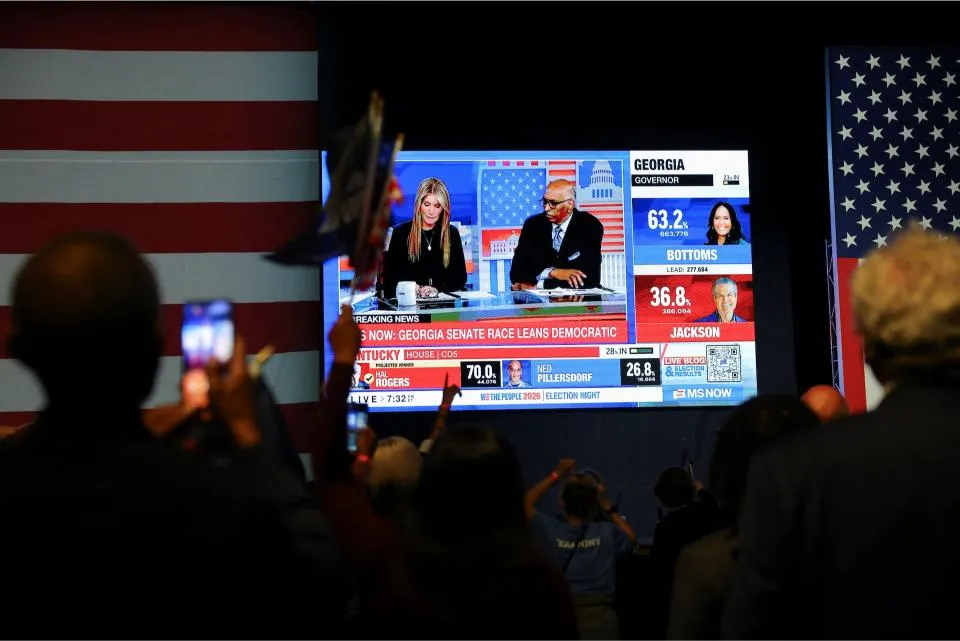
The congressional outcome was confirmed early Wednesday, November 4, giving Democrats both chambers for the last two years of Trump's presidency. Their gains reached several traditionally Republican states.
BBC and CBS projections showed at least seven Republican-held Senate seats changing hands. In Kansas, Adam Hamilton was projected to become the state's first Democratic senator in nearly a century. The projected Democratic winners also included James Talarico in Texas and Sherrod Brown in Ohio.
In Iowa, Josh Turek was projected to win the seat held by Republican Joni Ernst. Maine's Troy Jackson was projected to defeat longtime Republican Sen. Susan Collins. North Carolina and South Carolina were also projected flips, with Annie Andrews defeating Republican Darline Graham in South Carolina.
The networks also projected a Michigan victory for Democrat Abdul El-Sayed over Republican Mike Rogers. El-Sayed would become the first Muslim to serve in the US Senate.
The Texas result came despite substantial support for Republican Ken Paxton from Elon Musk. An OpenSecrets analysis of federal campaign disclosures, cited by the BBC, put Musk's spending on Republican candidates and conservative causes during the 2026 cycle at no less than $455 million. More than $200 million went toward backing Paxton, who lost to Talarico.
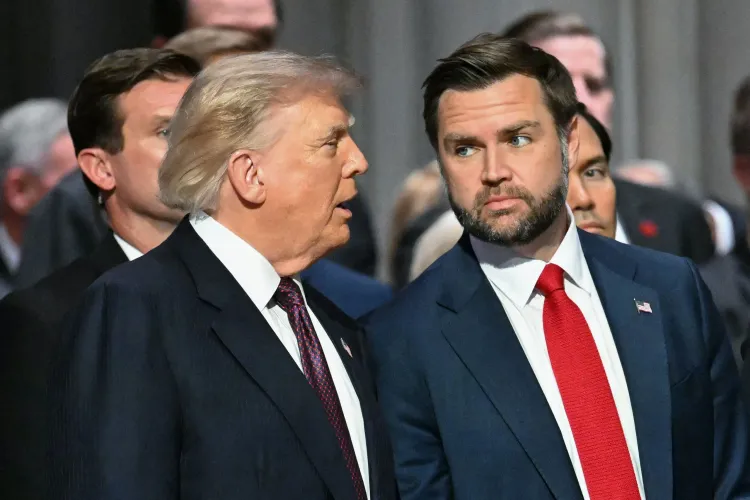
Trump acknowledged that the Iran war and higher fuel prices contributed to the Republican defeat, the BBC reported. In remarks to Fox News, he said Democrats "did a good job" and expressed willingness to work with them. He separately told The Wall Street Journal that he would exercise his veto if necessary.
Divided government reshapes the fiscal outlook
Democratic control creates new hurdles for the administration's tax proposals, spending plans and other domestic priorities. Congress will also play a central role in federal borrowing negotiations and future debt-ceiling disputes. Financial institutions, healthcare companies and defense contractors could face different legislative priorities and closer oversight.
How much policy changes will depend on negotiations with the White House, which retains substantial executive authority. Analysts cited by Bloomberg said the new congressional balance makes major partisan legislation harder to pass, lowering the likelihood of additional tax cuts or spending that would widen the deficit.
That prospect matters to bond investors already concerned about a US debt load of around $40 trillion, Bloomberg reported. Expectations of less fiscal stimulus, alongside demand for the relative safety of government bonds, accompanied a decline in the dollar to a one-month low.
In the initial market reaction, the Dollar Index reached about 101.41. The euro gained 0.4% to $1.1236, while sterling advanced 0.46% to $1.3475. The benchmark 10-year Treasury yield was around 4.92%. Bloomberg's later Wednesday update put the yield at 4.93%, down three basis points.
Employment data is the next economic test
The political shift leaves investors weighing two different effects: limits on fiscal expansion could ease borrowing pressures, while tighter technology oversight could challenge assumptions about growth in a sector that has powered much of the market's recent advance.
Persistent inflation, high borrowing costs and uncertainty about Federal Reserve policy remain part of that assessment. Friday's employment report will offer another measure of whether the Fed can justify further interest rate increases in December.