Vance blames Iran war for Republican losses as Democrats win Congress
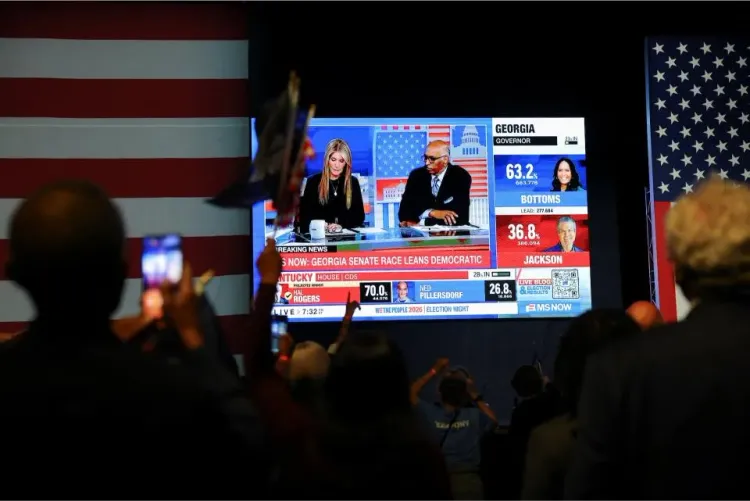
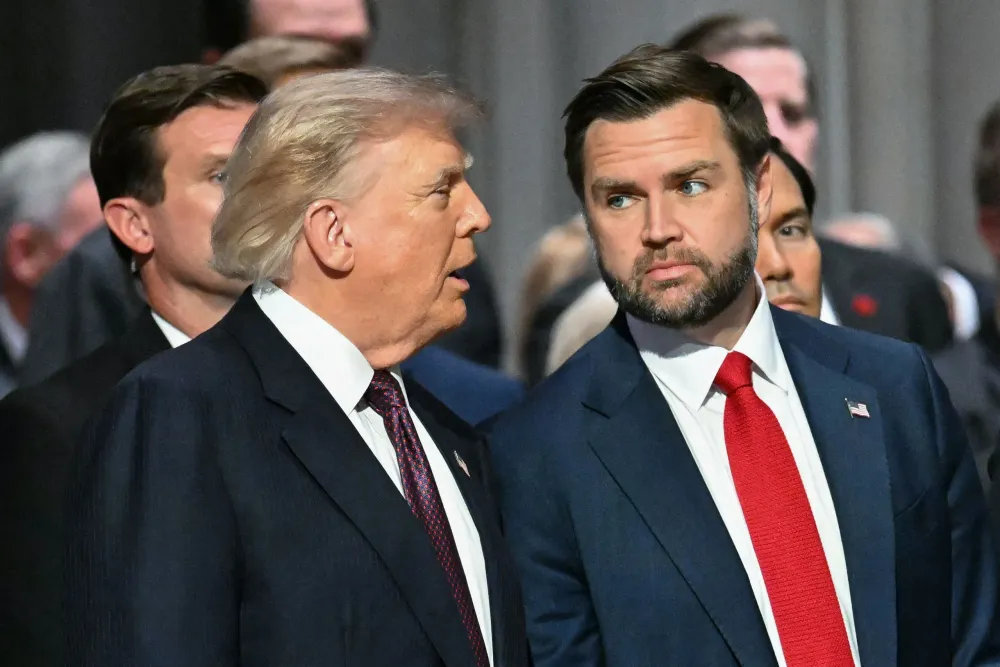
Vice President JD Vance attributed Republicans' sweeping midterm defeat to the war with Iran on Wednesday. President Donald Trump largely agreed with that assessment but defended his decision to go to war, as Democrats prepared to take control of both chambers of Congress.
 Mariam Al Mansoori
War and living costs fuel voter anger
"The reason we lost is the war. The President himself said so last night," Vance wrote on X. His assessment went further than Trump's remarks to Fox News the previous night, when the president described the conflict as "a part" of the explanation for Republican losses.
Asked about Vance's comments on Wednesday, Trump called them "largely true" but stood by his decision: "if I had to do again, I'd have to do it again because long term, it's the only answer."
The November 3 election gave Democrats both congressional majorities. BBC and CNN projections put the Senate tally at 54 Democratic seats to 44 Republican seats, with Alaska and Mississippi still uncalled. Democrats also exceeded the 218 seats required to control the House, and their Senate gains included Texas, South Carolina and Kansas.
Vance said a pollster he trusted had warned him before the election about anger among many of Trump's 2024 voters. Those voters wanted an end to the Iran war, action on inflation and living costs, an "America First" approach and a decision to "change our relationship to Israel," he said.
Gasoline prices were among the cost-of-living concerns cited in the Democratic sweep, BBC News reported. Trump had campaigned in 2024 on bringing prices below $2 a gallon; the national average in October 2026 was $4.31.
Vance's reservations about war with Iran predate the conflict. During the October 2024 presidential campaign, he said: "Our interest, I think very much, is in not going to war with Iran." Trump acknowledged their differences in March, describing his deputy as "philosophically a little bit different" and "maybe less enthusiastic" about military action.
Democrats gain leverage over war spending
The congressional change in January will give Democrats a way to challenge the administration's Middle East policy through spending decisions, hearings and investigations. They will be able to examine the cost of the Iran war, question those who planned it and seek limits on funding for additional operations.
A Pentagon estimate supplied to Congress put the war's cost at $47.1 billion as of October 16, according to Stars and Stripes. That was about $3.5 billion above the $43.6 billion reported through September 3. The estimate included about $29 billion earmarked for munitions replacement and $6.1 billion for lost equipment, neither of which had been funded.
Before the midterms, Congress had stalled on the Pentagon's request for $67 billion in supplemental funding. Sen. Jack Reed said the war had killed 21 US service members and wounded more than 850, while generating "nearly $50 billion in military expenses."
At a Middle East Institute briefing, former US ambassador Ryan Crocker described Democratic control of both chambers as a source of "unprecedented leverage," especially over spending. "We have seen the [Pentagon's] request for dramatically increased funding to support the war with Iran," he said. "So I think that'll be the first battleground."
That leverage has limits: Trump retains the presidency, command of the military and veto power. Democrats cannot dictate military strategy, but they can make funding harder to obtain and require the administration to defend its decisions more closely.
Crocker, who served as ambassador to Iraq and other countries in the region, also said the war had revealed vulnerabilities in the traditional US military presence in the Gulf. "The whole nature of American force projection in the region and indeed globally has to be rethought and reconsidered," he said. He called for a bipartisan reassessment conducted with Gulf allies.
Trump pledges to end annual aid to Israel
Military assistance to Israel also became a major foreign policy issue during the campaign, as voters across political lines grew more skeptical of continued US support. On Tuesday, Trump announced that Washington would stop providing about $4 billion in annual aid by the end of 2026.
The existing arrangement provides $3.8 billion a year in military aid under a 10-year memorandum of understanding that started in 2018 and is due to expire in 2028, CNN reported. Israel uses that assistance to purchase US weapons, directing the money to American arms manufacturers.
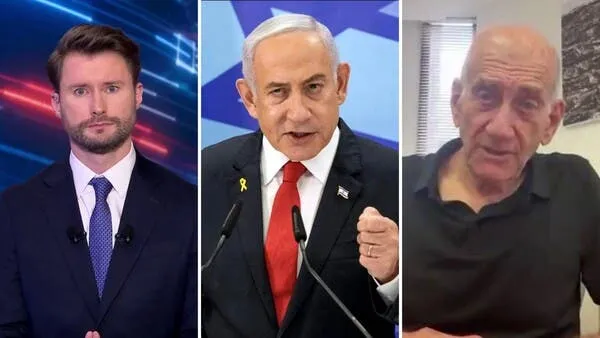
Trump said he had "reached an agreement" with Israeli Prime Minister Benjamin Netanyahu to end the aid. CNN said it had sought details from Netanyahu's office and the White House.
Trump also said Israel could continue buying American weapons and that Washington would help if needed. Critics questioned whether the announced cutoff would change the substance of US support if funding simply moved through other channels.
Netanyahu's main political rival, Gadi Eisenkot, criticized the way the announcement emerged. He said Israel's defense establishment had learned through the media about a change in the strategic relationship with Washington, calling Netanyahu's conduct "a real danger." Netanyahu "can no longer be trusted and must be replaced," Eisenkot added.
Israeli coalition uncertainty and Iran's response
The aid announcement came while Israel remained without a majority after its October 27 election. According to The Jerusalem Post, Netanyahu's Likud secured 27 seats, Eisenkot's Yashar won 21 and Naftali Bennett's B'Yachad took 12. Netanyahu's bloc held 53 seats in the 120-member Knesset, compared with 48 for the opposition bloc led by Eisenkot and a combined 19 for Arab parties. Turnout reached 77.7%, an increase of 7.1 percentage points from 2022.
Ross Harrison, a senior fellow at the Middle East Institute, said Netanyahu might use the interval before a new Israeli government takes office to encourage further US military action against Iran.
"There's generally a sense in Israel this might be the last pro-Israeli [US] government that's willing to abide by Israeli interests, and sometimes at the expense of US interests, and that that's a window of opportunity," Harrison told the institute's briefing. "My general understanding is that there's been an encouragement by Jerusalem by Bibi Netanyahu for Trump to reignite this war in some fashion."
Iranian officials offered different readings of the US election results. The country's chief negotiator in talks with Washington said Americans had "said NO TO WAR," BBC News reported. Supreme Leader Mojtaba Khamenei, however, said in a statement that he did not expect the outcome to change US policy.