Russia Plans Nuclear-Armed Satellite Launch This Year, German Media Report
Intelligence services from NATO member countries believe Russia intends to send a nuclear-armed satellite into space before the end of 2026, according to German media reports published November 23. The Kremlin dismissed the reports, while German leaders voiced concern and NATO outlined its readiness to respond.
 Mariam Al Mansoori
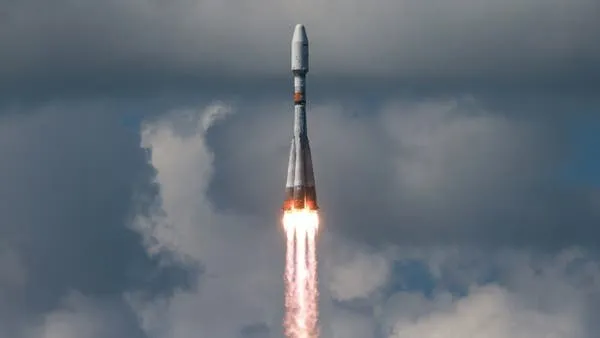
Intelligence points to a possible December launch
Broadcasters NDR and WDR and the newspaper Sueddeutsche Zeitung reported that Western intelligence services, including Germany's BND and military, had shared information about a satellite called Sputnik-S. Their reporting said it had been assembled several years earlier and was being held in the Moscow region.
Warnings circulated among NATO countries in early November indicated that a launch could occur within 60 days. Germany's Bundeswehr Space Command assessed that Sputnik-S could launch as early as December, according to Ars Technica.
Kremlin spokesman Dmitry Peskov rejected the reports when reporters asked about them on November 23. "No, we haven't seen the report. But there are so many 'alleged' and 'possible' claims in it, attributed to who knows whom, that it's certainly hardly worth taking them seriously," he said.
The Russian embassy in Berlin also disputed the reporting. According to the German outlets, it called the claims "unfounded allegations" and part of a "propaganda campaign".
NATO and Germany respond
At a November 23 press conference in Berlin with German Chancellor Friedrich Merz, NATO Secretary General Mark Rutte said the alliance's commitment to defend "every inch of Nato territory" extended to security in the space domain. He said NATO had multiple response options and would revise its deterrence and defense assessments as needed.
Merz described the reports as "not new, yet they remain no less shocking" and said they showed the level of escalation Russia was evidently willing to pursue. German government spokesman Stefan Kornelius said officials took the reports "very seriously," but cautioned against stirring excessive nervousness about hypothetical dangers.
European Space Agency head Josef Aschbacher told the Handelsblatt newspaper that nuclear weapons in space represented "the ultimate nightmare scenario".
Warnings about damage to satellite networks
A month before the German reporting, the US Defense Intelligence Agency publicly warned that Russia was developing a satellite intended to carry a nuclear weapon despite its Outer Space Treaty obligations. Its report on space security challenges said such a capability could cause "rapid and sudden loss or degradation of thousands of satellites" and create radiation belts that would remain for years, according to Ars Technica.
US officials have alleged that Russia's work on a nuclear weapon capable of destroying whole satellite networks has been underway for years. They have cited networks such as SpaceX's Starlink internet system, which Ukrainian troops use. Russia denied US assertions in 2024 that it was developing a weapon to destroy enemy satellites through a nuclear explosion in space.
Bleddyn Bowen, co-director of Durham University's Space Research Centre, told the BBC that a nuclear explosion in space would have "massive infrastructural effects," with more than 15,000 active satellites now in operation. He said the damage would be "extremely indiscriminate" and would also destroy much of Russia's own space infrastructure.
The treaty's nuclear weapons ban
Launching a nuclear-armed satellite would breach the 1967 Outer Space Treaty, which bars the deployment of weapons of mass destruction in space. Russia belongs to the treaty but in 2024 vetoed a draft UN Security Council resolution intended to reaffirm that prohibition, Ars Technica reported.
Conventional weapons are not subject to an international ban in space. In September 2026, the Pentagon confirmed that the US Space Force had put unspecified weapons into orbit, according to Ars Technica.