Qaani Holds Talks as Iraq Prepares Takeover of Kataib Hezbollah Stronghold
A confrontation over Jurf Al Sakhar appeared to have been averted Thursday as Iran's Quds Force commander, Esmail Qaani, met Iraqi militia leaders. Iraqi forces are expected to enter the Kataib Hezbollah-controlled district on Friday under an arrangement that would see the group's fighters relocate.
 Mariam Al Mansoori
Talks to prevent a clash
The talks followed Prime Minister Ali Al Zaidi's threat to send troops into Jurf Al Sakhar amid reports of widespread oil smuggling. Sources cited by The National said Qaani, who leads the Islamic Revolutionary Guard Corps' Quds Force, reached Baghdad on Monday night.
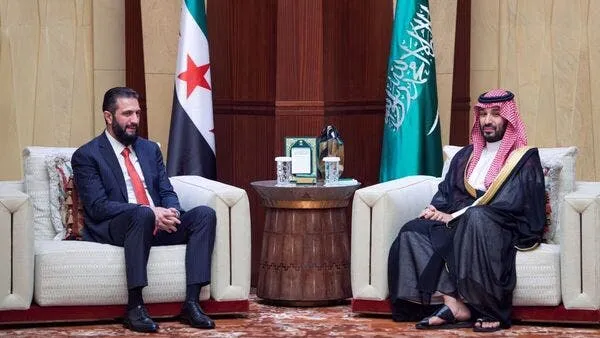
Kataib Hezbollah said its secretary general, Abu Hussein Al Hamidawi, met with Qaani, Badr Organization leader Hadi Al Amiri and Popular Mobilization Forces chairman Falih Al Fayadh to try to avert an escalation.
In a statement delivered by a spokesman afterward, Al Hamidawi said "the existing disagreements with the head of the authority will be addressed through private channels, denying our real enemies the opportunity to exploit them". He did not name Al Zaidi. The statement also thanked Qaani, Al Amiri, Al Fayadh and PMF chief of staff Abdul Aziz Al Muhammadawi for their "honourable positions" and work to prevent bloodshed.
Shafaq News reported on November 17, citing a political source, that Supreme Leader Mojtaba Khamenei had urgently dispatched Qaani to stop the dispute from becoming an armed confrontation. According to that account, Qaani landed in Najaf on Monday evening before holding meetings in Baghdad with faction leaders and figures from the Coordination Framework.
The same source described a tense Monday evening meeting between Al Zaidi and Coordination Framework leaders. The prime minister refused to extend his Friday-evening deadline, and the meeting ended without agreement following a heated exchange with Al Amiri, who warned that using force could provoke unrest in several Iraqi cities.
Friday deployment and division of control
Three security officials familiar with the arrangement said Iraqi government forces were expected to enter Jurf Al Sakhar on Friday. Lt. Gen. Saad Maan, who heads Iraq's security media cell, told Reuters that Kataib Hezbollah's forces would subsequently relocate to other areas.
The Prime Minister's Office outlined the deployment late Wednesday. The army's 38th Brigade is assigned to the western approaches to Anbar province, while the federal police's 17th Brigade is to secure central Jurf Al Sakhar. The PMF's 72nd and 79th brigades will oversee the sector extending toward neighboring Karbala province.
Energy police will guard the oil pipelines. Their assignment also includes establishing checkpoints in Babil and Anbar provinces and reopening the road connecting Musayyib, Al Fadhiliya and Amiriyat Al Fallujah.
On Thursday, Al Zaidi ordered a local command headquarters established for the federal forces and PMF brigades taking over from Kataib Hezbollah. Al Jazeera reported that Iraq's armed forces commander-in-chief set the opening of the new joint operations center for 6 a.m. local time Friday, or 03:00 GMT.
Oil allegations behind the standoff
A leaked Interior Ministry intelligence report alleged that crude worth millions of dollars had been diverted from two state pipelines running through the closed district since 2021, according to Al Jazeera's November 18 explainer. The document also alleged that those responsible had built makeshift underground refineries to process the stolen oil.
Al Zaidi created a high-level investigative committee, which entered the restricted area with military backing on November 13 to verify whether illicit facilities existed. The committee subsequently said it had located several sites associated with smuggling, Al Jazeera reported.
Before the committee arrived, Kataib Hezbollah sent approximately 8,000 fighters from several provinces toward Jurf Al Sakhar in a show of force, according to Al Jazeera.
The crackdown also brought the dismissal of nine senior security and administrative officials in Babil province. They included the provincial police chief and the Oil Pipelines Company's director, Al Jazeera reported.
A district outside effective government control
Jurf Al Sakhar, also known as Jurf Al Nasr, lies in Babil province, about 60 kilometers south of Baghdad. Al Jazeera puts its area at roughly 345 square kilometers and notes that it is on the Shia pilgrimage route linking Baghdad and Karbala. Saddam Hussein's military-industrial complexes once occupied sites there.
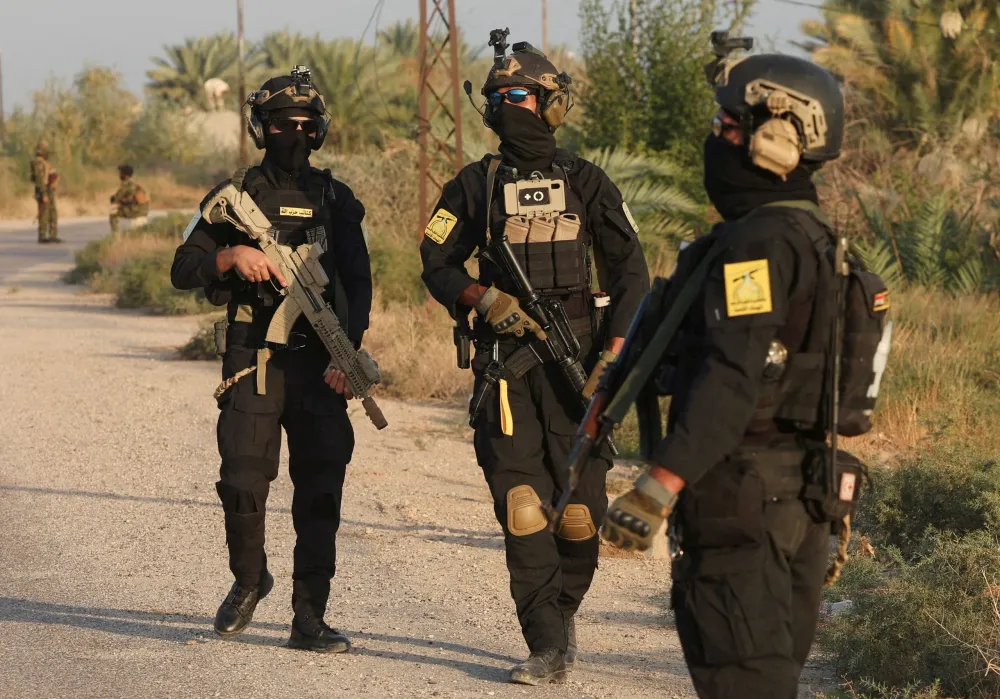
Kataib Hezbollah seized the district from ISIS in 2014 and has controlled it since. Its membership in the PMF formally places it under the prime minister's command, but the group has repeatedly resisted government orders.
After taking full control and renaming the town Jurf Al Nasr, the militia closed it on security grounds. That closure has effectively kept approximately 140,000 displaced residents from returning, according to Al Jazeera.
Al Zaidi, who became prime minister in May 2026, has made disarming all armed factions a priority. An initial September 30, 2026, deadline for placing all weapons under state control was later extended to June 2027, Al Jazeera reported.