Makkah defense pact text revealed as Turkey weighs ratification
The National has obtained the previously unpublished agreement linking Saudi Arabia, Turkey and Pakistan in a mutual defense pact. Now before Turkey's parliament, the text treats an external armed attack on one member as an attack on all three, while leaving the scale and form of assistance to a joint assessment.
 Mariam Al Mansoori
Parliamentary review amid Houthi attacks
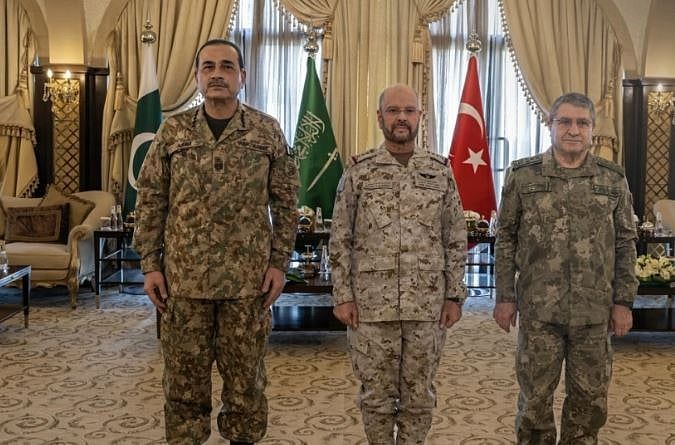
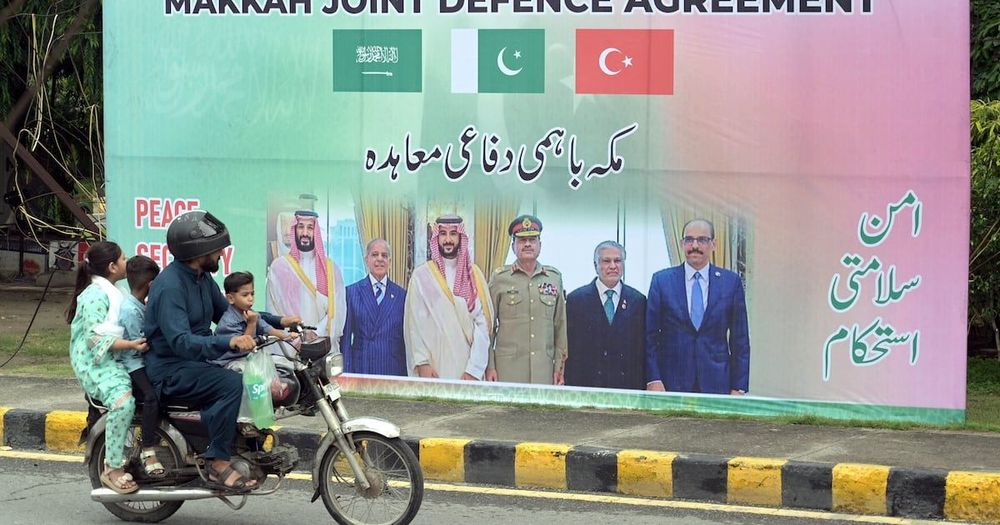
A Turkish source authenticated the text obtained by The National. Turkish President Recep Tayyip Erdoğan, Saudi Crown Prince Mohammed bin Salman and Pakistani Prime Minister Shehbaz Sharif signed the agreement in Makkah on August 7, 2026, but its provisions were not released publicly at the time.
The three governments held an emergency meeting in October to arrange rapid military deployments to Saudi Arabia in response to Houthi attacks. Although Turkish parliamentary approval is still required before the pact becomes legally binding, the members have already implemented some provisions: they have appointed a secretary general and established the Strategic Political and Defence Committee.
Turkey's parliament received the agreement on October 20, according to Reuters reporting cited by Dawn. Parliamentary sources said Speaker Numan Kurtulmus, who was visiting Kyrgyzstan, was expected to send it to the foreign affairs commission after his return. The commission could take it up as early as Friday, October 23.
Ratification would not itself authorize Turkey to send troops abroad. That requires a separate parliamentary decision under Turkey's constitution, Dawn and EconoTimes reported. As of October 21, a Turkish official said the country's expected contribution was limited to military equipment, intelligence sharing and weapons systems, with no other deployment under the alliance having occurred. Foreign Minister Hakan Fidan described the pact as not an "offensive agreement" and said Turkey would not send troops to attack another country's territory.
The mutual defense commitment
Article 2 establishes the NATO-style collective defense clause: an external armed attack against any member counts as an attack against them all. It then requires immediate assistance when a member faces an armed attack or military aggression by another country or group of countries.
The provision does not prescribe a fixed military response. Members are to assess the assistance needed objectively and decide its nature and extent, using the resources available to them, including military capabilities. The text places that cooperation within the right of self-defense recognized by Article 51 of the UN Charter.
The agreement also provides for regular security consultations and operational coordination against terrorism. Personnel exchanges, joint training and exercises are intended to strengthen military cooperation, alongside defense-industry projects such as co-production and joint research and development.
Intelligence is to be exchanged over secure channels agreed upon by the members. A separate logistics provision covers supplies such as weapons, ammunition, fuel and spare parts, subject to their availability and compatibility.
How the alliance will operate
The Strategic Political and Defence Committee brings together the three countries' foreign ministers, defense ministers and chiefs of defense or general staff. Its twice-yearly meetings will rotate among member countries, while national leaders may meet annually when needed.
A Saudi-based secretariat will support the committee. The secretary general's three-year term will rotate among the founding members, with Pakistan supplying the first officeholder. Admission of additional members requires a committee-approved process and unanimous agreement among the three founding countries.
Each country must complete its own ratification procedures. The pact takes effect when the final ratification is deposited at the secretariat's headquarters and has no expiration date. A member can leave only after it has been in force for ten years, with written notice sent through diplomatic channels at least three months before departure.
Consultations and negotiations are the prescribed route for resolving disputes, and amendments require consensus among the founding members. The Arabic, English and Turkish versions are equally authentic, but the English text governs if their meaning differs.
Different approval paths and political objections
Pakistan had approved the pact before Turkey began its ratification process. Dawn reported that Pakistan's executive-led treaty system allows approval by the federal government, through the prime minister and cabinet, under Article 90 of its constitution.
In Turkey, the main opposition Republican People's Party, or CHP, said on October 20 that it would challenge provisions it considered contrary to national interests. Party leader Kemal Kılıçdaroğlu warned that the pact could aggravate regional conflict, according to EconoTimes.
Egypt is not a member of the alliance, but its parliament was expected to vote on October 26 on whether to authorize potential military support for Saudi Arabia, Dawn reported.
Origins and scrutiny of the pact
The three-country agreement expands on the Strategic Mutual Defence Agreement signed by Saudi Arabia and Pakistan on September 17, 2025, according to a Beaconhouse National University policy brief and Wikipedia. The brief places its signing against the backdrop of the conflict involving the United States, Israel and Iran that began in February 2026.
The policy brief describes India's response as measured but concerned, Iran's as mixed and China's as cautiously interested. It reports open alarm in Israel, while US President Donald Trump publicly welcomed the agreement.
Houthi attacks subsequently raised questions about the alliance's credibility, according to Wikipedia. Pakistan said on September 10 that it was not considering an immediate military response under the pact, and Saudi Arabia had to seek US assistance as the Houthis seized Mocha.