Iran targeted US warning systems before widening base attacks, AP finds
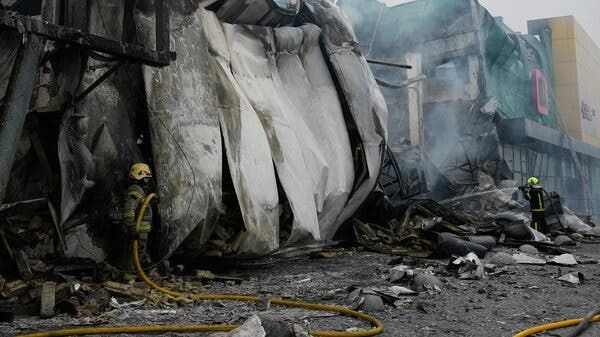
Iran attacked radars and aircraft hangars early in the war, then expanded its strikes to warehouses, troop housing and other facilities across US military sites in the Middle East, an Associated Press analysis found. The attacks caused billions of dollars in equipment damage and prompted the relocation of American assets from the Gulf, regional officials told the AP.
 Mariam Al Mansoori
Damage across 26 sites
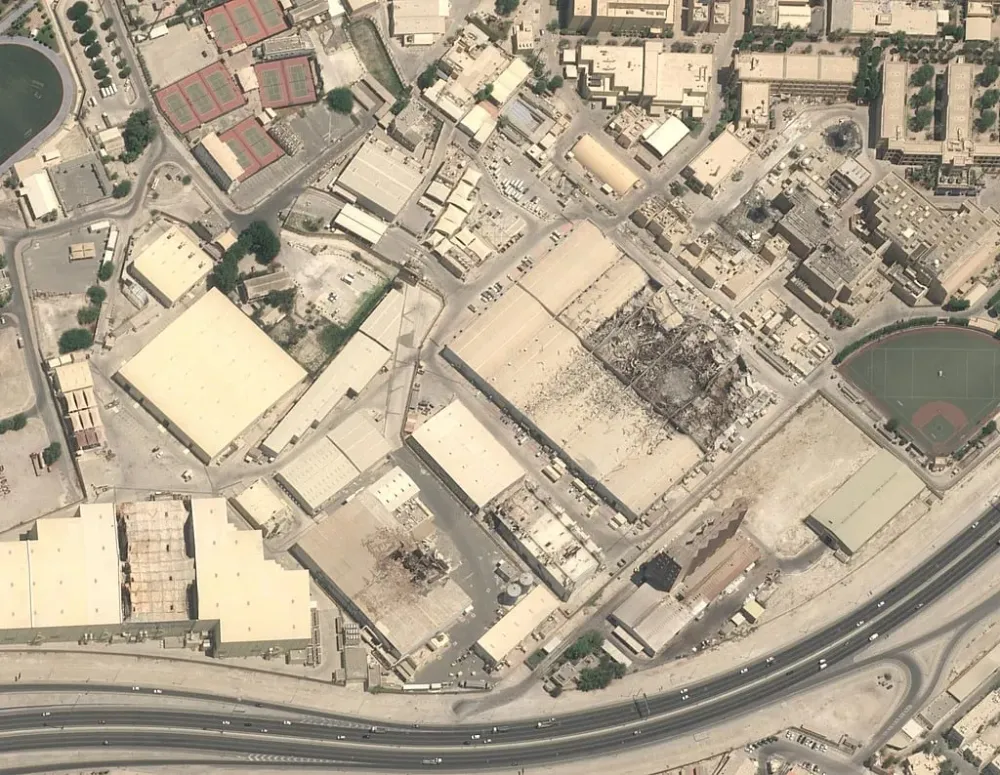
Using images from several satellite providers, the AP independently documented damage at 26 bases and other locations housing US equipment. Through August, more than 115 missile or drone strikes claimed by Iran or Iranian-backed militias had damaged or destroyed structures at those sites. The reporting also drew on four regional officials with firsthand knowledge or briefings about the attacks.
The AP found that hundreds of buildings and other structures on US bases were damaged or destroyed between April 1 and June 30. Its analysis traces a campaign that initially targeted aircraft hangars and strike-detection systems, opening the way for attacks on facilities needed to operate and house personnel at the bases.
Two regional officials said the United States had moved many assets out of the Gulf. One said the transfers included aircraft, air defenses, communications systems and other essential base equipment. The officials spoke anonymously because the damage involved sensitive military information.
Early strikes on hard-to-replace radars
In the first two days after the war began in late February, Iranian attacks destroyed protective enclosures around US radars at Kuwait's Camp Arifjan and Naval Support Activity Bahrain. Portable radar systems at Prince Sultan Air Base in Saudi Arabia and Muwaffaq Salti Air Base in Jordan were also hit.
N.R. Jenzen-Jones, director of Armament Research Services, said Iran concentrated on key early-warning radars that are costly and difficult to restore or replace. The attacks were likely "intended to disrupt and degrade the US and allies' ability to respond to further strikes," he said.
One radar struck in Jordan was reported destroyed. Manufacturer Raytheon said the Army had only 13 of that radar worldwide; budget documents put the cost of each at about $500 million. A separate radar in Qatar suffered substantial damage, although whether it was destroyed remains unclear. Qatar acquired it under a $1.1 billion deal in 2013, and it appears to have been the region's only radar of its kind.
Following the radar attacks, Iran carried out more than 50 successful strikes during the war's first month against 18 locations containing US military equipment, with aircraft areas a priority. Two regional officials described damage to refueling aircraft, communications equipment, fuel bunkers and troop accommodations.
A March attack at Prince Sultan Air Base damaged the rear portion of a Boeing E-3 Sentry surveillance plane. A regional military official who later visited the base said the same attack damaged several other aircraft, including two aerial refueling tankers. He described debris, damaged equipment, and bombed-out barracks and mess halls. Another Iranian strike hit a CIA unit at the US Embassy in Riyadh.
An October update to a Congressional Research Service report counted 15 US aircraft damaged at bases in the region.
Kuwait's bases and troop facilities hit repeatedly
Kuwait accounted for most of the attacks identified in the satellite analysis. US sites in Bahrain, Iraq, Jordan, Oman, Qatar and Saudi Arabia were also struck. The war's deadliest known attack on US troops occurred at Kuwait's Port Shuaiba on March 1, when a drone killed six soldiers.
At Ali Al Salem Air Base, at least 30 strikes damaged or destroyed 15 or more aircraft hangars, numerous warehouses and 10 buildings close to a residential area.
Camp Buehring suffered even heavier damage. Attacks left most of its hangars unusable, but with relatively few aircraft at the base, troop gathering places sustained much more damage. A gym was destroyed in March, a store serving troops was hit in late July, and two regional officials reported severe damage to a garage and dining room.
The AP confirmed repeated Iranian strikes on Camp Buehring in March, April, May and July. More than 30 structures were damaged or destroyed during a gap in publicly available satellite imagery that lasted from early March into August.
Raphael Cohen, director of the National Security Program at the RAND School of Public Policy, said that although Iran faced much heavier strikes, US equipment losses were inevitable. Today's warfare makes all militaries "susceptible to large-scale, cheap drone attacks," he said. "This should be a wake-up call for the United States."
Repair estimates add billions to the war's cost
A separate Wall Street Journal investigation published in late October 2026, reported by HuffPost, identified 274 damaged structures at 24 installations with a US military presence during the conflict's first six months. It found that Iranian missile and drone attacks had caused at least $5 billion in base damage.
The Pentagon's minimum estimate was $5 billion, while a person briefed on the costs said the total could rise to $15 billion. The Center for Strategic and International Studies estimated that rebuilding the damaged structures alone would exceed $4 billion, before replacing any equipment or systems inside.
Those repairs are excluded from the Pentagon's broader estimate of the war's cost to US taxpayers. That total reached $47.1 billion on October 16, 2026, an increase of about $3.5 billion from roughly $43.6 billion in early September.
The Pentagon inspector general separately documented aircraft losses in a report released September 14 covering February 28 through June 30. It confirmed damage to or destruction of dozens of crewed and uncrewed US aircraft, including four F-15Es, an A-10, four AH-6 helicopters, an AH-64, an MH-60, an MQ-4C drone and as many as 30 MQ-9 Reapers.
The report recorded 18 US military deaths as of August 27. Separately, Defense Department data cited by HuffPost put deaths in war-related activity at more than 20 since the conflict began on February 28. More than 400 service members had been wounded before a temporary ceasefire broke down in July; the government subsequently stopped releasing casualty figures specific to the war.
Diplomatic facilities also sustained damage. The inspector general's September report estimated about $184 million in damage from Iranian strikes to US diplomatic sites in four countries. Facilities in Iraq endured more than 600 attacks, while the embassies in Kuwait City and Riyadh were also hit.
Relocations, longer supply routes and depleted interceptors
The inspector general found that destruction of the Navy's regional hub in Bahrain created "significant challenges" in securing adequate naval bases and support ports. Diego Garcia, the distant Indian Ocean island, became a sea logistics hub, extending resupply cycles to 14 to 18 days.
By August, the Pentagon was considering whether to withdraw troops from the Persian Gulf after months of strikes on its large bases, according to Washington Post reporting carried by The Philadelphia Inquirer. The Pentagon's policy office led the review, while the Joint Staff and US Central Command also examined the issue.
CENTCOM commander Adm. Bradley Cooper supports discussions about a possible westward shift of US troops from the Persian Gulf. The command normally has about 40,000 troops at nearly 20 sites along a 1,500-mile arc between Jordan and Oman. The review concerned potential troop moves, separate from the equipment relocations described to the AP.
Washington Post reporting cited in August also found that US forces had fired more than 1,000 sophisticated air-defense interceptors to protect personnel in the region. Their use depleted Pentagon stocks of Patriot and Terminal High Altitude Area Defense missiles.
Restricted imagery and questions about rebuilding
The AP said limited disclosures by the Trump administration and military had made outside assessments essential to understanding the toll on personnel and equipment. Satellite access was also restricted: major providers holding US contracts blocked or delayed public imagery at American officials' request, sometimes on national security grounds.
Images from Airbus-owned OneAtlas eventually offered a way to verify strike damage. At Camp Buehring, reliable high-resolution imagery did not become available until late August, leaving months of attacks difficult to assess visually.
US Central Command has generally declined to detail damage to bases or equipment, citing operational security, and did not comment for the AP's report. Pentagon spokesman Sean Parnell said US "forces and bases are well protected and America's military is stronger than ever."
The damage comes as President Donald Trump considers further strikes after Tuesday's midterm elections and Tehran promises major retaliation. Renewed fighting could inflict further costly losses and deepen uncertainty about whether Washington will rebuild damaged bases and equipment after the war. Eight months into the conflict, no endgame has been articulated, and both countries say hostilities could resume.
Cohen said the conflict could point to a different operating environment for American forces. "This is the operating environment that we're going to face in the future," he said. "The idea that we can rely on fixed infrastructure in the way that we have during the global war on terrorism is over."